Shampoo vs Conditioner vs Scalp Serum: Which Haircare Product Should Your Brand Launch First?
Compare shampoo, conditioner and scalp serum from a haircare product development perspective to decide which format best fits your brand positioning, target consumer and launch strategy.
Launching a haircare brand does not always require starting with a complete shampoo-conditioner-treatment collection.
For many emerging beauty brands, one of the more important early decisions is:
Which product should become the first hero SKU?
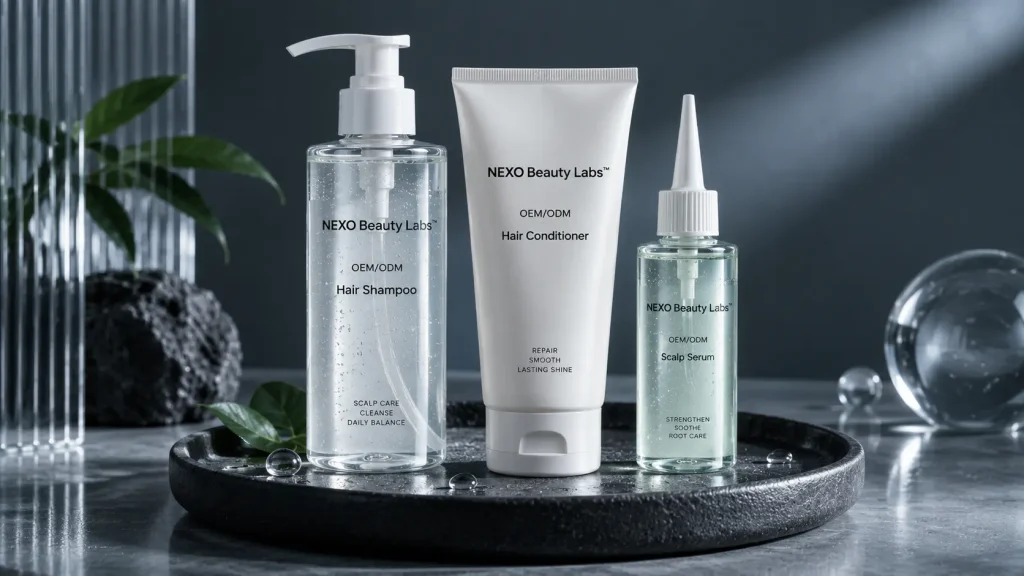
Shampoo, conditioner, and scalp serum all play different roles in a haircare routine.
They also create different opportunities — and different challenges — around:
- Consumer understanding
- Brand differentiation
- Repeat purchase
- Formula development
- Sensory experience
- Packaging
- MOQ and launch investment
- Claims and product testing
- Manufacturing
- Future product expansion
So the better question isn’t:
“Which haircare format is best?”
It is:
“Which first product gives our brand the clearest reason to enter the category — and makes the next product easier to launch?”
This guide compares shampoo, conditioner, and scalp serum from a beauty-brand and OEM/ODM product-development perspective.
Quick Answer: Shampoo vs Conditioner vs Scalp Serum as a First Hero SKU
There is no universal winner.
A shampoo usually provides the easiest consumer entry point.
A conditioner can create a highly tangible repair and sensory story.
A scalp serum can create the clearest specialist positioning.
The right decision depends on the brand you want consumers to understand first.
1. What Makes a Strong Haircare Hero SKU?
A hero SKU is not simply the product with the most ingredients or the most expensive packaging.
A strong first product should ideally do several things well.
Solve One Clear Consumer Problem
The consumer should quickly understand why the product exists.
Examples might include:
- Oily-feeling scalp
- Dry or rough-feeling hair
- Damage-care routine
- Frizz and manageability
- Scalp comfort
- Lightweight root care
Create a Clear Brand Association
Consumers should eventually be able to answer:
“What is this brand especially good at?”
Encourage Repeat Use
A hero product should fit naturally into a routine rather than depend only on novelty.
Have a Defensible Product Experience
Differentiation can come from:
- Formula
- Texture
- Fragrance
- Application method
- Packaging
- Ingredient story
- Finished-product performance
Fit the Brand’s Launch Economics
The ideal concept still needs to work within practical:
- MOQ
- Packaging budget
- Testing budget
- Target retail price
- Expected order volume
- Inventory risk
Create the Next SKU Naturally
The first product should create a path rather than a dead end.
A strong hero SKU should make product number two easier to explain.
2. Shampoo, Conditioner & Scalp Serum Solve Different Jobs
Shampoo = Cleanse
Shampoo is primarily a rinse-off cleansing product for the scalp and hair.
Possible positioning directions include:
- Daily cleansing
- Scalp cleansing
- Oil-control-oriented routines
- Botanical haircare
- Strengthening-oriented cosmetic positioning
- Scalp freshness
- Hair-type-specific cleansing
Conditioner = Condition & Transform Hair Feel
Conditioner focuses more strongly on the hair fiber and the immediate sensory experience after washing.
Possible benefits include:
- Detangling
- Slip
- Softness
- Smoothness
- Manageability
- Shine
- Reduced roughness perception
- Damage-care positioning
Scalp Serum = Targeted Leave-On Care
Scalp serum introduces a dedicated leave-on step applied to the scalp or root area.
Depending on the product concept, it can support positioning around:
- Scalp wellness
- Oil-balance routines
- Dryness and comfort
- Root-focused care
- Stronger-looking hair
- Fuller-looking roots
- Skincare-inspired scalp care
A simple way to think about the three is:
Shampoo enters the routine.
Conditioner transforms the hair feel.
Scalp serum creates a specialist treatment step.
3. When Does Shampoo Make Sense as the First Hero SKU?
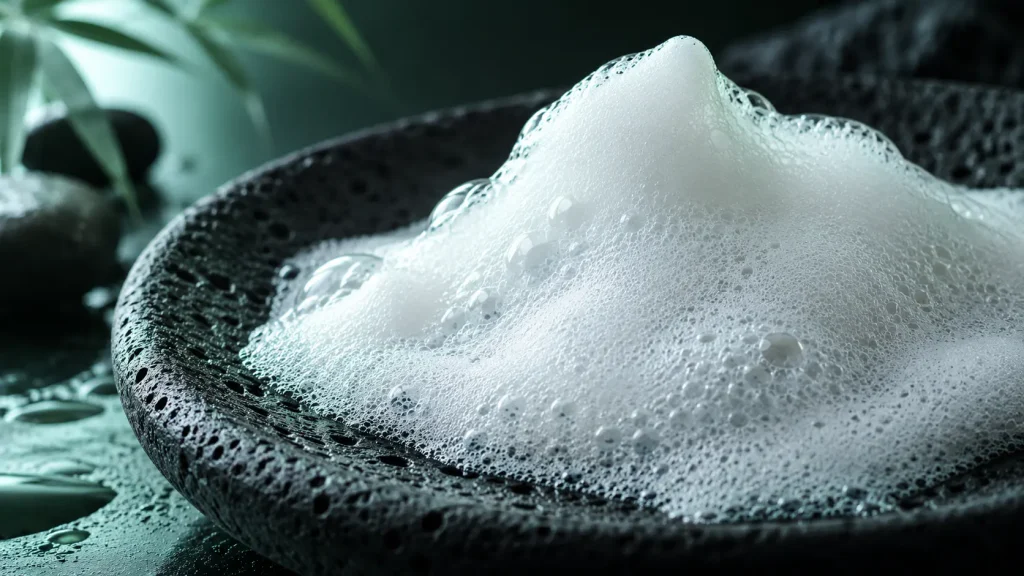
Shampoo has one major advantage as a first SKU:
Consumers already understand exactly where it fits in the routine.
This can make shampoo a strong entry point for brands focused on:
- Everyday haircare
- Hair-type-specific cleansing
- Scalp cleansing
- Botanical shampoo
- Strengthening routines
- Oily-scalp positioning
- Broad consumer haircare
But high familiarity also means the product needs a clear reason to exist.
The brand should be able to answer:
Why should a consumer replace the shampoo they already use with ours?
“Cleanses hair” is not enough differentiation on its own.
Shampoo Development Considerations
- Surfactant system
- Cleansing level
- Foam profile
- Rinse feel
- Hair feel
- Scalp feel
- Viscosity
- Fragrance
- Conditioning system
- Packaging
Examples of more specific product directions include:
RootRevive Ginseng Hair Strengthening Shampoo
and
Rosemary & PDRN Hair Thickening Shampoo.
These examples show how ingredient story and scalp-focused positioning can help move shampoo beyond a generic cleansing proposition.
4. When Does Conditioner Make Sense as the First Hero SKU?
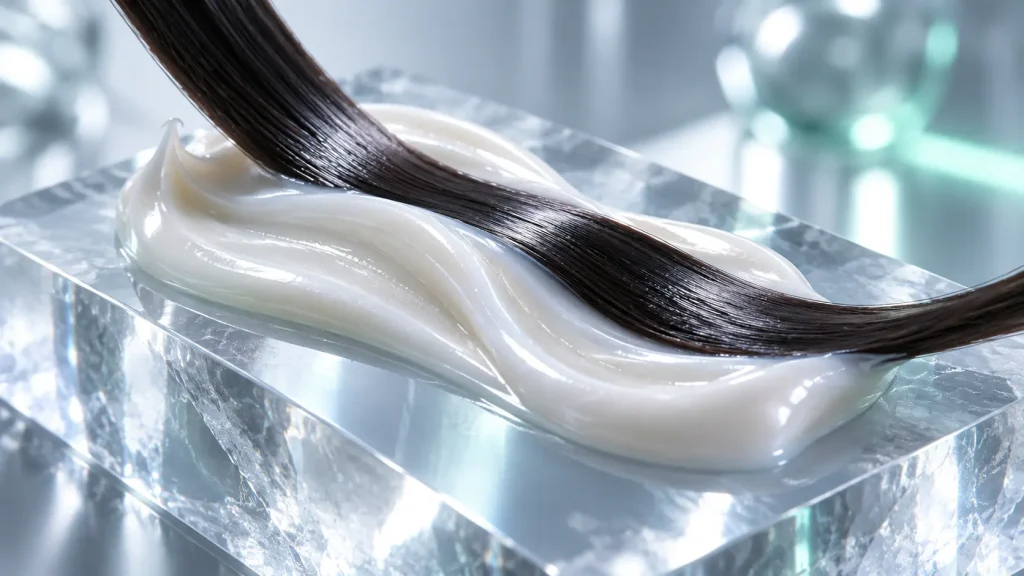
Conditioner creates a different type of hero-product opportunity.
Consumers can often evaluate the sensory result very quickly.
They notice:
- Slip
- Detangling
- Smoothness
- Softness
- Weight
- Residue
- Shine
- Manageability
This can make conditioner particularly interesting for brands built around:
- Damaged hair
- Dry hair
- Color-treated hair
- Chemically processed hair
- Salon-inspired care
- Repair systems
- Premium sensory transformation
A standalone conditioner can work as a hero SKU when its value is obvious without requiring the consumer to buy a matching shampoo first.
The positioning needs to communicate more than:
“Makes hair soft.”
For one product direction, see CeramideSilk Hair Repair Conditioner.
5. When Does Scalp Serum Make Sense as the First Hero SKU?

Scalp serum offers a different entry strategy.
Instead of entering haircare through a general wash product, the brand can begin with a targeted leave-on scalp-care concept.
This can work particularly well when the brand is built around:
- Scalp-first haircare
- Specialist positioning
- Premium treatment routines
- Skincare-inspired haircare
- Ingredient-led storytelling
- Root-focused cosmetic care
- Scalp wellness
The main advantage is:
clear differentiation.
The trade-off is that the brand may need to explain more clearly:
- What the serum does
- Where to apply it
- How much to use
- How often to use it
- Where it fits in the routine
Scalp Serum Development Considerations
- Lightweight texture
- Spreadability across the scalp
- Oiliness
- Stickiness
- Residue
- Scalp comfort
- Ingredient compatibility
- Precision dispensing
- Dropper or nozzle application
- Leave-on sensory experience
Because the product remains on the scalp, it should not make the roots feel unnecessarily greasy or interfere with the hairstyle.
For more detail, see How to Develop a Scalp Serum: Formulation & Manufacturing Guide.
Product directions include:
Green Tea Microbiome Scalp Care Serum
and
Ginseng Scalp Strengthening Serum.
6. Scalp Care Is Growing — But Do Not Choose It Only Because It Is Trending
Scalp-focused haircare has become increasingly visible in modern beauty.
Consumers are treating the scalp more like facial skin and paying more attention to:
- Scalp comfort
- Oiliness
- Dryness
- Visible buildup
- Root appearance
- Targeted treatment routines
This creates an attractive opportunity for brands.
But trend momentum alone should not determine the first SKU.
A scalp serum makes sense when the brand has:
- A credible scalp-first positioning
- A clear target consumer
- A defined formula story
- Appropriate cosmetic claims
- A consumer-education plan
- A logical path into future scalp or wash-care products
A trend is an opportunity. It is not a product strategy by itself.
7. Which Product Is Easiest to Differentiate?
Each format differentiates in a different way.
Shampoo Differentiation
Can come from:
- Hair/scalp type
- Surfactant strategy
- Foam and rinse feel
- Fragrance
- Botanical story
- Scalp-focused positioning
- Special format or texture
Conditioner Differentiation
Can come from:
- Immediate sensory transformation
- Slip
- Detangling
- Damage-care system
- Hair-type specificity
- Premium salon positioning
Scalp Serum Differentiation
Can come from:
- Targeted scalp need
- Ingredient architecture
- Precision applicator
- Lightweight leave-on texture
- Skincare-inspired positioning
- Specialist routine
The best opportunity is not necessarily the format with the most possible features.
It is the format where your brand can make the clearest credible promise.
8. First-SKU Economics Matter Too
A hero product still needs to make commercial sense.
Before choosing shampoo, conditioner, or scalp serum, evaluate:
- Formula MOQ
- Packaging MOQ
- Formula-development cost
- Packaging cost
- Testing requirements
- Target retail price
- Expected gross margin
- Shipping weight
- Consumer usage rate
- Expected reorder cycle
For example, a larger shampoo bottle can create very different packaging and freight economics from a smaller scalp-serum bottle with a precision applicator.
A scalp serum may support a higher perceived treatment value, but it can also require more consumer education and more specialized packaging.
A conditioner may use familiar packaging but still require a strong standalone reason to purchase.
There is no universal lowest-cost or highest-margin option.
The complete specification needs to be evaluated.
For more detail, see Cosmetic MOQ Explained: What Determines Minimum Order Quantity?.
9. Your First Product Should Make the Second Product Easier to Launch
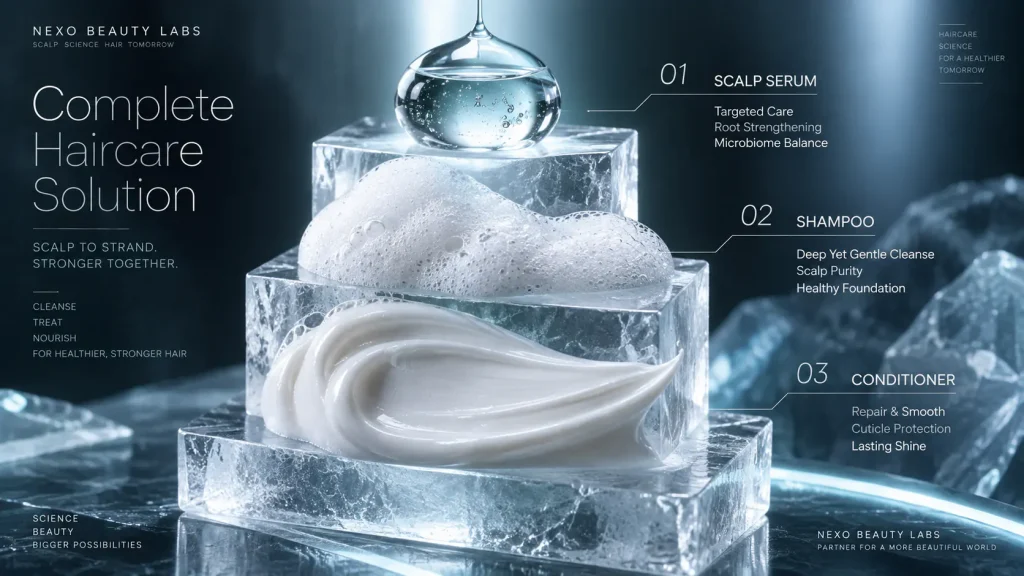
The strongest first SKU does more than sell independently.
It creates the logic for what comes next.
Scalp-First Brand
Scalp Serum
↓
Scalp / Strengthening Shampoo
↓
Conditioner or Hair Treatment
Damage-Repair Brand
Repair Shampoo or Conditioner
↓
Complementary Conditioner / Mask
↓
Leave-In Hair Serum
↓
Finishing Hair Oil
For more on the last two formats, see Hair Oil vs Hair Serum: Which Format Is Right for Your Haircare Brand?.
Oily-Scalp Brand
Scalp-Cleansing Shampoo
↓
Lightweight Scalp Serum
↓
Weekly Scalp Treatment
Salon / Repair Brand
High-Performance Conditioner
↓
Matching Shampoo
↓
Repair Mask
↓
Leave-In Treatment
The first product should create a product ladder — not a dead end.
10. Formula Strategy Changes by Product Format
Shampoo Formula Strategy
- Surfactant system
- Cleansing level
- Foam
- Rinse feel
- Viscosity
- Fragrance
- Hair feel
- Scalp comfort
Conditioner Formula Strategy
- Conditioning system
- Slip
- Detangling
- Smoothness
- Weight
- Residue
- Rinse feel
- After-dry hair feel
Scalp Serum Formula Strategy
- Ingredient compatibility
- Lightweight texture
- Spreadability
- Stickiness
- Oiliness
- Scalp comfort
- Leave-on residue
- Applicator compatibility
For more on the broader formulation process, see Cosmetic Product Formulation: Process, Ingredients & Why It Matters.
11. Sensory Experience Matters Differently for Each Format
Consumers do not evaluate shampoo, conditioner, and scalp serum using the same sensory criteria.
For Shampoo
Consumers may notice:
- Foam
- Cleansing feel
- Rinsability
- Fragrance
- Scalp freshness
- Hair feel after washing
For Conditioner
Consumers may notice:
- Slip
- Detangling
- Coating or weight
- Softness
- Smoothness after drying
For Scalp Serum
Consumers may notice:
- Spreadability
- Absorption perception
- Stickiness
- Greasiness
- Root feel
- Residue
- Effect on hairstyle
The sensory brief should therefore be product-specific.
12. Packaging Should Support the Usage Scenario
Shampoo Packaging
Common options include:
- Pump bottle
- Flip-top bottle
- Squeeze bottle
Conditioner Packaging
Depending on viscosity:
- Pump
- Tube
- Bottle
Scalp Serum Packaging
Possible formats include:
- Dropper
- Precision nozzle
- Comb applicator
- Other targeted dispensing systems
For scalp serum, application accuracy matters because the product should reach the scalp rather than remain primarily on the hair.
Packaging needs to support:
- Formula viscosity
- Dose
- Application accuracy
- Consumer handling
- Filling
- Leakage control
- Product positioning
For more detail, see How to Choose Cosmetic Packaging for Skincare & Beauty Products.
13. Rinse-Off vs Leave-On Changes the Development Strategy
Shampoo and most conventional conditioners are rinse-off products.
Scalp serum is a leave-on treatment format.
This changes important development questions around:
- Ingredient strategy
- Exposure and usage pattern
- Sensory expectations
- Residue
- Packaging
- Directions for use
- Product evaluation
Depending on the product, development may also involve:
- Physical stability
- Microbiological quality
- Packaging compatibility
- Sensory evaluation
- Hair or scalp performance
- Claim-supporting testing where relevant
For more detail, see Cosmetic Product Testing Before Mass Production and Cosmetic Stability Testing: What Beauty Brands Need to Know.
14. Do Not Turn a Cosmetic Scalp Serum Into a Hair-Loss Claim by Accident
Scalp care can support many cosmetic product concepts.
However, brands should distinguish cosmetic positioning from claims intended to treat a medical condition or restore hair growth.
Cosmetic directions can focus on areas such as:
- Scalp hydration
- Scalp comfort
- Oil-balance routines
- Healthy-looking scalp
- Stronger-looking hair
- Fuller-looking roots
If the intended positioning moves into treatment of hair loss or regrowth claims, the regulatory pathway may change depending on the target market.
Claims strategy should be defined before formulation and testing are finalized.
15. Should a New Brand Launch One SKU or a Shampoo + Conditioner Pair?
Not every brand needs to launch only one product.
Sometimes a two-SKU launch creates a stronger consumer proposition.
A Shampoo + Conditioner Pair Can Make Sense When:
- The positioning depends on a complete wash system
- Both products share one clear hair-type story
- The brand has enough inventory budget
- The MOQ of two SKUs is commercially manageable
- The products create an obvious routine together
A Single Hero SKU Can Make More Sense When:
- The budget needs to stay concentrated
- The brand wants to validate one clear product idea
- The product can stand alone naturally
- The first SKU has strong differentiation
- Inventory risk is a major consideration
Launching more products does not automatically create a stronger brand.
One memorable product is often more useful than several weakly differentiated products.
16. Private Label vs ODM vs Custom Development for a First Haircare SKU
Private Label
A private label route starts from an existing manufacturer-developed formula.
This can be useful when the brand wants to focus initial investment on:
- Brand identity
- Packaging
- Content
- Market testing
rather than extensive original formulation work.
Customized ODM
An ODM route may begin with an existing formulation platform and adapt selected characteristics such as:
- Hero ingredients
- Fragrance
- Texture
- Viscosity
- Hair-type positioning
- Packaging
Custom OEM / R&D Development
A more customized project can be developed around:
- Specific consumer need
- Hair or scalp type
- Product benchmark
- Ingredient architecture
- Sensory profile
- Packaging
- Claims direction
- Target market
The right route depends on how much genuine formula differentiation the first SKU needs.
17. What Should a New Haircare Brand Launch First?
Start With Shampoo When:
- You want broad consumer relevance
- Routine entry is important
- Cleansing or scalp cleansing is the central need
- You have a clearly differentiated shampoo concept
- A shampoo-conditioner-treatment line is the long-term plan
Start With Conditioner When:
- Damage care is the core brand story
- Sensory transformation is the key differentiator
- You are building a salon or professional-inspired brand
- The product can stand alone without requiring a matching shampoo
Start With Scalp Serum When:
- Scalp-first positioning defines the brand
- You want a specialist hero product
- Ingredient storytelling is important
- You can educate the consumer clearly
- You want to build a future scalp-care ecosystem
The stronger decision framework is:
Brand Positioning
↓
Target Consumer
↓
Primary Hair / Scalp Need
↓
Hero Benefit
↓
Consumer Experience
↓
Launch Economics
↓
Future Portfolio
↓
First SKU
rather than automatically choosing shampoo simply because it is familiar — or choosing scalp serum simply because scalp care is currently growing.
Questions to Ask Your Haircare Manufacturer Before Choosing the First SKU
- Which product format best fits our main consumer need?
- Do you have existing formulas suitable for this concept?
- How much formula customization is practical?
- What is the formula MOQ?
- What is the packaging MOQ?
- Which package types work with this formula?
- What testing is appropriate for the intended product?
- Which claims require additional substantiation?
- How does the project change between private label, ODM and custom development?
- What is the expected manufacturing complexity?
- Can the formula be scaled into repeat commercial production?
- Which complementary SKU should logically come next?
These questions make the first-product decision much more useful than simply asking:
“Which haircare product is most popular?”
Frequently Asked Questions
Should a new haircare brand launch shampoo first?
Not necessarily. Shampoo provides strong consumer familiarity and routine entry, but the best first SKU depends on brand positioning, target consumer, differentiation, budget, and future product strategy.
Is scalp serum a good hero product?
It can be. Scalp serum can create a strong specialist identity for brands built around scalp care, targeted leave-on treatment, and skincare-inspired haircare. However, it also requires clear consumer education and appropriate claims.
Is conditioner a good first product for a haircare brand?
Yes, when hair repair, sensory transformation, salon care, or conditioning performance is the central brand story. A conditioner-only launch should have a clear reason to be purchased independently.
Is scalp serum more premium than shampoo?
Not automatically. Its leave-on treatment format and specialized applicator can support premium positioning, but final price and consumer perception depend on formula, packaging, ingredients, performance, and brand strategy.
Does conditioner need to be sold with shampoo?
No. Conditioner can be sold independently. However, shampoo and conditioner naturally form a complementary wash-care system, so brands should decide whether the conditioner has enough standalone differentiation.
Should a new haircare brand launch one product or two?
A single hero SKU can concentrate budget and reduce inventory risk, while a complementary shampoo-and-conditioner pair can create a clearer system. The right choice depends on MOQ, available capital, positioning, and whether the products genuinely need to work together.
What is the difference between scalp serum and hair serum?
A scalp serum is primarily designed for application to the scalp and root area. Hair-fiber serum is generally designed for the lengths and ends, with positioning around smoothing, conditioning, shine, styling, or damage care.
Can one manufacturer develop shampoo, conditioner and scalp serum together?
Yes, if the manufacturer has the relevant formulation, packaging, testing and production capabilities. Developing complementary products together can help create a more coherent product system.
Which first haircare SKU usually has the lowest MOQ?
There is no universal answer. MOQ depends on formula batch size, packaging components, customization, raw materials, filling requirements and manufacturing setup.
Which haircare product is easiest to private label?
That depends on the manufacturer’s existing formulation library and packaging options. Shampoo and conditioner are commonly available in private label programs, while scalp treatments may also be available from manufacturers specializing in modern hair and scalp care.
What should brands consider before developing a haircare line?
Important considerations include target consumer, hair or scalp need, brand positioning, first hero benefit, formula, texture, packaging, claims, testing, MOQ, target price, manufacturing and future portfolio expansion.
Build the First Product Around the Brand You Want to Become
A new haircare brand does not necessarily need five products at launch.
It needs a product — or a tightly focused product system — with a clear reason to exist.
Shampoo can provide broad routine entry.
Conditioner can create a powerful repair and sensory story.
Scalp serum can establish a targeted specialist identity.
The right hero SKU should support both:
the consumer need you want to own today
and
the product portfolio you want to build tomorrow.
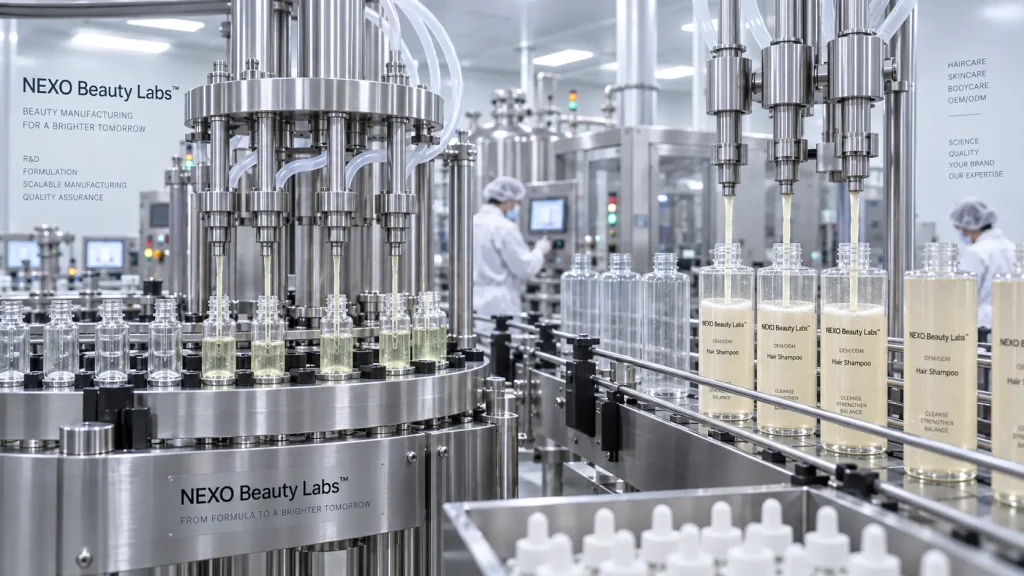
At NEXO Beauty Labs, haircare development can be approached across private label, ODM, and custom OEM pathways covering shampoo, conditioner, scalp care, hair treatments, formulation, sensory design, packaging, stability evaluation, product testing, scale-up, and commercial manufacturing.
Whether you’re starting with a strengthening shampoo, high-performance repair conditioner, or targeted scalp serum, the first product should give consumers a clear reason to understand and remember your brand.
Request a Haircare Hero SKU & OEM/ODM Consultation with NEXO Beauty Labs to discuss your first product, formulation route, packaging, MOQ, target market, and long-term haircare portfolio.