How to Develop a Scalp Serum: From Formula to OEM/ODM Production
Thinking about adding a scalp serum to your line? Here's how development actually works, from ingredients to packaging to launch.
Scalp care is moving beyond traditional anti-dandruff shampoos and oil-control treatments. Consumers increasingly treat the scalp as an extension of their skincare routine, creating new opportunities for beauty brands to develop targeted leave-in serums for scalp comfort, balance, lightweight hydration, and stronger or fuller-looking hair.
But a successful scalp serum formulation involves much more than combining a few trending ingredients.
Product positioning, ingredient architecture, texture, application method, packaging compatibility, testing, claims, MOQ, and manufacturing strategy all influence whether the finished product works as a complete commercial concept.
This guide explains how beauty brands can develop a scalp serum from initial concept through formulation, packaging, testing, and commercial manufacturing.
What Is a Scalp Serum?
A scalp serum is a lightweight leave-in product designed to be applied directly to the scalp rather than primarily to the lengths and ends of the hair.
Depending on the formulation, scalp serums can be developed around concerns such as:
- Scalp dryness and comfort
- Excess oil and visible buildup
- Scalp balance
- Sensitive scalp care
- Weak or fragile-looking hair
- Fuller-looking roots
- Daily scalp wellness
Because the scalp is skin, scalp serum development often combines skincare formulation principles with the sensory and application requirements of professional hair care.
That makes absorption, residue, ingredient compatibility, scalp comfort, and delivery format particularly important.
Scalp Serum vs. Hair Serum: What’s the Difference?
The terms sound similar, but the product targets are different.
This distinction is important during formulation because a product designed for direct scalp use should not unnecessarily weigh down the roots or leave visible residue.
For brands exploring a broader range of scalp, root, and hair-care product directions, you can also browse our Scalp & Hair Care Collection.
Step 1: Define Your Scalp Serum Positioning
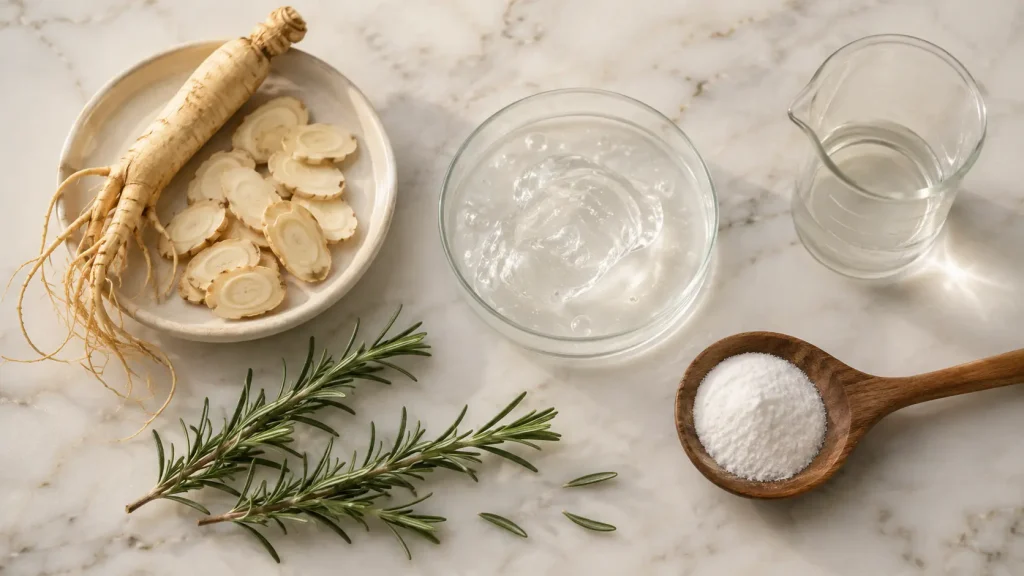
The first decision isn’t which ingredient to use. It’s what problem the product is actually designed to address.
Trying to combine every possible scalp benefit into one serum can create an unfocused product with a complicated formula and unclear marketing story.
Instead, begin with one primary positioning direction.
Scalp Strengthening
A strengthening-focused serum may target consumers concerned about fine, fragile, heat-styled, or color-treated hair.
A formulation concept might combine a recognizable botanical such as ginseng with supporting ingredients such as:
- Peptides
- Caffeine
- Arginine
- Niacinamide
- Panthenol
- Plant amino acids
The cosmetic positioning can focus on maintaining a healthy-looking scalp environment while supporting the appearance of stronger and more resilient hair.
Scalp Balance & Microbiome-Inspired Care
For oily or combination scalps, brands may focus on lightweight hydration, freshness, visible buildup, and scalp comfort rather than aggressive oil removal.
A microbiome-inspired scalp serum concept might include ingredients such as:
- Green tea extract
- Ferment-derived ingredients
- Zinc PCA
- Niacinamide
- PHA
- Panthenol
This type of concept can work well for daily scalp wellness, oily-scalp routines, active lifestyles, and lightweight haircare positioning.
Fuller-Looking Hair & Root Care
Another popular direction focuses on the scalp and root environment while supporting the appearance of fuller or denser-looking hair.
A formulation concept may include:
- Rosemary
- PDRN-inspired or biotech ingredient systems
- Caffeine
- Peptides
- Niacinamide
- Panthenol
- Amino acids
The exact ingredients matter less than whether the complete formulation supports one clear product concept.
Explore Three Scalp Serum Development Directions
The positioning examples above can translate into very different finished products. These NEXO Beauty Labs concepts show how ingredient strategy, texture, application, and product story can be developed around three distinct scalp-care directions.
STRENGTHENING DIRECTION
A ginseng-led concept for brands developing root-focused scalp care around stronger-looking, more resilient hair and everyday scalp wellness.
SCALP BALANCE DIRECTION
A lightweight green-tea and microbiome-inspired direction for brands targeting scalp freshness, balance, comfort, and oily-scalp routines.
DENSITY-FOCUSED DIRECTION
A rosemary- and PDRN-inspired concept for brands building root-care products around fuller- or denser-looking hair and a more treatment-led scalp routine.
Step 2: Build an Ingredient System, Not an Ingredient List
One of the most common mistakes in scalp serum development is adding ingredients simply because they’re currently popular.
A stronger approach is to build an ingredient architecture where different components have clearly defined roles.
Hero Ingredient
This is the ingredient consumers most easily associate with the product story.
Examples can include:
- Ginseng
- Rosemary
- Green tea
- Peptides
- Ferment-derived ingredients
Supporting Ingredients
Supporting ingredients reinforce the main positioning rather than competing with it.
Depending on the formulation concept, options may include:
- Niacinamide for scalp-conditioning and barrier-focused concepts
- Panthenol for lightweight hydration and comfort
- Zinc PCA for oily-scalp positioning
- Caffeine for root and density-focused product concepts
- Amino acids for hair-resilience positioning
- PHA for gentle scalp surface exfoliation concepts
- Peptides for advanced scalp-care positioning
Formula Support System
The most marketable ingredients aren’t the only important ones.
A professional scalp serum also needs an appropriate base, solubilization or emulsification system where required, viscosity control, preservation strategy, chelation or stabilization support where appropriate, and other functional ingredients that allow the formula to remain usable and manufacturable.
The goal isn’t the longest INCI list.
It’s a clear, stable, comfortable formula where every ingredient supports the same product strategy.
Step 3: Choose the Right Scalp Serum Texture
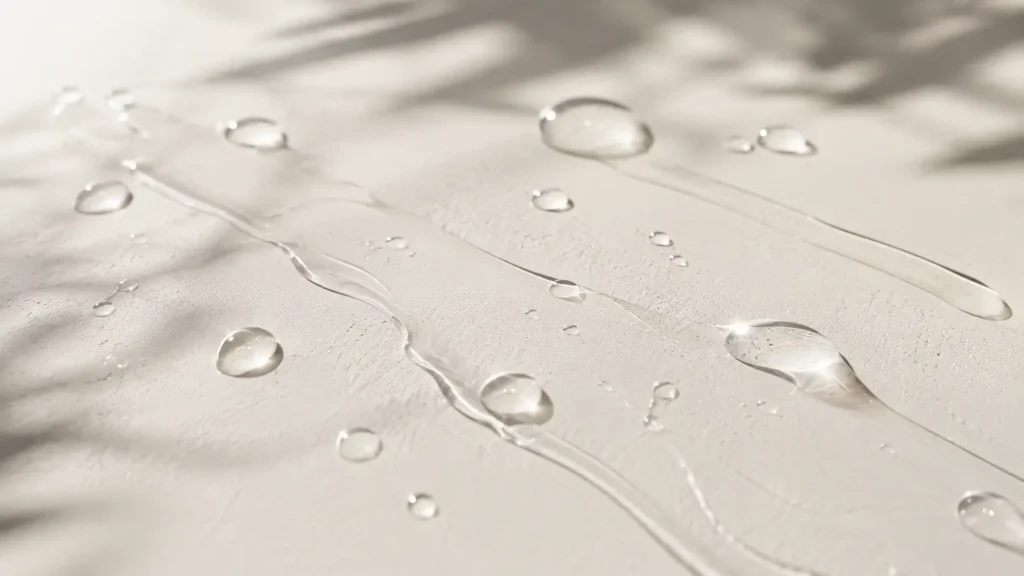
Texture is particularly important because a scalp serum is applied underneath or between the hair.
A formula that feels sticky, greasy, or heavy can flatten the roots and make daily use inconvenient even if the ingredient concept looks strong on paper.
Possible texture directions include:
- Lightweight water serum
- Cooling scalp essence
- Lightweight gel serum
- Low-residue emulsion
- Leave-in scalp tonic
- Fine scalp mist
The target consumer should influence the texture.
Fine-hair or oily-scalp products usually benefit from an extremely lightweight finish, while comfort-focused products for dry scalps may need more conditioning.
Step 4: Choose Your Formulation Development Path
Once the concept is clear, brands generally have three broad development options.
Private Label Scalp Serum
Private label typically starts with an existing ready-developed scalp serum.
Customization may focus primarily on:
- Packaging
- Branding
- Fragrance
- Selected product details
This can be useful for brands that want to enter the scalp care category with less original formulation development.
ODM Scalp Serum
ODM development generally starts with a manufacturer-developed formula or platform that can be adapted within an agreed scope.
Possible customization can include:
- Ingredient combinations
- Selected actives
- Fragrance
- Texture
- Product positioning
- Packaging
This provides a balance between development speed and product differentiation.
Custom OEM Scalp Serum
A more customized OEM project is suitable when the formula itself needs to be a major part of the brand’s differentiation.
Development can provide greater control over:
- Ingredient architecture
- Formula specifications
- Texture
- Sensory profile
- Packaging compatibility
- Product positioning
Greater customization usually means additional R&D, sampling, technical evaluation, and development work.
Step 5: Develop Samples & Evaluate Consumer Experience
A scalp serum can look excellent on an ingredient sheet and still fail if consumers don’t enjoy using it.
During sample evaluation, review:
- Absorption speed
- Greasiness
- Stickiness
- Scalp comfort
- Fragrance
- Residue
- Ease of application
- Compatibility with hairstyles
- Effect on root appearance
- Dispensing control
This is particularly important for leave-in formulas designed for frequent or daily use.
The best scalp serum should fit naturally into the consumer’s routine instead of creating another inconvenient step.
Step 6: Stability, Microbiological & Packaging Compatibility Evaluation
Before commercial manufacturing, the approved formula needs appropriate technical evaluation.
Depending on the product, this may include:
- Appearance
- Viscosity
- Odor
- pH where relevant
- Physical stability
- Microbiological quality
- Preservative-system performance where applicable
- Packaging interaction
- Dispensing performance
The appropriate evaluation program depends on the actual formula, packaging, intended use, claims, and target market.
This is also why packaging should be considered during formulation development rather than selected only after the formula is completely finished.
Step 7: Choose the Right Scalp Serum Applicator & Packaging
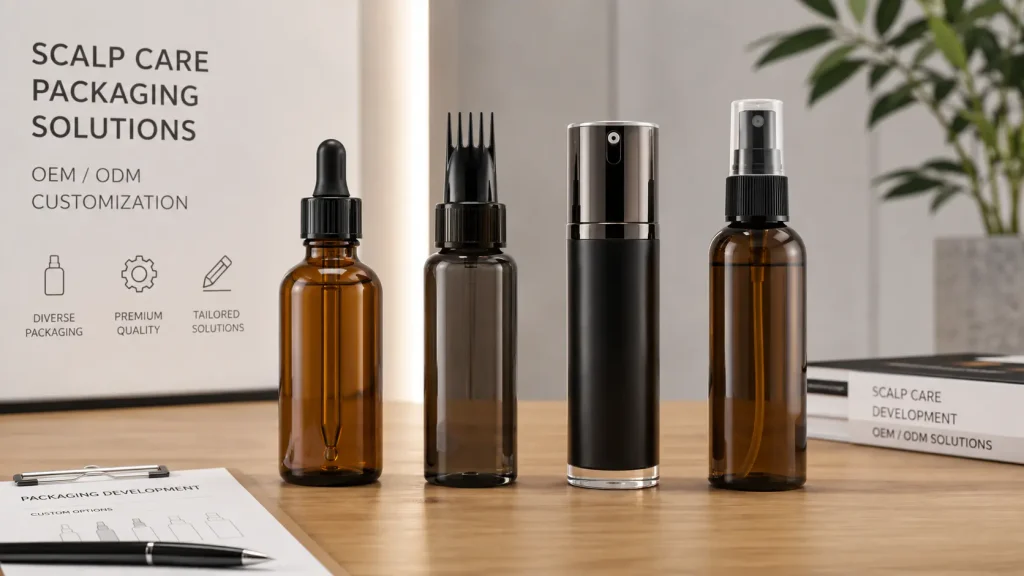
For scalp products, packaging is part of the product experience.
Dropper Bottle
A familiar premium format for lightweight liquid serums. It offers flexible dosage but requires the consumer to manually part the hair and place the product on the scalp.
Precision Scalp Applicator
A narrow nozzle or dedicated scalp applicator helps deliver formula directly between the hair and onto the intended area.
This can support a more targeted, treatment-inspired user experience.
Airless Pump
Suitable for some serum or light-emulsion textures where controlled dispensing and a skincare-inspired appearance are important.
Fine Mist Spray
Useful for low-viscosity scalp refresh products or broader-area application.
Sustainability-Focused Packaging
Depending on the project and packaging availability, PCR materials, reduced-material formats, refill concepts, or other packaging strategies may also be considered.
The final choice should be based on formula viscosity, dosage, compatibility, application area, positioning, target cost, and user experience.
Step 8: Review Scalp Serum Claims Before Launch
Claims should be considered during development rather than written after the product is already finished.
Scalp care sits close to treatment-oriented categories, so strong claims need particular attention.
For cosmetic positioning, brands can focus on areas such as:
- Supporting a healthy-looking scalp environment
- Improving scalp comfort
- Helping maintain scalp balance
- Reducing the appearance of excess oil
- Minimizing visible buildup
- Supporting stronger-looking hair
- Supporting fuller or denser-looking hair
- Providing lightweight daily scalp care
The final wording should match the formula, available supporting evidence, intended product category, and requirements of the target market.
Step 9: Scale Up & Manufacture the Scalp Serum

Once the formula, packaging, specifications, and required evaluations are ready, the project can move toward commercial manufacturing.
A laboratory formula still needs to translate into a repeatable production process at larger scale.
Commercial production can include:
- Raw material preparation
- Controlled weighing and mixing
- Scale-up of the approved formula
- In-process quality checks
- Filling
- Packaging
- Batch coding
- Finished-product inspection
Manufacturing procedures depend on the actual formula and product format.
What Affects Scalp Serum MOQ?
There is no universal MOQ for scalp serum manufacturing.
Minimum order quantity can depend on:
- Formula batch size
- Existing vs. custom formulation
- Raw material supplier minimums
- Packaging availability
- Custom bottle or applicator requirements
- Printing and decoration
- Secondary packaging
- Degree of customization
Existing formulas and stock packaging may sometimes allow a more flexible launch plan, while custom ingredients or packaging can introduce additional supplier minimums.
Brands should evaluate MOQ together with product cost, inventory risk, packaging strategy, and expected sales volume.
How Long Does It Take to Develop a Scalp Serum?
There is no single development timeline that applies to every scalp serum.
The schedule depends on factors such as:
- Private label, ODM, or custom development
- Formula complexity
- Number of sample revisions
- Ingredient availability
- Technical evaluation
- Packaging sourcing
- Custom applicator development
- Artwork approval
- Production scheduling
- Target-market requirements
An existing formulation platform requiring limited changes will generally involve less development work than a fully customized scalp serum.
The most useful timeline is a project-specific schedule covering formula development, samples, packaging, evaluation, manufacturing, and delivery.
Frequently Asked Questions
What ingredients are commonly used in scalp serums?
Ingredient selection depends on the positioning. Common options include rosemary, ginseng, green tea, peptides, caffeine, niacinamide, panthenol, amino acids, Zinc PCA, ferment-derived ingredients, and gentle exfoliating ingredients such as PHA.
The best combination depends on whether the product focuses on scalp balance, comfort, buildup, strengthening, or fuller-looking hair.
What is the best base for a scalp serum?
There isn’t one universal base. Many daily-use scalp serums use lightweight aqueous or gel-serum systems to reduce residue, while other concepts may require different vehicles depending on the ingredients, target scalp type, and desired sensory profile.
Can I develop a scalp serum for oily scalps?
Yes. Oily-scalp products can be designed around lightweight textures, freshness, visible buildup, comfort, and scalp-balance positioning without creating unnecessary heaviness at the roots.
Can a scalp serum be silicone-free or alcohol-free?
Depending on the product brief, silicone-free, alcohol-free, fragrance-free, vegan, or other formulation directions can be explored.
These requirements should be identified early because they influence the formulation system and available ingredient choices.
What packaging is best for a scalp serum?
Droppers, precision scalp applicators, airless pumps, and fine mist sprays are all possible. The best option depends on viscosity, dosage, application area, packaging compatibility, target cost, and consumer experience.
Can I start with an existing scalp serum formula?
Yes. Brands that want to reduce initial formulation development can start with an existing private label or ODM platform and customize selected ingredients, fragrance, texture, packaging, and branding depending on the manufacturer.
What’s the difference between private label and custom scalp serum development?
Private label generally begins with an existing ready-developed product, while custom development involves building the formula around a more specific brand brief. ODM often sits between the two by allowing selected customization of a manufacturer-developed formulation platform.
Do I need to make hair-growth claims?
No. A scalp serum can be positioned around scalp wellness, comfort, balance, stronger-looking hair, or fuller-looking roots without relying on direct hair-growth claims.
Claims should always be reviewed according to the product formula, available evidence, and target market.
What affects the MOQ for a scalp serum?
MOQ can be influenced by formula batch size, raw materials, packaging, applicators, printing, customization, and supplier minimums. Confirm the complete product MOQ rather than looking only at the bulk formula.
How much does it cost to develop a scalp serum?
Cost depends on the level of formulation customization, ingredients, sampling, testing, packaging, MOQ, decoration, and manufacturing requirements. A detailed product brief is the best starting point for obtaining an accurate project quotation.
Develop Your Scalp Serum with NEXO Beauty Labs
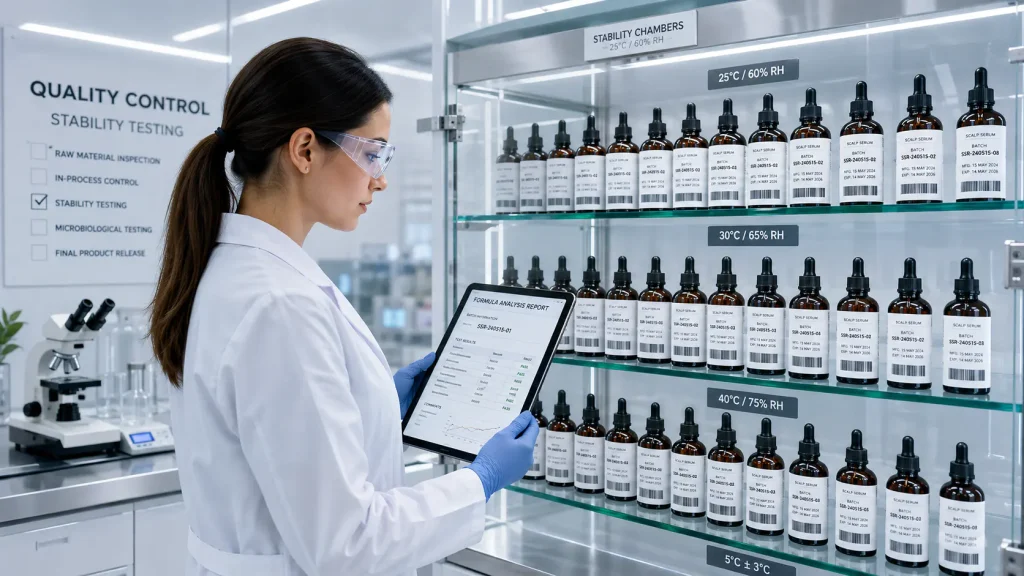
A successful scalp serum starts with a clear consumer need and a formulation strategy that connects ingredients, texture, packaging, claims, and manufacturing.
At NEXO Beauty Labs, we support beauty brands across private label, ODM, and custom OEM scalp care development.
Depending on the project, development can include:
- Existing scalp serum formulation options
- Custom cosmetic formulation
- Ingredient-system customization
- Texture optimization
- Sample development
- Packaging and applicator recommendations
- Private label and ODM development
- Custom OEM manufacturing
- MOQ planning based on formula and packaging
- Product documentation and target-market support
Whether you’re developing a ginseng strengthening concept, a microbiome-inspired scalp serum, or a rosemary-focused fuller-looking hair product, the goal is the same: create a clear product concept that consumers understand and a formula that can be manufactured consistently at commercial scale.
Request a Scalp Serum OEM/ODM Consultation with NEXO Beauty Labs to discuss your formulation concept, ingredients, texture, applicator, MOQ, packaging, and launch requirements.