Product Formulation: How to Do It and Its Importance
What is cosmetic product formulation, and why does it matter so much? Here's how the process works and what separates a good formula from a great one.
Every cosmetic product starts with an idea. Cosmetic product formulation is what turns that idea into a real product with the right texture, performance, stability, sensory experience, and manufacturing characteristics.
But formulation is much more than choosing a few trending ingredients and mixing them together.
A professional cosmetic formula needs to consider how ingredients interact, what concentrations make sense, how the product feels during use, how it behaves over time, whether the packaging works with the formula, what the product is expected to cost, and whether it can eventually be produced consistently at commercial scale.
This guide explains what cosmetic formulation is, why it matters, what goes into a formula, and how the formulation development process works from concept to production-ready product.
What Is Cosmetic Product Formulation?
Cosmetic product formulation is the process of designing and combining ingredients in defined proportions to create a finished skincare, haircare, body care, or personal care product.
A formula determines much more than the ingredient list.
It influences:
- How the product performs
- Texture and viscosity
- Spreadability and absorption
- Fragrance and appearance
- Product stability
- Microbiological protection
- Packaging compatibility
- Manufacturing feasibility
- Finished-product cost
Two products can contain many of the same recognizable ingredients and still perform very differently because the ingredient ratios, supporting ingredients, processing method, pH, viscosity, preservation strategy, and overall formulation architecture are different.
That’s why a strong cosmetic product is built around the complete formula, not simply a list of hero ingredients.
Why Is Cosmetic Formulation So Important?
Formulation influences nearly every part of the finished product — from performance and safety to consumer experience and commercial viability.
1. Product Performance
A formula needs to support the product’s intended purpose.
For example, a hydrating serum doesn’t become effective simply because hyaluronic acid or another recognizable moisturizing ingredient appears on the ingredient list. The complete formulation — including ingredient selection, concentration, delivery system, texture, and supporting components — determines the finished product experience.
2. Stability
Ingredients need to remain compatible within the formula over the product’s intended life.
Poorly designed formulas may experience problems such as:
- Separation
- Changes in viscosity
- Color changes
- Odor changes
- Precipitation or crystallization
- Changes in appearance or texture
Formulators therefore consider stability from the early stages of development rather than waiting until the product is ready for production.
3. Product Safety
Cosmetic product safety depends on the complete product rather than one ingredient viewed in isolation.
Formulators need to consider factors such as ingredient levels, interactions, intended use, preservation, microbiological quality, packaging, and relevant target-market requirements.
The appropriate safety and testing strategy depends on the actual product rather than one universal checklist for every cosmetic.
4. Sensory Experience
Consumers experience a product through much more than its ingredient list.
They notice:
- How easily it spreads
- How quickly it absorbs
- Whether it feels sticky, rich, silky, lightweight, or dry
- How it smells
- How it leaves the skin or hair feeling afterward
These characteristics are created through formulation choices.
5. Manufacturing & Commercial Viability
A successful laboratory prototype still needs to be practical to manufacture.
The formula should also make sense within the brand’s target cost, packaging strategy, production quantity, and commercial positioning.
A formula can perform beautifully in the laboratory but still be difficult to launch if it requires impractical ingredients, unrealistic processing, unavailable packaging, or a finished-product cost far above the brand’s target price.
Start With a Cosmetic Formulation Brief
Professional formulation development starts before the first ingredient is weighed.
The manufacturer or formulation laboratory first needs to understand the product you’re trying to create.
A useful cosmetic formulation brief can include:
- Product type: serum, cream, cleanser, shampoo, body lotion, mask, oil, deodorant, or another format.
- Target consumer: who the product is designed for.
- Primary product benefits: the main experience or purpose the product should deliver.
- Ingredient direction: ingredients you want to explore or avoid.
- Texture: lightweight, rich, gel-like, silky, matte, creamy, foaming, or another sensory direction.
- Fragrance: scented, lightly scented, fragrance-free, or another direction.
- Reference products: existing products that help communicate texture, format, or market positioning.
- Target cost: the commercial cost range the formula needs to work within.
- Packaging direction: bottle, jar, tube, pump, dropper, stick, roll-on, or other format.
- Target market: where the finished product is intended to be sold.
A clear brief gives the formulator technical and commercial boundaries to work within.
STILL DEFINING YOUR PRODUCT DIRECTION?
If you are still deciding whether your next product should be a serum, cream, cleanser, mask, scalp treatment, sun-care product, body-care product, or another format, browse our Beauty Product Categories → for product-format and development inspiration before finalizing your formulation brief.
The Building Blocks of a Cosmetic Formula
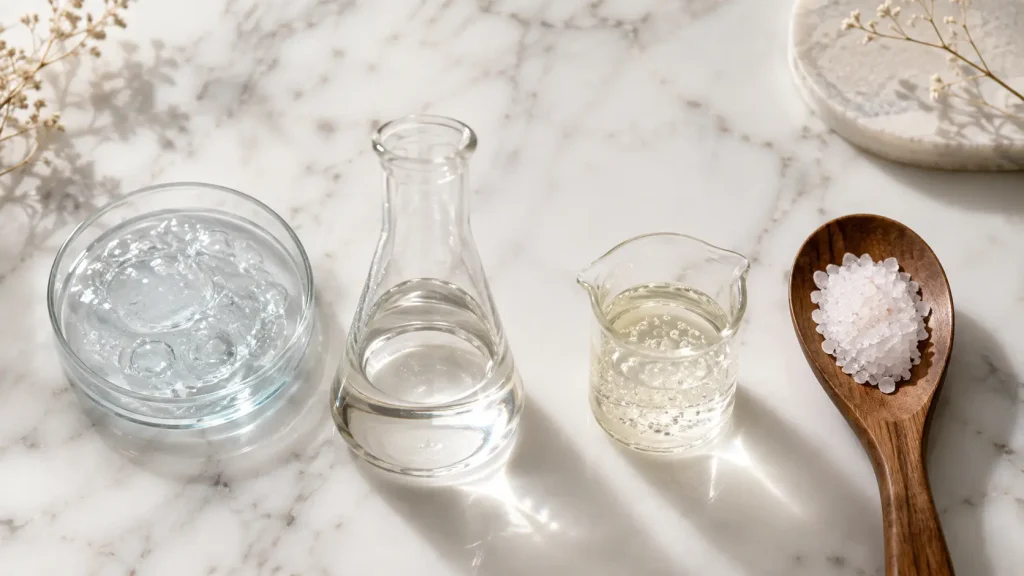
Cosmetic formulas are built from ingredients that perform different functions within the complete system.
The exact ingredient categories depend on the product.
A shampoo, facial serum, emulsion cream, cleansing oil, clay mask, and solid balm all require different formulation architectures.
The important point is that ingredients work as a system. Changing one component can affect texture, viscosity, pH, preservation, stability, appearance, or performance elsewhere in the formula.
How Cosmetic Product Formulation Works: Step by Step
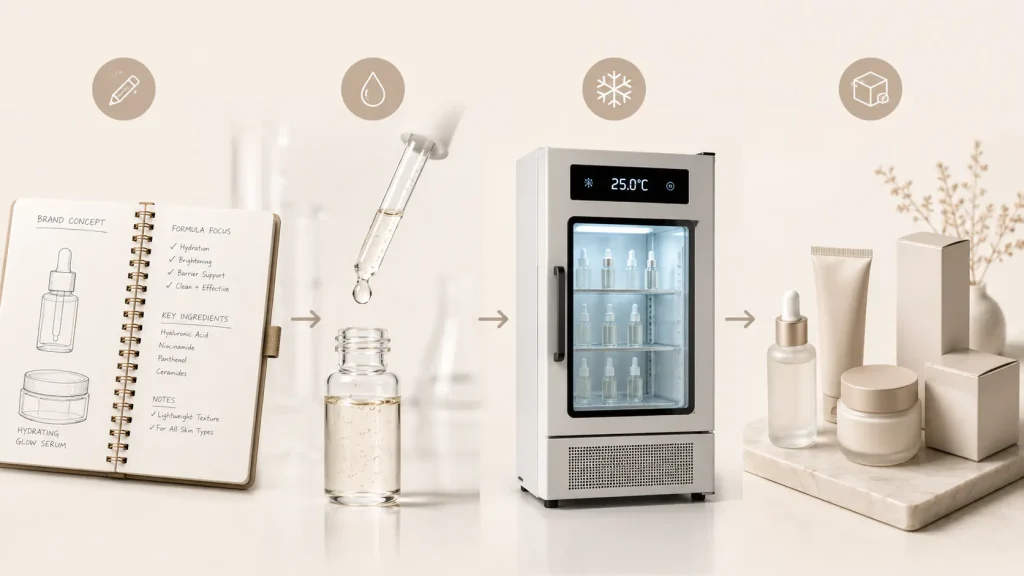
Step 1: Define the Product Brief
The process starts by translating the brand idea into a technical development target.
The formulation team reviews the intended product type, consumer, benefits, texture, ingredient direction, packaging, target price, and market.
This provides the framework for every decision that follows.
Step 2: Build the Ingredient Strategy
The formulator then selects ingredients according to the role each one needs to perform within the complete product.
This isn’t only about selecting the most marketable ingredients.
The team also needs to consider:
- Ingredient compatibility
- Appropriate usage levels
- Solubility
- pH requirements
- Processing conditions
- Texture
- Preservation
- Cost
- Supply availability
The objective is to build a coherent formula rather than an ingredient wish list.
Step 3: Develop the First Laboratory Prototype
The first prototype turns the theoretical formula into a physical product.
The cosmetic chemist establishes a preliminary composition and processing method, then evaluates how the formula behaves in practice.
Early prototypes rarely represent the final commercial product.
They provide a starting point for technical and sensory refinement.
Step 4: Evaluate Texture, Performance & Technical Characteristics
Once a prototype exists, it can be evaluated against the original brief.
Depending on the product, the team may review:
- Appearance
- Texture
- Viscosity
- pH where relevant
- Spreadability
- Absorption
- Foam characteristics
- Fragrance
- Skin or hair feel
- Dispensing behavior
The brand can also evaluate samples and provide feedback before the next revision.
Step 5: Refine the Formula
Formulation is an iterative process.
If a cream feels too heavy, a gel is too thin, a shampoo produces the wrong sensory experience, or an ingredient creates an unwanted appearance, the formula may need to be adjusted.
Changes can affect other parts of the system, so each revision needs to be considered as part of the complete formula rather than as an isolated ingredient swap.
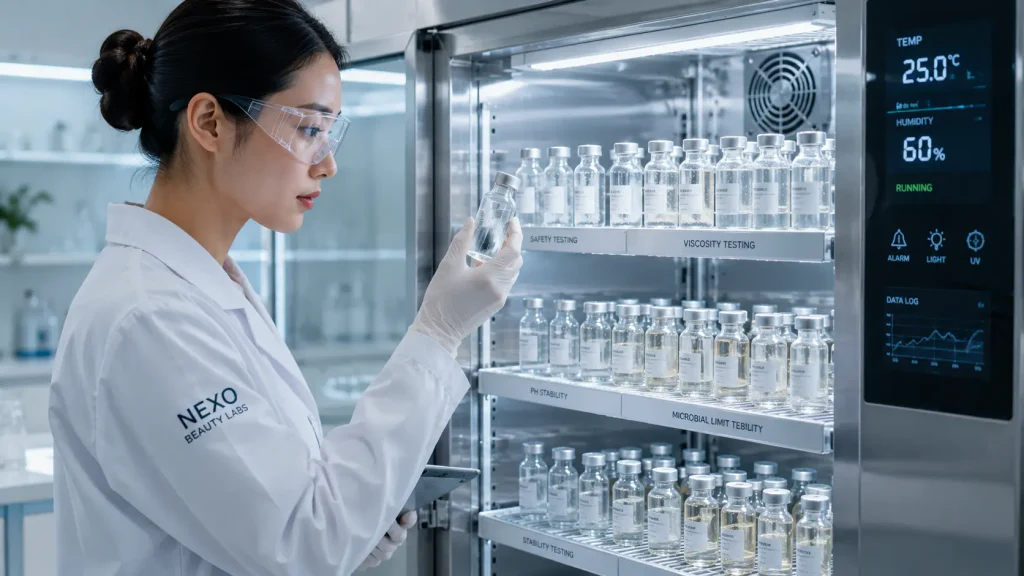
Step 6: Evaluate Stability, Microbiological Quality & Packaging Compatibility
As the formula moves closer to approval, technical evaluation becomes increasingly important.
Depending on the product, this can include areas such as:
- Stability evaluation — observing how the product’s physical and chemical characteristics perform under defined conditions over time.
- Microbiological evaluation — considering the microbiological quality of the finished product.
- Preservative-system evaluation — where applicable, assessing whether the preservation strategy provides appropriate protection for the formula and intended use.
- Packaging compatibility — evaluating whether the formula and selected packaging perform appropriately together.
The exact testing and safety-evaluation approach depends on the formula, product type, packaging, intended use, claims, and target market.
Step 7: Review Cost & Commercial Feasibility
A technically successful formula still needs to make sense commercially.
Before final approval, the team may review:
- Raw material cost
- Ingredient availability
- Supplier minimums
- Manufacturing complexity
- Packaging requirements
- Target product cost
This is why brands should communicate their intended price positioning early.
It’s much easier to formulate toward a realistic cost target from the beginning than to redesign an expensive formula after development is nearly complete.
Step 8: Final Formula Approval & Scale-Up
Once the formulation meets the agreed technical, sensory, and commercial requirements, it can move toward manufacturing transfer and scale-up.
A laboratory formula still needs to be translated into a repeatable production process using larger equipment and commercial batch sizes.
Processing parameters may therefore need to be established or refined before full-scale manufacturing begins.
At this point, formulation development transitions into the broader cosmetic manufacturing process.
If you want to see what happens after the formula is approved — from raw-material preparation and batching to filling, packaging, and quality control — continue with our
Complete Cosmetic Manufacturing Process Guide.
What Makes a Great Cosmetic Formula?
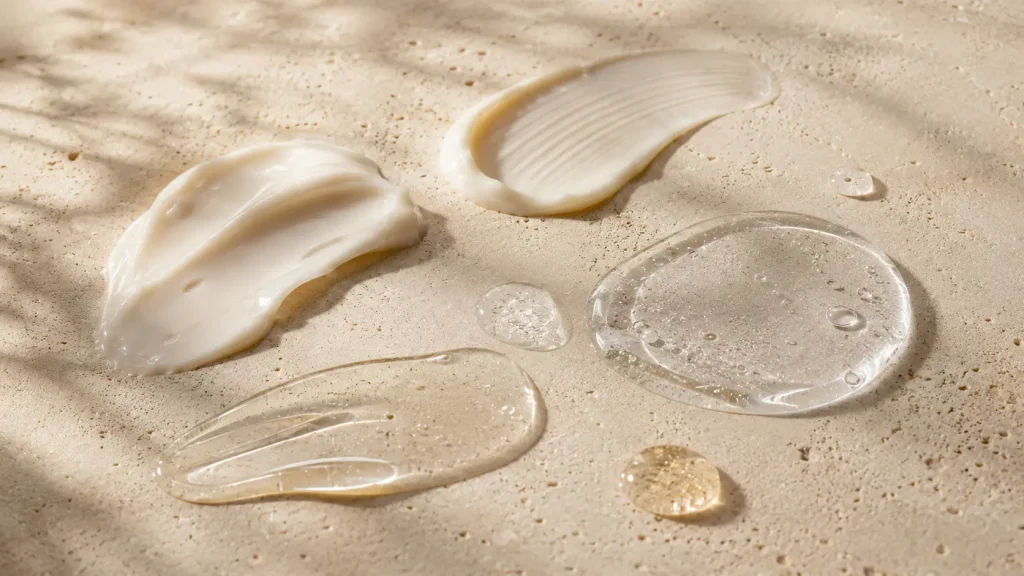
A great formula isn’t simply the one with the longest ingredient list or the largest number of trending actives.
It needs to balance several goals at once.
- Purposeful: every ingredient should have a reason for being in the formula.
- Stable: the complete system should be designed to maintain appropriate characteristics over its intended life.
- Safe for intended use: formulation and product safety need to be considered according to the complete product.
- Sensory-appropriate: the texture, fragrance, application, and after-feel should match the target consumer and positioning.
- Packaging-compatible: the formula needs to work appropriately with the selected packaging system.
- Manufacturable: the laboratory formula needs to translate into a practical, repeatable production process.
- Commercially realistic: ingredient and manufacturing costs should make sense for the brand’s intended price point.
This is why evaluating a cosmetic product only by its hero ingredients rarely tells the complete story.
Custom Cosmetic Formulation vs. Existing Formulas
Not every beauty brand needs to develop a formula entirely from the beginning.
The right route depends on your desired level of differentiation, budget, timeline, and product strategy.
Existing Formula or ODM Development
A brand may begin with an existing manufacturer-developed formula and customize selected elements where appropriate.
This can reduce the amount of original formulation work required and may be suitable when speed to market is important.
Custom Cosmetic Formulation
Custom formulation involves developing a product around a more specific brand brief and technical target.
This route can make sense when differentiation depends on areas such as:
- A specific texture
- Distinct ingredient strategy
- Specialized sensory profile
- Defined product specifications
- Unique product positioning
Greater customization usually requires more R&D, sampling, evaluation, and development work.
Formula ownership and exclusivity should be discussed separately with the manufacturer and documented in the commercial agreement rather than assumed based on the words OEM, ODM, or custom.
Common Cosmetic Formulation Challenges
Ingredient Compatibility
An ingredient may work well individually but create problems when combined with other components in the complete system.
Performance vs. Sensory Experience
The strongest possible concentration or richest texture isn’t automatically the best consumer product.
Formulators often need to balance performance goals with comfort, spreadability, absorption, fragrance, residue, and overall usability.
Stability
A prototype can look excellent immediately after it is made and still develop problems later.
That’s why stability needs to be evaluated as part of development rather than judged only from a fresh laboratory sample.
Preservation
Products that can support microbial growth require an appropriate preservation strategy designed around the complete formula, packaging, manufacturing conditions, and intended use.
Packaging Compatibility
A good formula placed in unsuitable packaging can still create problems.
The container, closure, pump, dropper, or other dispensing system should be considered as part of the finished product.
Cost
Premium ingredients, specialty technologies, difficult sourcing, and complicated manufacturing can push the finished product beyond its commercial target.
Target-Market Requirements
Ingredient restrictions, product classification, claims, labeling, and documentation requirements can differ between markets.
The intended sales market should therefore be considered before the formula is finalized.
Scale-Up
A successful small laboratory batch still needs to behave consistently when transferred to larger manufacturing equipment.
This makes manufacturability an important part of professional formulation development.
Cosmetic Formulation vs. Cosmetic Manufacturing
These two terms are closely related, but they describe different stages.
Cosmetic formulation is the development of the product itself — its ingredients, proportions, texture, characteristics, processing method, and technical specifications.
Cosmetic manufacturing is the controlled commercial production of that approved formula at scale.
In simple terms:
Formulation determines what the product is. Manufacturing determines how it is produced consistently at commercial scale.
The two need to work together because a formula that cannot be reliably scaled and manufactured isn’t yet a complete commercial solution.
How Long Does Cosmetic Formulation Take?
There is no single formulation-development timeline that applies to every product.
Development time depends on factors such as:
- Whether you’re starting with an existing or custom formula
- Formula complexity
- Number of sample revisions
- Ingredient sourcing
- Testing strategy
- Packaging development
- Technical problems discovered during development
- Target-market requirements
An existing formulation requiring limited adjustment will generally involve less development work than a highly customized product created around a new technical brief.
Rather than planning around one generic industry estimate, ask your formulation partner for a project-specific development schedule.
For a broader view of how formulation, sampling, testing, packaging, approvals, and production affect launch timing, see our Cosmetic Product Development Timeline Guide.
What Should a Beauty Brand Prepare Before Starting Formulation?
You don’t need to understand cosmetic chemistry before contacting a formulation laboratory or manufacturer.
What you do need is a reasonably clear commercial idea.
Prepare:
- Your product concept
- Target consumer
- Main product benefits
- Reference products
- Ingredient preferences
- Texture and fragrance direction
- Packaging idea
- Target retail positioning
- Expected order quantity
- Target market
- Desired launch timing
A good R&D team can then help translate those commercial goals into realistic formulation specifications.
If your product concept is still at an early stage, market direction can also help define the brief. Our Beauty Product Trends Brands Should Know Before Developing New Products looks at emerging product directions that can help brands think about category, format, positioning, and consumer demand before starting formulation.
Frequently Asked Questions
What is cosmetic product formulation?
Cosmetic product formulation is the process of selecting and combining ingredients in defined proportions to create a finished skincare, haircare, body care, or personal care product with the desired performance, stability, texture, appearance, and manufacturing characteristics.
Do I need a cosmetic chemist to formulate a beauty product?
Beauty brands don’t necessarily need their own in-house chemist. Many work with cosmetic formulation laboratories or manufacturers with R&D teams that handle technical formulation development.
What’s the difference between cosmetic formulation and manufacturing?
Formulation develops the product composition and technical specifications. Manufacturing produces the approved formula consistently at commercial scale.
How long does cosmetic formulation take?
The timeline depends on formula complexity, whether an existing formula is being adapted, the number of revisions, ingredient sourcing, testing, packaging, and other technical requirements. A project-specific schedule is more useful than one generic industry estimate.
Can an existing cosmetic formula be customized?
Often, depending on the manufacturer and formulation. Possible changes may involve fragrance, color, selected ingredients, texture, or other characteristics, but significant changes can require additional development and technical evaluation.
Can a cosmetic formula be changed after approval?
Yes, but a formulation change can affect other parts of the product system. Depending on the change, stability, preservation, packaging compatibility, specifications, or other evaluations may need to be reconsidered.
What testing does a cosmetic formula need?
There isn’t one identical test package for every cosmetic. The appropriate evaluation depends on the formula, product category, packaging, intended use, claims, and target market. Stability, microbiological quality, preservative-system performance, packaging compatibility, and other product-specific evaluations may need to be considered.
What makes a cosmetic formula stable?
Stability depends on the entire formulation system, including ingredient compatibility, concentrations, pH where relevant, emulsification or solubilization systems, preservation strategy, processing method, packaging, and storage conditions.
Is a formula with more active ingredients better?
Not necessarily. More ingredients don’t automatically create a better product. A strong formulation uses ingredients deliberately and balances performance, stability, sensory experience, compatibility, cost, and manufacturability.
What is custom cosmetic formulation?
Custom cosmetic formulation involves developing a product around a specific brand brief rather than simply selecting an existing ready-developed product. The degree of customization can include ingredient strategy, texture, fragrance, product specifications, and other characteristics.
How much does custom cosmetic formulation cost?
Cost depends on the complexity of the formula, ingredients, number of development rounds, testing, packaging requirements, and scope of R&D. The most accurate estimate comes from providing a detailed product brief to the formulation partner.
Ready to Develop Your Cosmetic Formula?
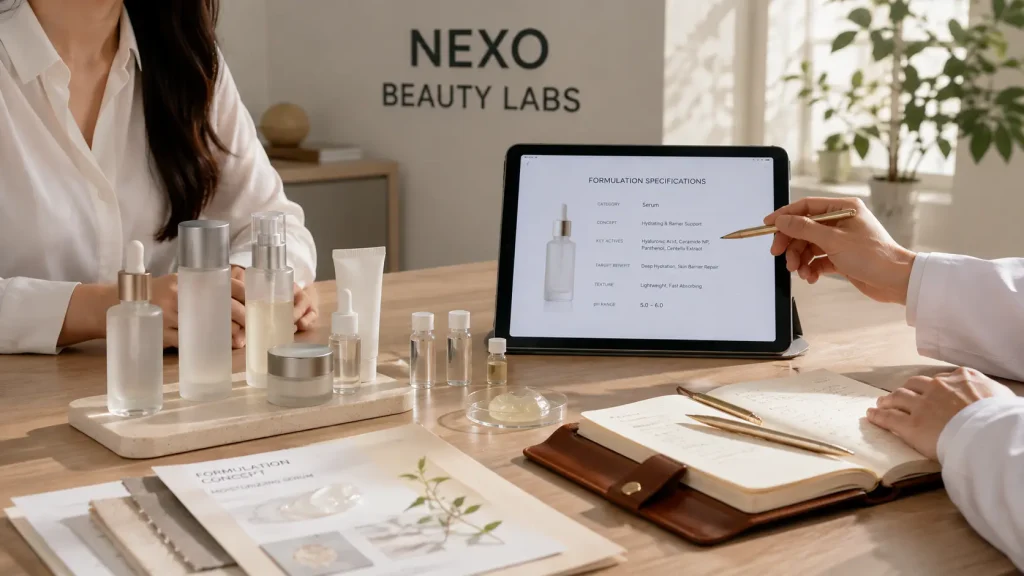
A successful cosmetic product starts with more than a good ingredient idea. It needs a formulation that balances performance, stability, sensory experience, packaging, manufacturing, and commercial requirements.
NEXO Beauty Labs supports beauty brands with existing formulation options, ODM customization, and custom OEM formulation development across skincare, haircare, body care, sun care, and personal care.
From initial product brief and laboratory prototypes through sampling, technical evaluation, packaging, and scale-up, our R&D team helps turn product concepts into production-ready formulations.
Request an OEM/ODM Consultation with NEXO Beauty Labsto talk through your product idea and see what’s realistic to formulate for your brand.