Beauty Product Trends Brands Should Know Before Developing New Products
The skincare trends 2026 and cosmetic industry trends shaping what consumers want next — and what they mean for your next product launch.
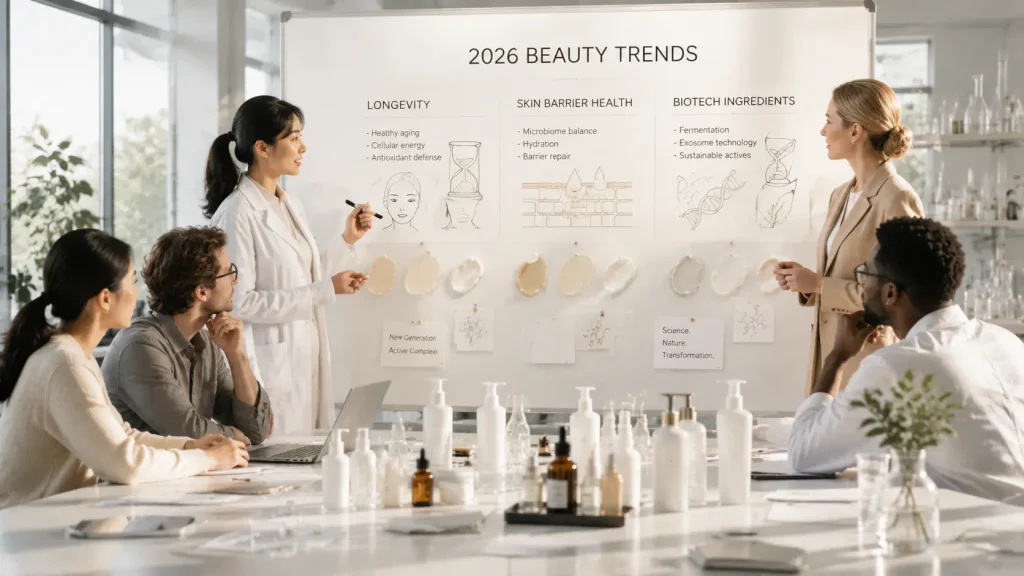
Before you finalize a formula or invest in packaging, it helps to understand where the beauty market is actually moving.
The strongest beauty product trends in 2026 aren’t simply viral ingredients or short-lived social media aesthetics. Consumers are becoming more selective about performance, value, formulation quality, convenience, and the overall experience a product delivers.
For beauty brands, that changes the product development question from “What’s trending right now?” to “Which consumer shifts are strong enough to build a product around?”
Here are 10 beauty and skincare trends shaping product development in 2026 — and what each one could mean for your next launch.
1. Skin Longevity Is Replacing Traditional Anti-Aging
One of the clearest skincare trends in 2026 is the shift from traditional “anti-aging” messaging toward skin longevity, resilience, and healthy aging.
Instead of focusing only on making wrinkles or other visible signs of aging disappear, longevity-oriented skincare takes a broader approach: maintaining skin function, supporting the barrier, protecting against environmental stress, and helping skin remain healthy over time.
This doesn’t mean anti-aging products are disappearing. It means the story around them is becoming more sophisticated.
What it means for your product: if you’re developing products for mature skin or preventative skincare, consider positioning around long-term skin health rather than aggressive “reverse aging” language.
Product concepts may combine areas such as:
- Barrier-support ingredients
- Antioxidants
- Peptides
- Fermented ingredients
- Hydration and lipid support
- Daily environmental protection
The important part is not simply adding the word “longevity” to existing packaging. The formula and product story should support the positioning in a credible way.
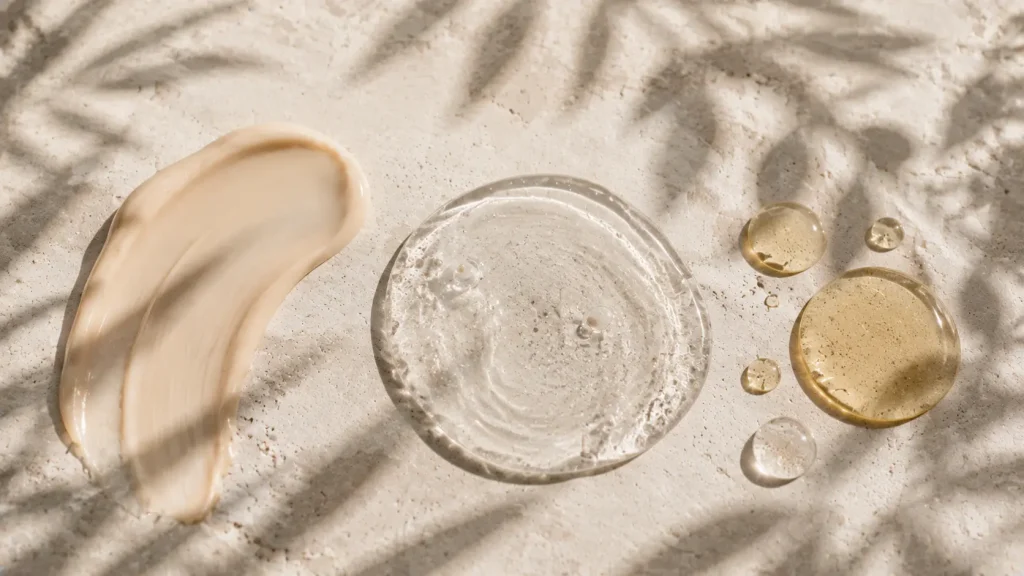
2. Barrier-First Skincare Is Becoming the Baseline
Skin barrier care is no longer a niche response to over-exfoliation. It’s becoming part of how consumers evaluate everyday skincare.
After years of aggressive exfoliating acids, active stacking, and complicated routines, many consumers are moving toward formulas designed to deliver results while maintaining comfort and barrier integrity.
This creates opportunities well beyond standalone barrier creams.
What it means for your product: barrier-supportive formulation can be incorporated into cleansers, serums, moisturizers, masks, sunscreens, and even products containing stronger active ingredients.
Depending on the formulation, ingredients may include:
- Ceramides
- Cholesterol and fatty acids
- Panthenol
- Niacinamide
- Ectoin
- Centella asiatica
- Postbiotic or fermented ingredients
The broader opportunity is to design products around results without unnecessary barrier disruption.
Explore This Product Direction: For brands developing barrier-focused creams, serums, masks, lotions, and related skincare concepts, browse our Barrier Repair Product Collection →
3. Biotech Ingredients Are Moving Further Into Mainstream Beauty
Biotechnology is becoming increasingly visible in cosmetic formulation.
Fermentation-derived ingredients, biomimetic materials, advanced peptides, and other biotech-enabled ingredients allow formulators to explore new approaches to performance, consistency, sourcing, and differentiation.
But biotech itself isn’t enough to create a strong product.
As ingredient literacy grows, consumers and retailers are becoming more skeptical of formulas that simply add a trending ingredient at a token level for marketing purposes.
What it means for your product: use biotechnology when it supports a real formulation strategy rather than simply providing a fashionable ingredient name.
For a B2B beauty brand, strong differentiation may come from:
- Fermented actives
- Advanced peptide systems
- Biomimetic ingredients
- Next-generation delivery systems
- Biotech-derived alternatives to difficult-to-source materials
The strongest story is usually what the technology contributes to the finished formula, not how futuristic the ingredient sounds.

4. AI & Data Are Changing Beauty Personalization
Personalized beauty has been discussed for years, but AI and improved digital analysis tools are making the concept more practical.
Consumers increasingly encounter:
- AI-assisted skin analysis
- Personalized routine recommendations
- Diagnostic questionnaires
- Concern-specific product matching
- Data-driven beauty consultations
For most beauty brands, this does not mean manufacturing a completely unique formula for every customer.
What it means for your product: personalization can happen at the portfolio level.
For example, instead of launching one generic serum, a brand could develop clearly differentiated variations for dry, oily, sensitive, blemish-prone, or mature skin.
The clearer the product is about who it’s for and what problem it solves, the easier it becomes to integrate into personalized discovery tools.
5. Fewer Products, More Functions
The era of assuming that more steps automatically create a better routine is losing momentum.
Consumers increasingly want products that perform multiple useful functions without requiring complicated layering.
This is driving demand for hybrid formats such as:
- Moisturizers with active skincare benefits
- Skin tints with skincare ingredients
- Lip products combining color and treatment
- Serums that combine hydration, barrier care, and targeted actives
- Cleansers designed to clean without leaving skin feeling stripped
- Hair products combining styling and conditioning benefits
What it means for your product: don’t add functions simply to create a longer claims list. Look for benefits that naturally belong together and make the consumer’s routine easier.
A well-designed multifunctional product can create a stronger reason to buy than another single-purpose SKU competing in an already crowded category.
6. Texture & Sensorial Experience Are Product Differentiators
Ingredient lists matter, but consumers also judge products by how they feel from the first application.
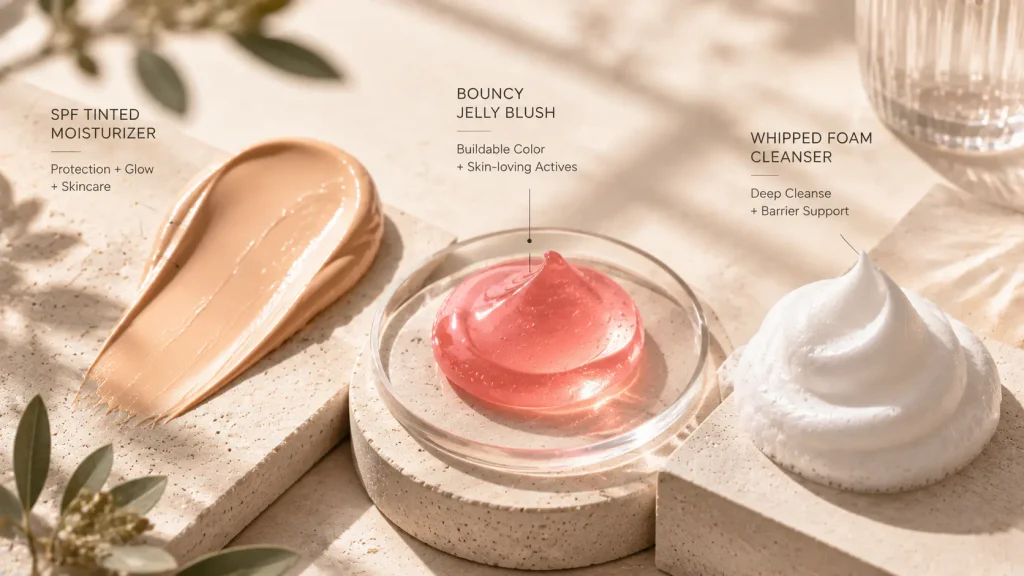
In 2026, texture is becoming an increasingly visible source of differentiation, particularly in categories where formulas otherwise look similar on paper. Industry trend reporting highlights jelly creams, bouncy gels, airy foams, soft-matte hybrids, and other sensorial formats as notable development areas.
Examples include:
- Jelly creams
- Whipped or cloud-like textures
- Bouncy gel serums
- Water-breaking creams
- Transforming balm-to-oil textures
- Lightweight bi-phase formulas
- Soft-matte skincare-makeup hybrids
What it means for your product: sensory experience should be considered during formulation development, not treated as something that can be fixed at the end.
A memorable texture can make an otherwise familiar product category feel new.
7. SPF Is Moving Into Hybrid Beauty Formats
Sun care is increasingly being developed around convenience, wearability, and integration into the rest of the beauty routine.
Rather than treating sunscreen only as a traditional standalone cream, product developers are exploring formats that combine protection with cosmetic elegance and other beauty benefits.
Examples can include:
- Lightweight facial sunscreens
- Invisible sunscreen sprays
- Matte sunscreen sticks
- Tinted sunscreen products
- Skincare-SPF hybrids
- Color cosmetics incorporating sun protection where regulations allow
What it means for your product: for brands developing sun care, the opportunity isn’t simply higher SPF. Texture, finish, ease of reapplication, compatibility with makeup, and climate suitability can all help differentiate the finished product.
Sun protection products are also highly dependent on target-market regulations, permitted filters, testing, claims, and labeling requirements, so the intended sales market should be defined early in development.
Explore This Product Direction: If your brand is evaluating sunscreen lotions, sticks, mists, or other daily sun-care formats, explore our Sun Care Product Collection →
8. Scalp, Hair & Body Care Are Borrowing From Skincare
One of the broader changes in beauty is the expansion of skincare thinking beyond the face.
Scalp-focused haircare is becoming more visible, with consumers paying greater attention to the scalp environment rather than treating shampoo only as a cleansing step. 2026 beauty coverage has also highlighted scalp-first haircare as a growing area.
At the same time, body care is adopting ingredients, textures, and positioning once associated mainly with facial skincare.
This creates room for products such as:
- Scalp serums
- Exfoliating scalp treatments
- Barrier-supportive shampoos
- Hair-density and scalp-care concepts
- Active body serums
- Barrier-focused body creams
- Exfoliating and brightening body treatments
What it means for your product: don’t think of skincare, haircare, and body care as completely separate innovation worlds.
A successful facial skincare concept may reveal an opportunity in scalp or body care — as long as the formula is properly designed for the new use area.
Explore This Product Direction: For brands developing scalp serums, shampoos, conditioners, hair treatments, and scalp-focused product concepts, browse our Scalp & Hair Care Collection →
9. Proof, Performance & Value Matter More Than Hype
Consumers have more ingredient knowledge than they did a few years ago, and they’re increasingly skeptical of vague claims, viral hero ingredients, and products built primarily around marketing language.
This is happening at the same time that shoppers remain highly aware of price and value. McKinsey notes continued pressure from value-conscious consumers and reports that lower-priced skincare brands capable of delivering visible results and clinical credibility are gaining acceptance.
What it means for your product: a premium price increasingly needs a clear reason behind it.
That might come from:
- A differentiated formulation
- Meaningful ingredient levels
- Strong sensory performance
- Testing or substantiation appropriate to the claims
- Innovative delivery or packaging
- A clearly defined consumer problem
The same principle applies to “clean,” “natural,” “clinical,” “biotech,” and “longevity” positioning: the label itself isn’t the product strategy.
Consumers increasingly want to understand what the product does, why it was formulated that way, and whether the benefit justifies the price.
10. Sustainability Is Becoming More Specific
Sustainability hasn’t disappeared, but broad phrases such as “eco-friendly” are less useful when they aren’t supported by something concrete.
Beauty brands are increasingly looking at specific decisions within the product and supply chain, such as:
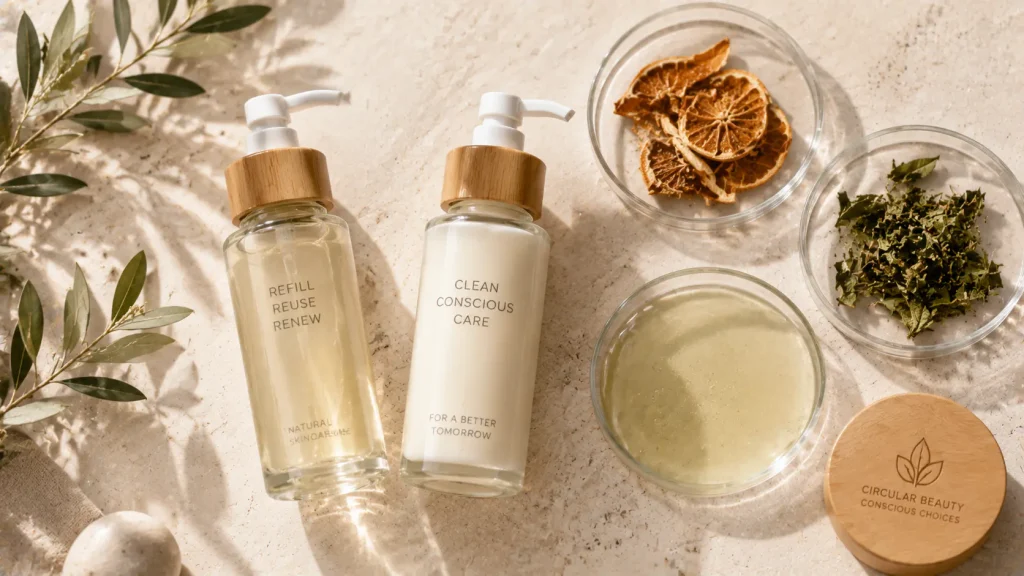
- Refillable or reusable packaging systems
- Reduced packaging weight
- Recyclable material choices where practical
- Upcycled ingredients
- Responsible sourcing
- More efficient secondary packaging
What it means for your product: choose sustainability improvements you can explain clearly rather than trying to attach a broad environmental claim to every part of the product.
A smaller, specific improvement that can be supported is generally more credible than an ambitious claim without clear evidence.
How Should Beauty Brands Use 2026 Trends?
The biggest mistake is trying to put every trend into one product.
A longevity serum doesn’t also need to be personalized, refillable, jelly-textured, AI-powered, microbiome-focused, and built around five trending ingredients.
Strong product development usually starts by choosing one primary consumer need and then selecting one or two relevant trends that make the concept stronger.
Before moving into formulation, ask:
- Does this trend fit our target customer?
- Does it fit our brand positioning?
- Can the formula genuinely support the story?
- Can we explain the benefit clearly?
- Will the trend still make sense by the time the product launches?
- Can we manufacture it within our target cost and MOQ?
That last question matters because cosmetic product development takes time. A trend that lasts only a few weeks on social media may be gone before a custom formulation reaches commercial production.
From Beauty Trend to Product Concept
For brands working with an OEM/ODM manufacturer, trends become most useful when they’re translated into specific product briefs.
For example:
- Longevity + barrier care → peptide and barrier-support facial serum
- Biotech + scalp care → fermented-active scalp serum
- Sensorial + minimalism → lightweight multi-benefit jelly moisturizer
- Hybrid beauty + SPF → skincare-inspired lightweight sunscreen format
- Body skincare → active body serum or barrier-repair body treatment
- Sustainability + premium positioning → concentrated formula with carefully selected packaging
The objective isn’t to copy a trending product already on the market. It’s to identify the consumer behavior behind the trend and develop something that fits your own brand.
Once a trend has been translated into a clear product concept, the next step is determining how that idea moves through formulation, sampling, packaging, testing, manufacturing, and commercial launch. Our Beauty Product Manufacturing Guide: From Concept to Market explains that development journey in more detail.
Frequently Asked Questions
What are the biggest beauty trends in 2026?
Major 2026 beauty trends include skin longevity, barrier-focused skincare, biotech ingredients, AI-assisted personalization, multifunctional products, sensorial textures, hybrid SPF formats, scalp-focused haircare, evidence-led product claims, and more specific sustainability strategies.
What skincare trends are growing in 2026?
Skin longevity, barrier health, biotech-enabled formulations, simplified routines, multifunctional skincare, and stronger emphasis on product efficacy are among the most visible skincare directions in 2026.
Is anti-aging skincare going away?
No. The consumer need isn’t disappearing, but the positioning is evolving. Many products are shifting from aggressive “anti-aging” language toward healthy aging, skin longevity, resilience, protection, and long-term skin function.
Are biotech ingredients worth developing products around?
They can create useful differentiation when the ingredient or technology contributes meaningfully to the formula. A biotech label alone isn’t enough; the formulation, ingredient level, performance, stability, and product story still need to make sense together.
Should a new beauty brand follow trends?
Trends can help identify emerging opportunities, but they shouldn’t replace a clear brand strategy. New brands are usually better served by choosing a strong consumer problem first and using relevant trends to strengthen the solution.
Which beauty trend is best for a new product launch?
There isn’t one trend that’s right for every brand. The strongest opportunity depends on your customer, category, price point, target market, brand positioning, and manufacturing capabilities.
How early should I involve a cosmetic manufacturer?
Ideally, involve your manufacturer while the product concept is still flexible. An experienced R&D team can help determine whether the desired ingredients, texture, packaging, claims, MOQ, cost target, and launch timeline are realistic before you invest heavily in the concept.
Ready to Turn a Beauty Trend Into a Real Product?
Knowing what’s trending is the easy part. Turning the right trend into a stable, manufacturable product that fits your brand, budget, and target market is where product development really begins.
NEXO Beauty Labs works with beauty brands across skincare, haircare, body care, sun care, and personal care, supporting product development from concept and formulation through sampling, packaging, testing, and commercial manufacturing.
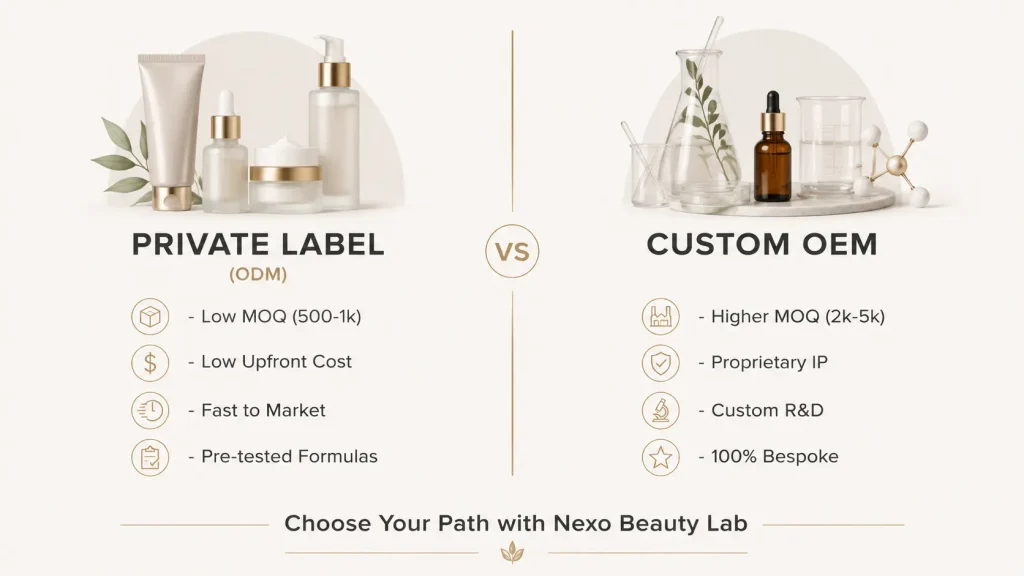
Whether you want to customize an existing ODM formula or develop a more differentiated OEM product, our R&D team can help you evaluate which trends make sense for your target consumer — and which ones are better left on social media.
Request an OEM/ODM Consultation with NEXO Beauty Labs to discuss your next beauty product concept, formulation direction, packaging, MOQ, and launch plan.