Private Label Skincare Products: A Complete Guide for New Beauty Brands
New to private label skincare? Here's how it works, what it costs, and how to choose the right manufacturer to launch your own skincare line.
If you’re researching how to start a skincare brand, you’ve probably come across the term private label skincare.
For founders and established beauty brands alike, private label manufacturing can offer a faster and less development-intensive route to market than creating a completely new formula from scratch.
But private label doesn’t mean simply choosing a random product, adding a logo, and launching. Formula selection, sampling, packaging, customization, quality, compliance, minimum order quantities, and manufacturing capabilities can all affect whether the finished product actually fits your brand.
This guide explains what private label skincare is, how it works, what you can customize, how it compares with custom formulation, and how to choose the right private label skincare manufacturer.
What Is Private Label Skincare?
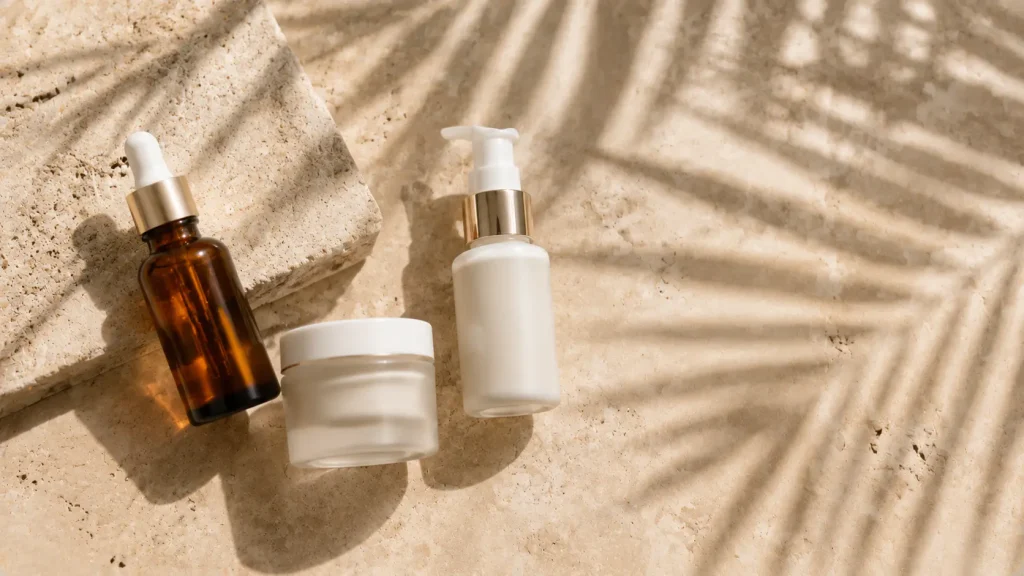
Private label skincare generally means working with a third-party cosmetic manufacturer to produce skincare products that are sold under your own brand name.
Instead of building every formula from the beginning, you typically select from products or formulation platforms the manufacturer has already developed. Depending on the supplier and product, you may then customize elements such as packaging, fragrance, color, selected ingredients, or other product characteristics.
The manufacturer handles areas such as formulation and production, while your brand focuses more heavily on:
- Brand positioning
- Product selection
- Packaging and visual identity
- Marketing
- Distribution
- Customer acquisition
This can significantly reduce the amount of product development required before launch.
Private Label vs. White Label vs. ODM: Are They the Same?
These terms are often used interchangeably in the beauty industry, but they don’t always mean exactly the same thing.
White label commonly refers to a relatively standardized existing product that multiple brands may sell using their own branding.
Private label can also start with an existing product, but manufacturers may offer additional customization in areas such as packaging, fragrance, appearance, or selected formula characteristics.
ODM (Original Design Manufacturing) is another term frequently used by cosmetic manufacturers when they provide existing formulas or product platforms that brands can select and customize.
The boundaries between these models vary from one supplier to another.
For that reason, don’t choose a manufacturing partner based only on whether they call themselves “private label,” “white label,” or “ODM.” Ask exactly what is included:
- Can the formula be modified?
- Can ingredients be added or removed?
- Is the formula available to other brands?
- Can packaging be customized?
- What testing is included?
- What are the minimum order quantities?
- What exclusivity or ownership terms apply?
How Private Label Skincare Works: Step by Step
The exact process differs between manufacturers, but most private label skincare projects follow a similar path.
Step 1: Define Your Brand & Target Customer
Before looking through a product catalog, define who you’re actually building the brand for.
Consider:
- Target customer
- Main skin concerns
- Price positioning
- Brand aesthetic
- Target market
- Desired product claims
This helps prevent a common mistake: selecting products simply because they’re trending rather than because they make sense for your brand.
Step 2: Choose Your Product Range
Next, review the manufacturer’s available products and identify formulas that fit your positioning.
Common private label skincare categories include:
- Facial cleansers
- Toners and essences
- Face serums
- Moisturizers
- Eye care
- Face masks
- Body care
- Specialized treatment products
For a first launch, a focused collection of hero products can often be easier to position, inventory, and market than a large product range.
Explore Product Directions:If you’re still deciding which categories or formats could fit your brand, browse our Beauty Product Categories → to explore skincare, hair care, body care, sun care, serum capsules, and other product development directions.
Step 3: Request & Evaluate Samples
Don’t select a private label skincare product based only on an ingredient list or product description.
Physical samples allow you to evaluate:
- Texture
- Absorption
- Fragrance
- Color and appearance
- Skin feel
- Packaging compatibility
- Overall fit with your brand
This step is especially important because two formulas positioned around similar ingredients can feel very different when applied.
Step 4: Decide What You Want to Customize
Customization can range from simple branding changes to more substantial product adjustments.
Depending on the manufacturer and formula, options may include:
- Fragrance
- Color
- Selected botanical extracts
- Selected active ingredients
- Packaging format
- Bottle or jar color
- Printing and decoration
- Labels
- Outer cartons
Significant changes to the core formula may move the project beyond standard private label development and require additional formulation work, testing, cost, or MOQ.
Step 5: Develop Your Packaging & Branding
Packaging is one of the easiest ways to differentiate a private label product.
Even when two brands start with a similar formulation platform, differences in packaging, positioning, visual identity, product naming, and customer experience can create very different products in the market.
You may choose between:
- Stock packaging for a faster, simpler launch
- Customized colors or decoration
- Custom labels and cartons
- Premium bottles, pumps, droppers, jars, or tubes
- More customized packaging as order volume grows
Step 6: Confirm Testing & Target-Market Requirements
Using an existing formula doesn’t mean every regulatory and testing question automatically disappears.
Before production, confirm with your manufacturer what documentation and testing apply to your specific product, packaging, claims, and intended sales market.
This is especially important if you change the formula, packaging system, product claims, or target country.
Step 7: Approve & Place Your Production Order
Once the formula, packaging, artwork, specifications, and commercial terms are approved, the project can move into production.
Your manufacturer produces the batch, fills the selected packaging, completes the required packaging and labeling operations, and prepares the finished products for release.
Step 8: Launch, Reorder & Scale
Private label doesn’t need to be only a short-term startup strategy.
Once you know which products perform well, you can:
- Increase order quantities
- Add complementary SKUs
- Upgrade packaging
- Introduce new product variations
- Move selected hero products toward more customized formulations
This gives brands a practical path from market testing to a more differentiated long-term product portfolio.
Private Label vs. Custom Skincare Manufacturing
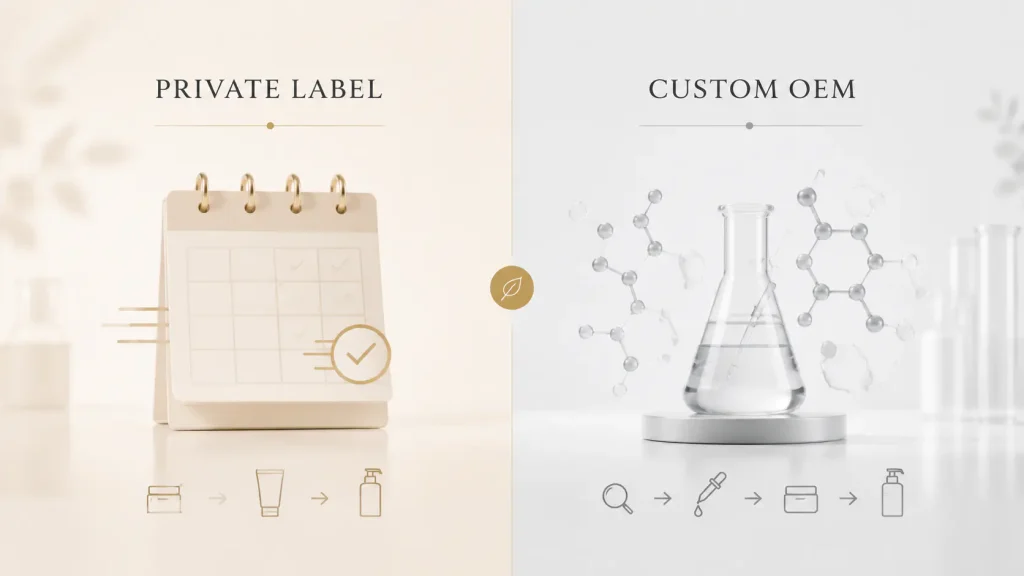
The biggest strategic decision is often whether to start with an existing formula or develop something more customized.
Neither model is automatically better.
If your priority is testing demand and getting to market efficiently, private label can be a practical starting point. If your brand strategy depends on a distinctive formula, texture, ingredient system, or product experience, custom development may make more sense.
What Can You Customize in Private Label Skincare?
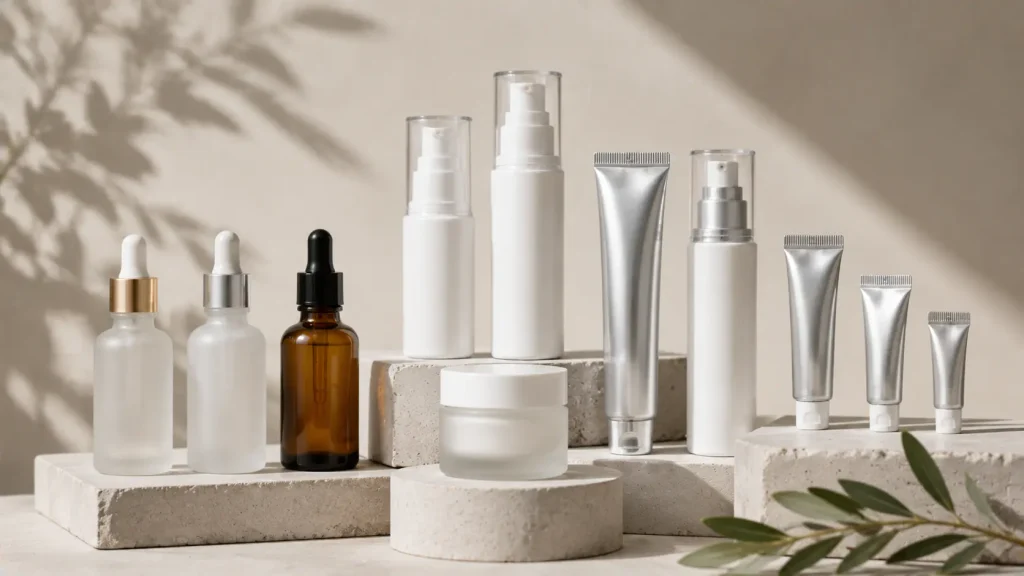
One misconception about private label skincare is that every product has to look identical apart from the logo.
The amount of customization varies by manufacturer, but differentiation can often happen across several layers.
Formula
Depending on the formulation, selected adjustments may be possible in areas such as fragrance, color, botanical extracts, or other characteristics.
Packaging
Packaging can significantly change how a product is positioned. Options may include different bottles, jars, pumps, droppers, colors, finishes, capacities, and secondary packaging.
Branding
Product names, visual identity, logo placement, label design, cartons, and overall brand storytelling remain completely central to how consumers experience the finished product.
Product Positioning
The same general product category can be developed around very different audiences — for example, minimalist skincare, sensitive skin, premium spa, active-focused skincare, or other clearly defined brand concepts.
Always confirm what customization is actually available before building your marketing strategy around it.
Benefits of Private Label Skincare
- Faster product development. Starting with an existing formulation can reduce the amount of R&D required before launch.
- Lower development complexity. You don’t need to build a formulation laboratory or hire your own team of cosmetic chemists.
- Lower upfront development cost. You’re generally investing less in original formula development than with a fully custom project.
- Easier market testing. Brands can validate a category or consumer idea before making a larger investment in custom development.
- Access to manufacturing expertise. You work with an established production partner instead of building manufacturing infrastructure from scratch.
- Potentially simpler scaling. If the product sells well, future production can be expanded based on demand and manufacturing capacity.
Private Label Skincare Trade-Offs
Private label isn’t the right solution for every brand.
- Less formula differentiation. Depending on the manufacturer, similar formulations may be available to other customers.
- Customization can be limited. Major changes may require a separate custom development project.
- Your brand still needs a reason to exist. A ready-developed formula doesn’t automatically create compelling positioning.
- Supplier dependence. Your manufacturer plays an important role in formula availability, packaging sourcing, quality, and production continuity.
- Ownership and exclusivity vary. Never assume a formula or modification is exclusive unless the commercial agreement specifically says so.
These trade-offs aren’t necessarily disadvantages. They simply need to fit your business model.
How Much Does Private Label Skincare Cost?
There is no single standard price for launching a private label skincare line.
Your total investment can depend on:
- Number of SKUs
- Order quantity
- Formula selection
- Level of customization
- Packaging choice
- Printing and decoration
- Outer cartons
- Testing or documentation requirements
- Shipping and logistics
Private label generally reduces formula development costs compared with building a completely custom formula, but packaging and inventory can still represent a significant part of the launch budget.
For a realistic number, request a quotation based on your actual formula, packaging, quantity, and target market rather than relying on a generic online estimate.
For a broader breakdown of formulation, samples, testing, packaging, production, logistics, branding, and launch expenses, see our Beauty Product Launch Cost Guide.
What Is the MOQ for Private Label Skincare?
MOQ means minimum order quantity — the smallest production quantity a manufacturer is willing or able to produce under a given specification.
There is no universal private label skincare MOQ.
It can depend on:
- Formula
- Product format
- Raw material minimums
- Packaging supplier requirements
- Printing or decoration
- Level of customization
A lower MOQ can reduce initial inventory exposure, but it shouldn’t be the only factor used to choose a manufacturer.
Formula quality, packaging options, testing support, production consistency, communication, and the ability to scale are also important.
If you want to understand how formula batch size, packaging, raw materials, customization, and supplier minimums affect order quantities, read our Cosmetic MOQ Explained: What Beauty Brands Should Know.
How Long Does Private Label Skincare Take to Launch?
Private label skincare can generally move faster than a fully custom formulation project because much of the initial formula development has already been completed.
However, your actual timeline still depends on:
- Sample approval
- Requested formula changes
- Packaging availability
- Custom printing or decoration
- Artwork approval
- Testing requirements
- Order quantity
- Production scheduling
A product using an existing formula and stock packaging will usually be simpler to launch than one requiring customized packaging and significant formulation changes.
Ask the manufacturer for a project-specific schedule before setting your public launch date.
How to Choose a Private Label Skincare Manufacturer
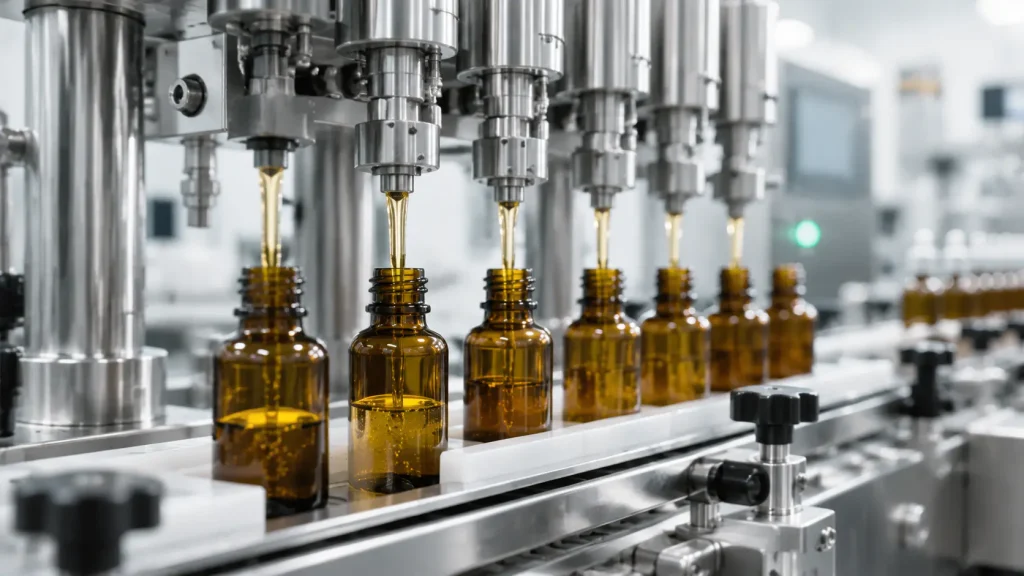
Don’t choose a skincare manufacturer based on unit price alone.
Before committing to a supplier, evaluate these areas:
1. Product Category Experience
Look for a manufacturer with experience producing products similar to the ones you want to launch.
2. Formula Quality & Product Range
Review physical samples, not just a product catalog. The texture, finish, fragrance, and overall experience should match the positioning of your brand.
3. Manufacturing & Quality Systems
Ask how raw materials, production batches, filling, packaging, and finished products are controlled and documented.
4. MOQ & Scalability
Your first order needs to fit your launch budget, but the manufacturer should also be capable of supporting larger reorders if the brand grows.
5. Customization Options
Understand where customization stops. Can you change only the label, or can you adjust packaging, fragrance, selected ingredients, texture, or other product characteristics?
6. Packaging Support
A manufacturer that can coordinate both formula and packaging development can simplify the supply chain and reduce the number of separate suppliers your team needs to manage.
7. Target-Market Experience
If you’re planning to sell internationally, ask whether the manufacturer has experience supporting brands targeting those markets and what documentation or compliance support is available.
8. Communication
Clear timelines, documented approvals, responsive communication, and transparent explanations are important indicators of whether a supplier is likely to become a reliable long-term partner.
9. Custom Development Capability
Even if you’re starting with private label, it can be useful to choose a manufacturer that also offers custom formulation.
That gives you the option to move successful hero products toward more differentiated formulas later without rebuilding your entire manufacturing relationship.
Related Guide: For a more complete manufacturer-evaluation checklist covering R&D, quality systems, certifications, MOQ, packaging, testing, communication, scalability, lead times, and commercial terms, see How to Choose a Reliable Cosmetic Manufacturer →
Private Label Skincare & Regulatory Compliance
Working with a private label manufacturer simplifies product development, but it doesn’t mean brands should ignore target-market requirements.
Responsibilities depend on the country, product, business structure, and parties involved.
Before launch, clarify:
- Who handles required product documentation?
- Who reviews ingredient and formula compliance?
- Who is responsible for label review?
- What product testing is available?
- What notifications, registrations, or listings may apply?
- What claims can the available documentation support?
This should be discussed early, particularly if you plan to sell the same product in multiple markets.
Who Is Private Label Skincare Best For?
Private label can work especially well for:
- First-time beauty founders looking for a less development-intensive way to enter the market.
- Content creators and personal brands that already have an audience and want to introduce physical products.
- Estheticians, spas, clinics, and salons developing a branded retail range alongside services.
- E-commerce brands looking to expand into skincare.
- Established beauty brands testing a new category before investing in fully custom development.
- Brands expanding internationally that need additional product formats or manufacturing capacity.
Should You Start With Private Label or Custom Formulation?
Start with your brand strategy rather than the manufacturing terminology.
Private label may make more sense if:
- Speed to market matters
- You want to reduce initial development complexity
- You are testing a new category or concept
- Your differentiation comes primarily from branding, positioning, packaging, or audience
Custom formulation may make more sense if:
- Your formula itself is central to the brand
- You need a specific texture or ingredient system
- You want stronger product differentiation
- Your positioning requires features not available in existing formulas
There’s also no reason the decision has to be permanent.
A brand can start with selected private label products, learn what customers actually buy, and invest in more customized development once the market opportunity is clearer.
Frequently Asked Questions
What is private label skincare?
Private label skincare generally involves partnering with a third-party cosmetic manufacturer to produce skincare products sold under your own brand. You typically begin with an existing formula or product platform and customize branding, packaging, and other elements depending on the manufacturer.
Is private label skincare the same as white label?
Not always. White label often refers to more standardized products offered to multiple brands, while private label may allow additional customization. However, manufacturers use these terms differently, so always confirm the actual scope of service.
Is private label skincare the same as ODM?
The two models can overlap, especially in cosmetic manufacturing, because both may involve selecting and customizing manufacturer-developed products. However, the terminology varies between suppliers, so it’s better to compare actual development and customization capabilities rather than relying on the label alone.
Can I customize a private label skincare formula?
Often, but the level of customization depends on the manufacturer and formula. Fragrance, color, selected ingredients, and packaging may be adjustable, while major changes can require additional formulation and testing.
Do I own a private label formula?
Not automatically. Formula ownership, exclusivity, and intellectual property terms depend on the manufacturer and your agreement. Confirm these terms before placing an order.
How much does private label skincare cost?
Costs depend on formula selection, order quantity, packaging, customization, decoration, testing, and logistics. Private label generally involves less formula-development investment than building a completely custom product.
What is the MOQ for private label skincare?
There is no universal MOQ. Minimum quantities depend on the formula, packaging, customization, raw material requirements, and manufacturing process.
How long does it take to launch a private label skincare line?
Private label can generally be launched faster than a fully custom formulation, but the actual schedule depends on sampling, packaging, artwork, testing, production capacity, and the amount of customization required.
Is private label skincare safe?
Private label is a manufacturing model, not a measure of product safety. Product safety depends on the formula, manufacturing quality, testing, packaging, intended use, and compliance with the requirements applicable to the target market.
Can I switch from private label to custom formulation later?
Yes. Some brands start with private label products to validate demand and later develop more customized formulas for successful products or categories.
Ready to Launch Your Private Label Skincare Line?
Private label skincare can give beauty brands a practical route from concept to finished product without developing every formula from the beginning.
The key is choosing products that genuinely fit your customer and working with a manufacturer that can support formula selection, customization, packaging, quality, production, and future growth.
NEXO Beauty Labs supports brands across private label, ODM, and custom OEM skincare development, allowing you to choose the development route that fits your brand, budget, and level of differentiation.
Request an OEM/ODM Consultation with NEXO Beauty Labs to discuss your skincare concept, product selection, packaging, customization, MOQ, and next steps.