OEM vs ODM vs Private Label Cosmetics: Which Manufacturing Model Is Right for Your Brand?
Confused about OEM, ODM, and private label cosmetics manufacturing? Here's a clear breakdown of the differences, costs, and how to pick the right model for your brand.
If you’re planning to launch a beauty brand, you’ll quickly come across three manufacturing terms: OEM, ODM, and private label.
They all allow you to sell cosmetics under your own brand without building your own factory, but they offer different levels of product development, customization, speed, cost, and control.
The confusing part is that cosmetic manufacturers don’t always use these terms in exactly the same way.
So instead of choosing based on the label alone, it’s more useful to understand who develops the product, how much you can customize, how quickly you want to launch, and what your agreement says about formula ownership and exclusivity.
Here’s how OEM, ODM, and private label cosmetics compare — and how to choose the right manufacturing model for your beauty brand.
What Is OEM Cosmetic Manufacturing?
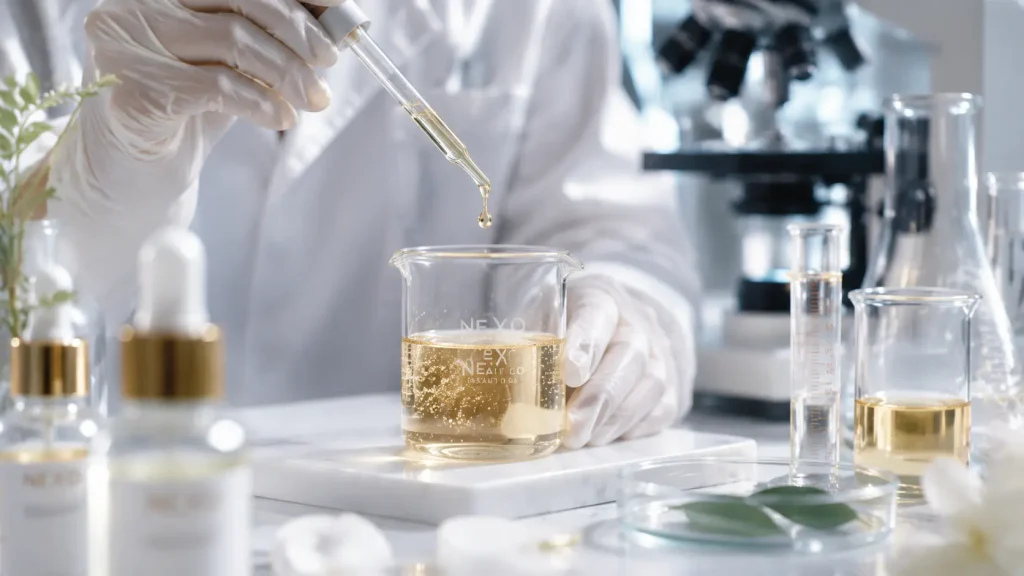
OEM stands for Original Equipment Manufacturing.
In cosmetic manufacturing, OEM generally refers to producing a product according to an agreed brand brief, specification, or formula, usually with a relatively high level of customization.
Depending on the manufacturer and project, the brand may already have a formula or may work with the manufacturer’s R&D team to develop one around its requirements.
OEM projects can offer control over areas such as:
- Formula direction
- Active ingredients
- Ingredient concentrations where technically appropriate
- Texture and viscosity
- Fragrance
- Color and appearance
- Packaging
- Product positioning
OEM is generally most suitable when the product itself needs to be a major point of differentiation.
Why Brands Choose OEM
- Greater formula and product customization
- More flexibility around product specifications
- Stronger potential for product differentiation
- Ability to build around a specific brand concept or product brief
- More control over the final product experience
The trade-off is that greater customization usually means more formulation work, samples, testing, packaging development, and scale-up before commercial production.
Formula ownership and exclusivity should not be assumed simply because a project is called OEM. These terms should be confirmed in your development and manufacturing agreement.
What Is ODM Cosmetic Manufacturing?
ODM stands for Original Design Manufacturing.
In beauty manufacturing, ODM commonly means the manufacturer provides existing formulation expertise, product platforms, or developed formulas that can be adapted for your brand.
Instead of developing every element from the beginning, you may start with an existing formula and customize selected characteristics.
Depending on the product and manufacturer, this may include:
- Fragrance
- Color
- Selected botanical extracts
- Selected active ingredients
- Texture adjustments
- Packaging
- Labels and decoration
Why Brands Choose ODM
- Less development work than a highly customized project
- More customization than a standard ready-made product
- Access to the manufacturer’s existing R&D resources
- Potentially faster product development
- A practical balance between differentiation and development complexity
The main limitation is that your starting point usually comes from the manufacturer’s existing formulation or technology platform.
If your brand needs a very specific formula architecture, proprietary texture, or highly customized ingredient system, a more customized development route may be a better fit.
What Is Private Label Cosmetics?
Private label cosmetics generally involve selecting an existing cosmetic product or formula from a manufacturer and selling the finished product under your own brand.
Customization is usually focused more heavily on areas such as:
- Brand name
- Logo
- Label design
- Packaging
- Outer cartons
- Product naming and positioning
Depending on the manufacturer, limited formula customization may also be possible.
Why Brands Choose Private Label
- Lower development complexity
- Faster route to market
- No need to develop every formula from scratch
- Useful for testing new categories or concepts
- Allows more resources to be focused on branding, marketing, and distribution
The main trade-off is differentiation.
If the manufacturer offers the same base product to multiple customers, your competitive advantage needs to come from branding, packaging, positioning, customer experience, or additional customization.
OEM vs ODM vs Private Label Cosmetics: Key Differences
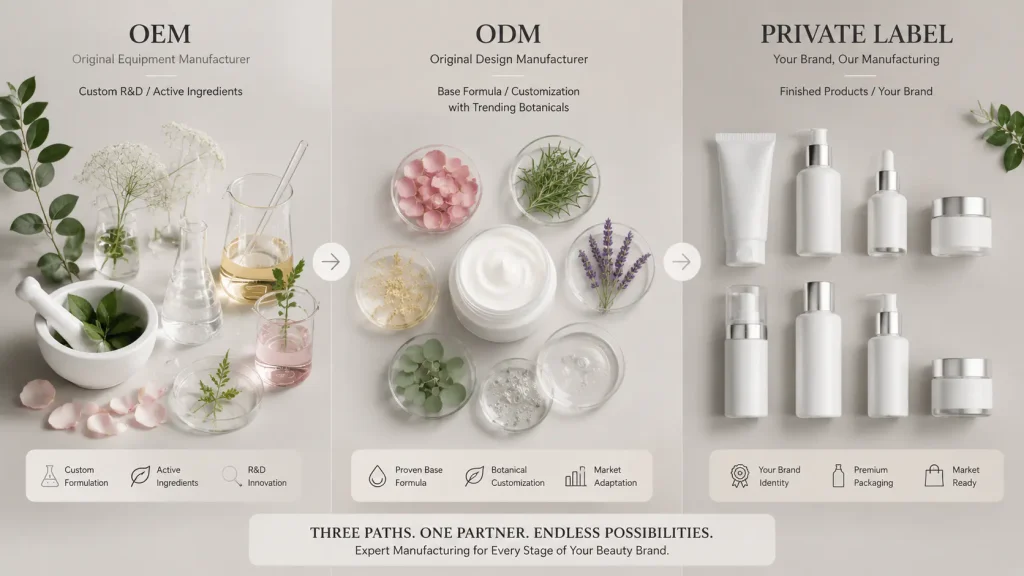
This table describes the general differences, but the exact scope of OEM, ODM, and private label services varies between cosmetic manufacturers.
Which Cosmetic Manufacturing Model Gives You the Most Control?
In general, greater customization means greater product control — but also more development responsibility.
If your product brief requires a very specific combination of ingredients, texture, sensory profile, packaging, and performance targets, a customized OEM-style project may offer the greatest flexibility.
ODM can provide a middle ground by allowing you to customize an existing formulation platform.
Private label puts more emphasis on selecting the right existing product and differentiating it through branding, positioning, packaging, and customer experience.
None of these models automatically guarantees better product quality.
Quality depends more on the actual formula, raw materials, testing, manufacturing standards, quality systems, packaging, and manufacturer than on whether the project is called OEM, ODM, or private label.
How Do OEM, ODM & Private Label Affect MOQ?
There is no universal MOQ for any of the three models.
Minimum order quantity can be affected by:
- Formula batch size
- Raw material purchasing minimums
- Product type
- Manufacturing equipment
- Packaging supplier minimums
- Printing and decoration
- Degree of customization
Private label projects using existing formulas and stock packaging may offer more flexible starting quantities in some cases.
A highly customized formula or packaging system can create higher minimum requirements because more materials or dedicated production resources are needed.
Always ask for the MOQ of the complete product specification, not just the bulk formula.
OEM vs ODM vs Private Label: Which Costs More?
Development cost generally increases as customization increases.
Private label typically requires less original formulation work because the product already exists.
ODM can involve additional development costs when ingredients, fragrance, texture, packaging, or other characteristics are customized.
Custom OEM may involve more R&D, sampling, testing, scale-up, and product-specific development.
However, the manufacturing model isn’t the only factor that determines your total investment.
Packaging, MOQ, specialty ingredients, decoration, testing, shipping, and number of SKUs can sometimes affect the budget just as much as formula development.
What About Formula Ownership & Exclusivity?
This is one of the most important questions to ask before choosing a manufacturing model.
Don’t assume that:
- OEM automatically means you own the formula
- ODM automatically means the manufacturer owns everything
- A customized formula is automatically exclusive
- Private label formulas can never be exclusive
Instead, ask the manufacturer:
- Who owns the base formula?
- Who owns any custom development?
- Is the formula exclusive to my brand?
- Can similar formulas be offered to other customers?
- Can I take the formula to another manufacturer?
- Who owns any custom molds or tooling?
- What happens to the formula or packaging if the relationship ends?
These terms should be documented clearly in the development or manufacturing agreement.
How to Choose Between OEM, ODM & Private Label
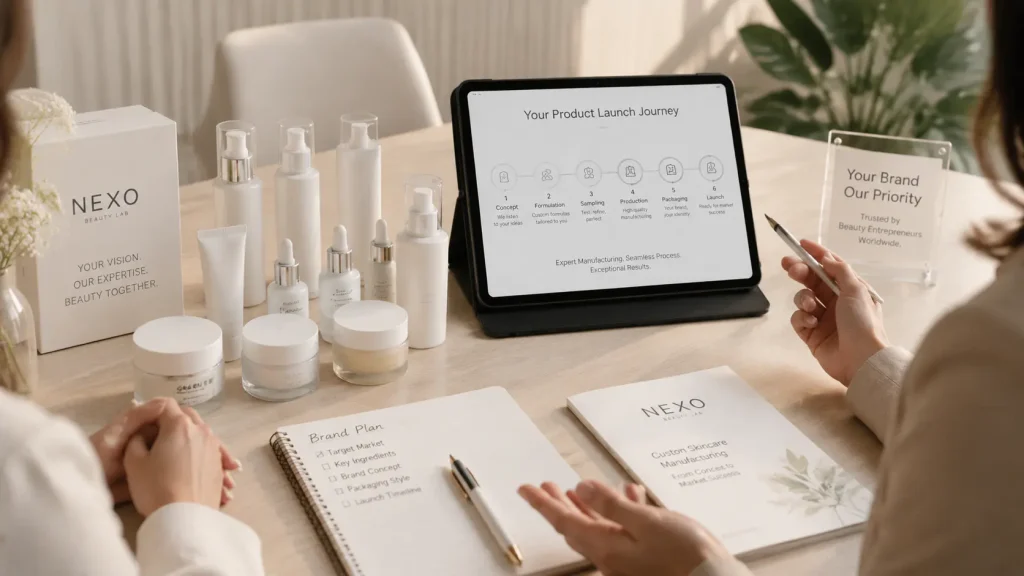
There’s no single model that’s best for every beauty brand.
Use these questions to narrow down the right option.
How Fast Do You Need to Launch?
If speed is the priority, an existing private label product or an ODM formula requiring limited customization can usually reduce development work.
A highly customized project normally requires more time for formulation, samples, testing, packaging, and scale-up.
How Important Is Formula Differentiation?
If your marketing strategy depends heavily on a distinctive formula or product experience, a more customized development route may make sense.
If your strongest advantages are audience, branding, packaging, distribution, or speed to market, an existing formula may already provide what you need.
What’s Your Development Budget?
Greater customization generally means more R&D and development work.
Private label can reduce early development complexity, while ODM allows selected customization without necessarily building every aspect of the product from the beginning.
How Much Inventory Risk Can You Take?
Don’t evaluate only unit price.
Consider how much cash will be tied up in:
- Formula production
- Raw materials
- Packaging
- Printed components
- Finished inventory
A higher unit cost with a more manageable initial production quantity may sometimes make more commercial sense than buying excessive inventory simply to reduce the unit price.
Do You Need Formula Ownership or Exclusivity?
If formula IP is central to your business strategy, discuss ownership before development begins rather than after samples have already been created.
What Are Your Long-Term Plans?
Your first manufacturing model doesn’t need to be permanent.
A brand may begin with private label products, customize successful categories through ODM, and invest in more differentiated development as sales data and customer feedback become available.
Can a Beauty Brand Use More Than One Manufacturing Model?
Yes.
There’s no reason every SKU in a beauty brand has to follow the same development route.
For example, a brand might:
- Use private label for a simple supporting product
- Use ODM for trend-driven products that need some customization
- Invest in custom OEM development for its hero product
This can help balance development cost, differentiation, launch speed, and inventory risk across the entire product portfolio.
The Manufacturing Model Doesn’t Determine Product Quality
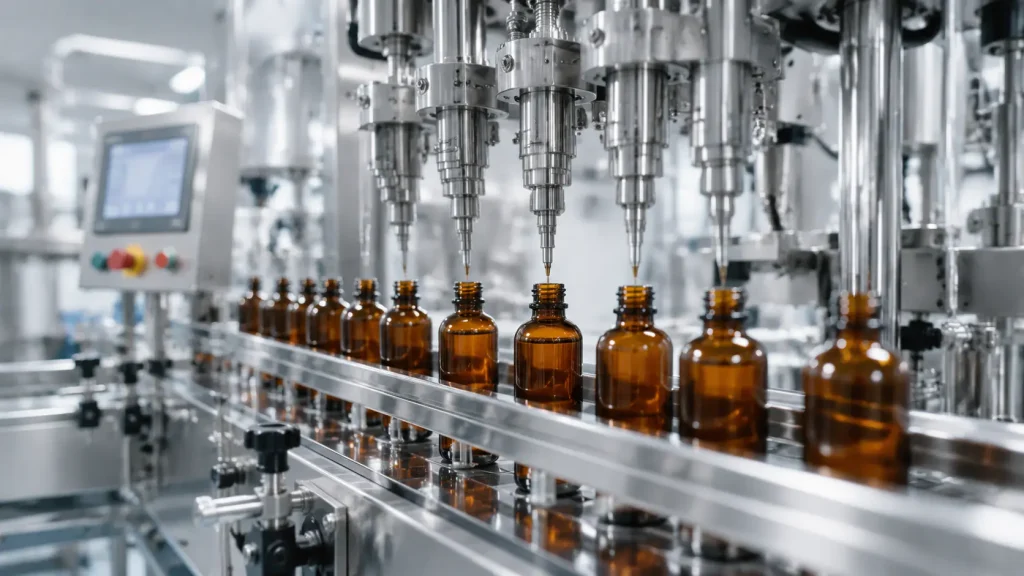
Private label isn’t automatically low quality, and a custom OEM formula isn’t automatically superior.
A strong existing formula manufactured under appropriate quality procedures can perform better than a poorly designed custom product.
When evaluating a cosmetic manufacturing project, look beyond OEM, ODM, and private label terminology and consider:
- Product-category experience
- R&D capabilities
- Raw material controls
- Testing
- Manufacturing quality systems
- Packaging capabilities
- Production consistency
- Communication
- Scalability
The manufacturing model tells you how the project may be developed. It does not, by itself, tell you how well the finished product will be formulated, produced, tested, or controlled.
Continue Your Manufacturing Research
Once you’ve chosen a development model, the next questions are how the product will actually move through production — and whether the manufacturing partner has the right capabilities to support your brand.
UNDERSTAND THE PRODUCTION PROCESS
See how an approved product moves through raw-material preparation, scale-up, batching, filling, packaging, quality control, and commercial production.
EVALUATE THE MANUFACTURING PARTNER
Learn what to review when comparing cosmetic manufacturers, including category experience, R&D capability, quality systems, MOQ, packaging support, communication, and scalability.
Frequently Asked Questions
What is the main difference between OEM, ODM, and private label cosmetics?
The main difference is generally the level of product development and customization involved. Private label usually starts with an existing finished product, ODM often starts with a manufacturer-developed formula or product platform that can be customized, and OEM commonly involves a more customized product brief or specification.
Is OEM better than ODM?
Not necessarily. OEM can provide more customization, while ODM may reduce development time and complexity. The better option depends on your brand strategy, product requirements, budget, timeline, and desired level of differentiation.
Is ODM the same as private label?
Not always. The models can overlap, but ODM typically involves more manufacturer-led product development or customization, while private label usually starts closer to a ready-developed product. Terminology varies between suppliers, so compare the actual service scope.
Which is cheaper: OEM, ODM, or private label?
Private label generally involves the least original product-development work, while highly customized OEM development can involve greater R&D investment. However, total project cost also depends on MOQ, ingredients, packaging, testing, and production requirements.
Which model has the lowest MOQ?
There is no universal MOQ for any manufacturing model. Existing formulas and stock packaging may sometimes support more flexible quantities, while custom ingredients, packaging, or dedicated batch requirements can increase minimums.
Do I own an OEM cosmetic formula?
Not automatically. Formula ownership and exclusivity depend on how the product was developed and what your contract says. Confirm intellectual property terms before development begins.
Can ODM formulas be exclusive?
Possibly. Exclusivity depends on the manufacturer, the extent of customization, and the commercial agreement. Ask specifically whether the base formula or customized version can be offered to other brands.
Can I start with private label and move to OEM later?
Yes. A brand can use an existing product to validate demand and later invest in more customized development for successful categories or hero products.
Do I need my own cosmetic chemist for OEM?
Not necessarily. Some OEM projects begin with a formula or detailed specification supplied by the brand, while others involve working with the manufacturer’s R&D team to develop a product around an agreed brief. Confirm the manufacturer’s actual development capabilities before starting.
Ready to Choose the Right Cosmetic Manufacturing Model?
OEM, ODM, and private label aren’t competing definitions of the “best” way to manufacture cosmetics. They’re different development routes designed for different business priorities.
The right choice depends on how much customization you need, how quickly you want to launch, how much development complexity you’re prepared to manage, and how important formula differentiation is to your brand.
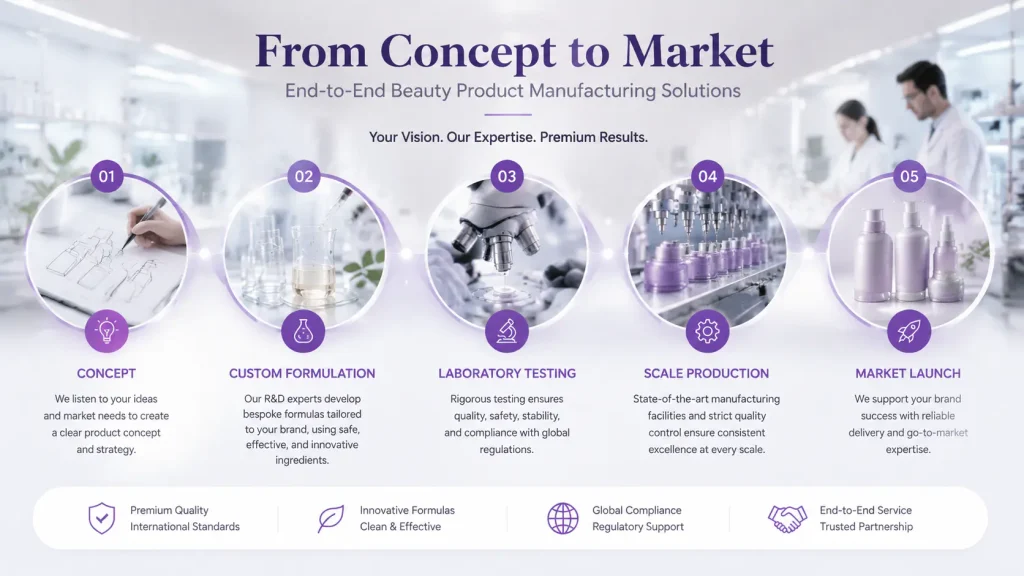
NEXO Beauty Labs supports beauty brands across private label, ODM, and custom OEM development, including formulation, sampling, testing, packaging, and commercial manufacturing.
Request an OEM/ODM Consultation with NEXO Beauty Labs to discuss your product concept, customization requirements, packaging, MOQ, target market, and the manufacturing model that best fits your launch plan.