What to Include in a Cosmetic Product Development Brief
Learn what to include in a cosmetic product development brief: product concept, consumer, sensory goals, claims, packaging and commercial needs, plus a free checklist.
The key information beauty brands should prepare before starting formulation, sampling, packaging and production.
A beauty product idea can start with something as simple as “We want to develop a lightweight serum.”
That is rarely enough for an R&D team to develop the right product. Before formulation begins, a manufacturer needs to understand what the product is supposed to do, who it is for, how it should feel, where it will be sold, how it will be packaged, and what commercial constraints apply.
This is where a cosmetic product development brief becomes important. A good brief does not need to contain every technical answer. It needs to give R&D enough information to make the right development decisions.
This guide walks through what to include in a practical development order. It is a general reference, not regulatory advice.
1. Start With the Product Concept
Describe the basics clearly:
- Product category (serum, cream, shampoo, deodorant)
- Product format
- Intended use
- Main consumer need
- Where the product fits in the routine
“A daily facial serum for sensitive skin” gives a development team far more to work with than “a premium serum with advanced ingredients.”
2. Define the Target Consumer
“Women aged 25–45” is a demographic, not a development target. Go further:
- Skin or hair type
- Main concern
- Usage habits and lifestyle
- Climate or environment
- Price positioning
A consumer in a hot, humid market may want a very different texture from one in a dry, cold climate, even for the same concern.
3. Describe the Product Performance Goal
Avoid writing only an ingredient. “We want a peptide serum” describes a component, not a goal. Instead, describe:
- What should the product help consumers achieve?
- What should consumers notice?
- How quickly should it feel?
- Which sensory or performance characteristics matter?
A useful principle: start with the finished-product experience, then work backward toward the product formula.
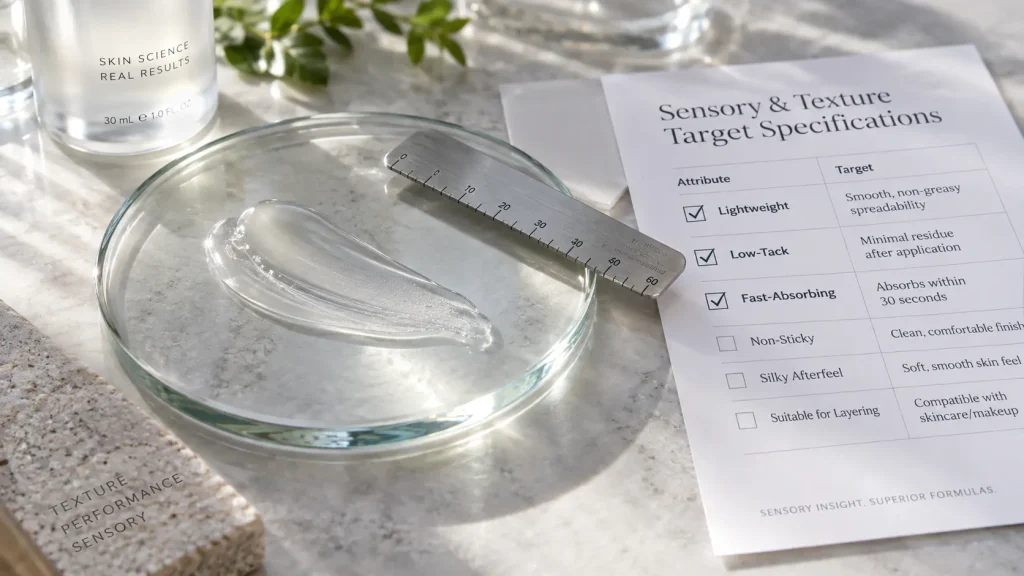
4. Set Texture and Sensory Expectations
Texture is one of the most important parts of a brief, and one of the most often left vague. Useful descriptors include:
- Lightweight or rich
- Fast-absorbing or cushioning
- Non-sticky, fresh or silky
- Matte or glossy finish
- Fragrance-free, or a specific fragrance direction
“Premium” is not a sensory specification. Brands need to translate that feeling into features R&D can actually build, such as spreadability, after-feel and residue.
5. Define Ingredient Preferences and Restrictions
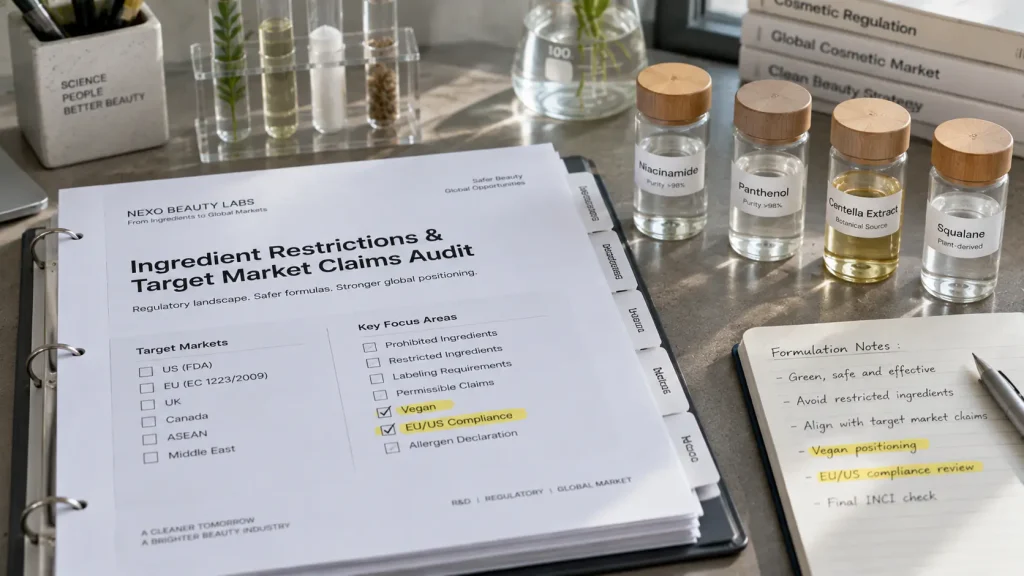
Include:
- Hero ingredients and preferred ingredients
- Ingredients to avoid
- Vegan or natural positioning requirements
- Fragrance restrictions
- Preservative preferences
- Other brand-specific requirements
Keep in mind that an ingredient wish list is not the same as a finished formulation strategy. Ingredients have to work together in a stable, usable formula.
6. Clarify Claims and Target Markets
This part shapes both formulation and later compliance work. Include:
- Intended claims
- Target countries
- Regulatory considerations
- Product positioning and packaging claims
- Evidence requirements
For example, “a brightening serum for the U.S. market” and “a brightening serum for the EU and U.S. markets with fragrance-free positioning” lead to different development and documentation needs.
Claims and rules vary by market and change over time, so confirm specifics with your manufacturer’s compliance team or a qualified regulatory professional.
If the brand intends to communicate specific product benefits that require additional evidence, the testing and claims plan should be incorporated into the development schedule.
7. Include Packaging Direction Early
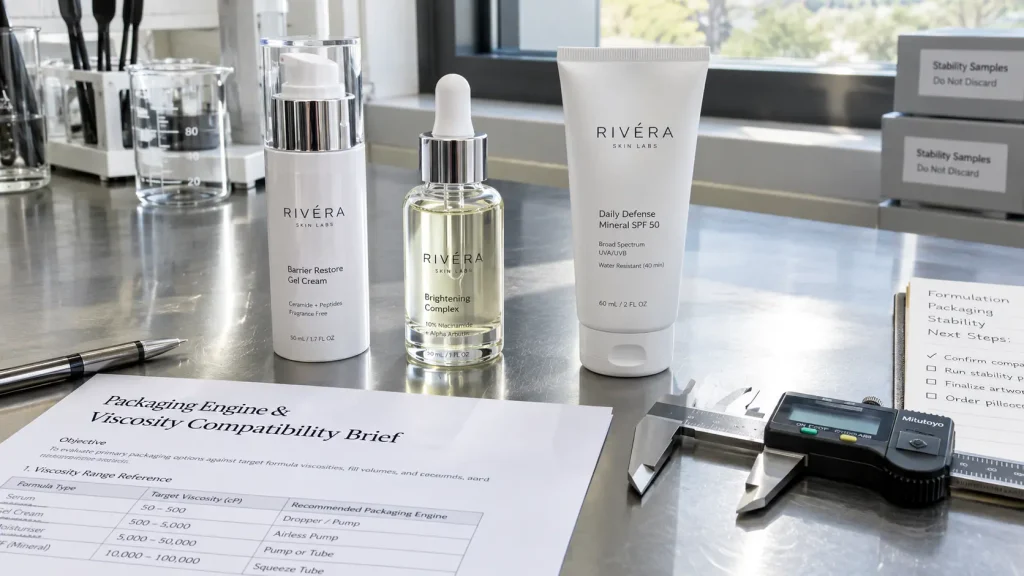
Formula and packaging are not two fully separate projects. Tell your manufacturer:
- Bottle, tube, jar, pump or dropper
- Fill size
- Airless requirement
- Material preference
- Refill concept, if any
- Whether packaging is already selected
- The dispensing experience you want
Viscosity, pump performance and formula exposure all interact.
8. Add Commercial Requirements
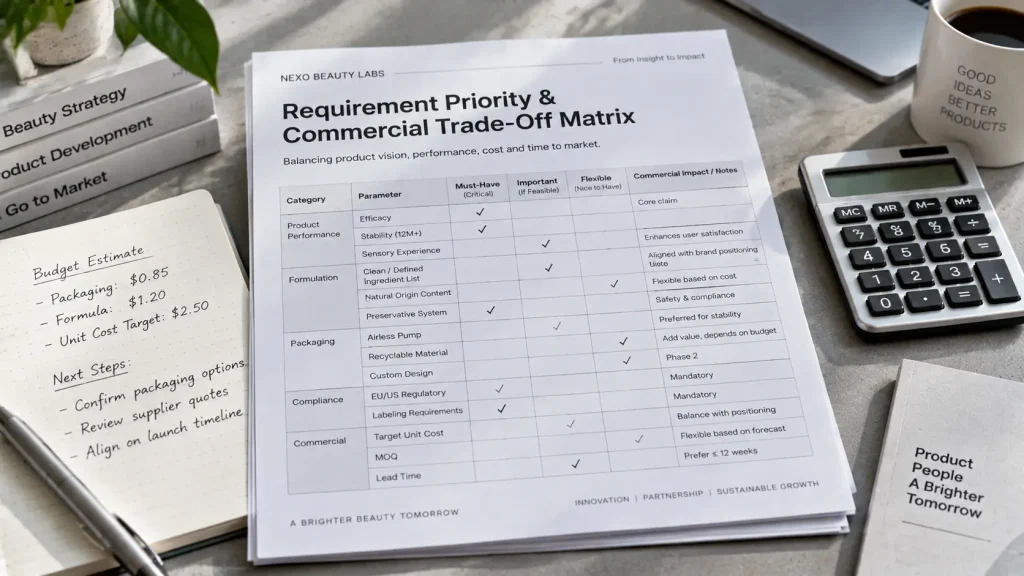
Many briefs skip this section, which later causes avoidable surprises. Include:
- Target unit cost and target retail price
- Initial order quantity and expected MOQ
- Launch market and timing
- Future scale expectations
These shape which formula and packaging options are realistic. MOQ should be considered as part of the complete product specification rather than as an isolated factory number.
9. Separate Must-Haves From Preferences
Not every requirement has the same priority. If everything is written as a “must,” R&D struggles to balance cost, stability, sensory, packaging and manufacturing trade-offs.
Marking priorities lets the development team make smart trade-offs instead of guessing.
10. Include Reference Products and Approval Criteria
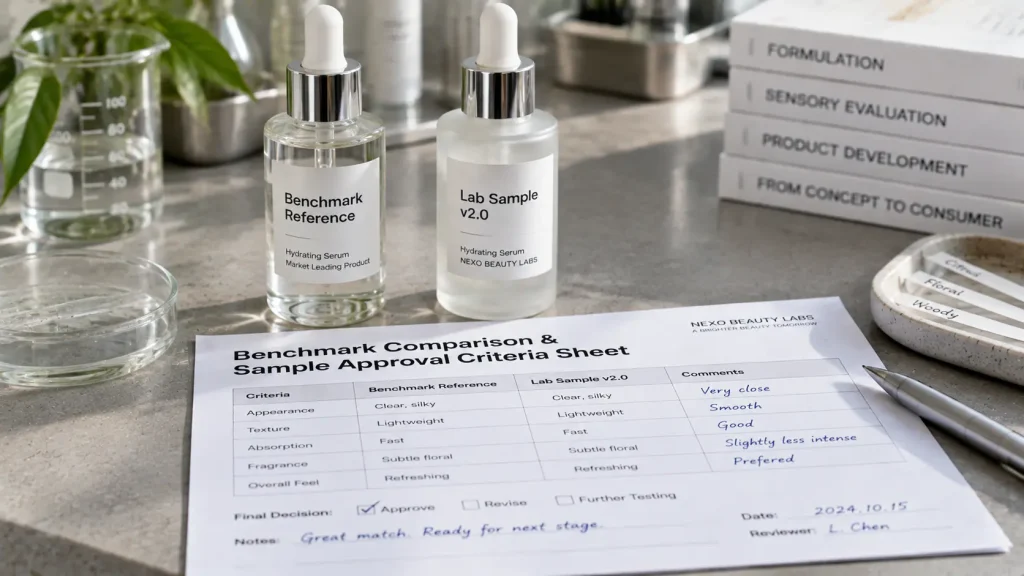
If you have a benchmark product or sample, include it in the brief and explain what you want to learn from it.
A reference is more useful when R&D knows which attributes matter:
- Texture or spreadability to match
- Absorption or finish to target
- Fragrance direction
- Packaging or dispensing experience
- Performance characteristics to improve
- Features that should be different
Also define how samples will be reviewed and approved. Identify the people responsible for feedback, the characteristics that determine approval, and how final decisions will be communicated.
“Make it like this” is less useful than “match the lightweight slip and fast absorption, but develop a different ingredient system and fragrance.”
The clearer the reference and approval criteria, the easier it is to turn feedback into the next development step.
A Simple Cosmetic Product Development Brief Checklist
Product
- Product category
- Format
- Intended use
- Target consumer
Performance
- Main benefit
- Texture
- Sensory expectations
- Usage experience
Formula
- Hero ingredients
- Ingredient preferences
- Restrictions
- Fragrance requirements
Market
- Target countries
- Claims direction
- Regulatory considerations
Packaging
- Packaging format
- Fill size
- Material
- Dispensing requirements
Commercial
- Target cost
- Initial quantity
- MOQ expectations
- Launch timeline
Development
- Reference product
- Required sample characteristics
- Testing expectations
- Approval process
A Better Brief Makes Better Development Decisions
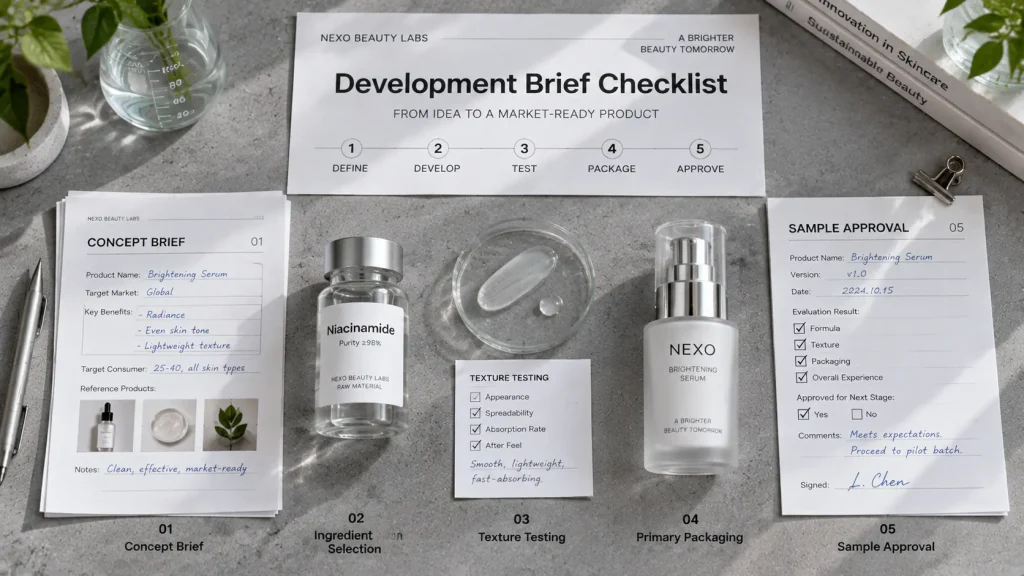
A cosmetic product development brief does not need to predict the final formula. Its job is to give the development team a clear target.
When product goals, consumer needs, sensory expectations, packaging, market requirements and commercial constraints are defined early, R&D can make better decisions from the first sample onward.
From concept and formulation to testing, packaging and manufacturing, the process becomes much easier to manage when everyone is working from the same brief.
A strong brief also gives an OEM/ODM development partner a clearer framework for evaluating what is technically and commercially realistic before the project moves too far into formulation or production preparation.
Frequently Asked Questions
What is a cosmetic product development brief?
It is a document that tells a manufacturer what you want to develop: the product concept, target consumer, performance and sensory goals, claims direction, packaging, and commercial requirements.
How detailed should a cosmetic brief be?
Detailed enough for R&D to understand the goal, but not so rigid that it prescribes the whole formula. Clear priorities matter more than long lists.
Do I need to know the exact ingredients?
No. Hero ingredients and restrictions help, but describing the finished-product experience is often more useful than naming a full ingredient list.
What if I don’t have all the answers yet?
That is common. A good manufacturer can help you refine a first draft of the brief, especially for markets, claims and packaging.
Can an OEM/ODM manufacturer help refine a product brief?
Yes. A development partner can help translate the brand’s product concept into practical formulation, packaging, testing, MOQ and manufacturing requirements. The more clearly the brand defines its priorities, the easier it is to evaluate the right development route.
Ready to Turn Your Brief Into a Product?
At NEXO Beauty Labs, product development connects positioning, ingredient strategy, custom formulation, sensory design, packaging, testing and manufacturing preparation.
Whether you are starting with an existing formula or developing something more customized, a clear product brief helps align the technical and commercial requirements before development moves forward.
Request a Cosmetic Product Development & OEM/ODM Consultation with NEXO Beauty Labs to discuss your product concept, formulation route, packaging, testing requirements, MOQ, and product-development plan.