
Cleansing Milk vs Micellar Water vs Bi-Phase Makeup Remover: Which Format Should Your Beauty Brand Develop?
Compare cleansing milk, micellar water and bi-phase makeup remover from a beauty product development perspective, including texture, packaging and positioning.
Makeup removal is not one single product category.
A creamy cleansing milk, lightweight micellar water, and bi-phase makeup remover can all be developed to remove makeup, sunscreen, sebum, and surface impurities — but they create very different formula structures, textures, usage rituals, packaging systems, and consumer expectations.
For beauty brands, the better question isn’t:
“Which makeup remover is best?”
It is:
“Which cleansing format best fits the makeup-removal need, target consumer, desired skin feel, usage scenario, and product positioning we want to build?”
This guide compares cleansing milk, micellar water, and bi-phase makeup remover from a beauty-brand formulation and OEM/ODM product-development perspective.
Quick Answer: Cleansing Milk vs Micellar Water vs Bi-Phase Remover
No format is automatically better.
The better choice depends on:
What the consumer needs to remove + how the cleansing step should feel afterward.
1. These Three Categories Are Useful — But Not Completely Mutually Exclusive
From a consumer perspective, cleansing milk, micellar water, and bi-phase remover are useful categories for comparing makeup-removal experiences.
Technically, however, they describe different aspects of a formulation.
Cleansing Milk
Usually describes a creamy or lotion-like emulsion cleansing format.
Micellar Water
Describes a primarily water-based cleansing product formulated around surfactant structures commonly described as micelles.
Bi-Phase Makeup Remover
Describes a product with two intentionally separate liquid phases that are mixed temporarily before use.
This means a product can potentially be both:
Micellar + Bi-Phase
if it combines a micellar cleansing system with an intentionally separated second phase.
Brands should therefore build the product description around the actual formula rather than assuming these marketing categories always represent completely separate technologies.
2. What Is Cleansing Milk?
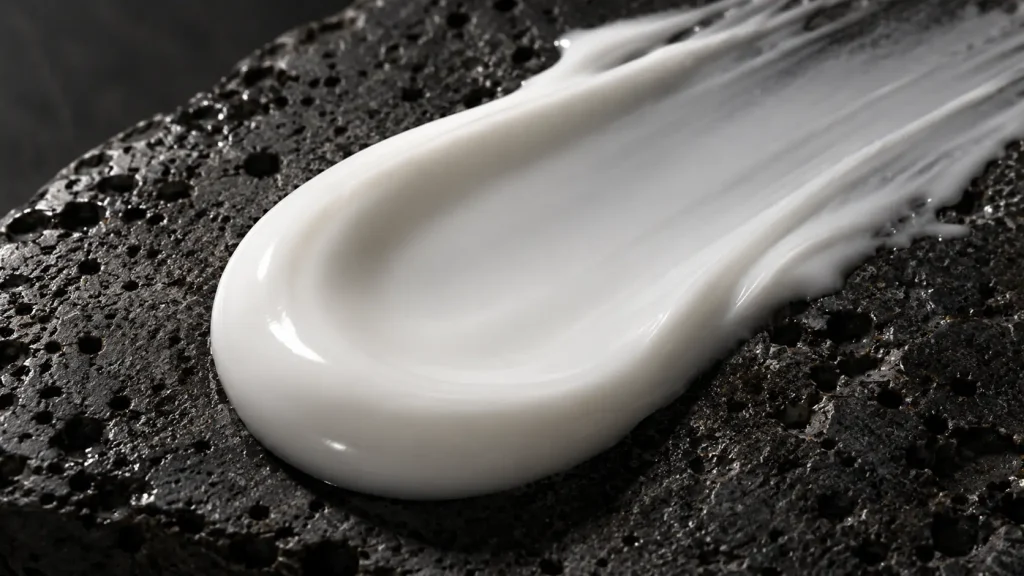
Cleansing milk generally creates a soft, creamy, lotion-like cleansing experience.
It can fit product concepts centered on:
- Gentle daily cleansing
- Dry-skin positioning
- Sensitive-skin-oriented concepts
- Skincare-first cleansing
- Comfortable after-feel
- Full-face cleansing
- Creamier sensory profiles
Compared with a lightweight cleansing water, cleansing milk usually relies on a more structured emulsion system.
This allows the product to feel closer to a moisturizer or lotion during application.
Cleansing Milk Development Considerations
- Emulsion stability
- Oil and emollient system
- Surfactant / cleansing system
- Viscosity
- Spreadability
- Makeup-removal performance
- Residue
- Rinse or wipe-off behavior
- Skin feel
- Fragrance
- Packaging compatibility
- Commercial filling
The challenge is balancing cleansing performance with the soft, comfortable after-feel consumers expect from the format.
A rich formula may feel luxurious on dry skin but too heavy for a consumer looking for a quick, fresh cleansing step.
For one product direction, see Chlorophyll Pore-Purifying Cleansing Milk.
3. What Is Micellar Water?

Micellar water generally sits at the lighter end of the makeup-removal category.
The format is commonly built around a water-rich cleansing system containing surfactants organized into structures known as micelles.
These cleansing structures help lift oil, debris, and makeup from the skin during use.
This format can support positioning around:
- Lightweight cleansing
- Minimalist skincare
- Daily makeup removal
- Travel convenience
- Fresh after-feel
- Low-residue routines
- Sensitive-skin-oriented concepts
- No-rinse or wipe-off use where appropriate to the finished formula
However, brands should not assume every transparent makeup-removal liquid is automatically a micellar water.
The category name should reflect the actual cleansing system being used.
Micellar Water Development Considerations
- Surfactant selection
- Micellar cleansing system
- Cleansing performance
- Clarity
- pH where relevant
- Skin feel
- Stickiness
- Residue
- Fragrance or fragrance-free direction
- Color
- Preservation strategy
- Packaging
- Formula stability
For a lightweight product, after-feel matters significantly.
A cleansing water that leaves noticeable tackiness or film can conflict with the fresh, minimal positioning consumers expect.
For one related format direction, see Rose Microbiome No-Rinse Makeup Remover.
4. Does Micellar Water Remove Waterproof Makeup?
It depends on the finished formula.
A conventional lightweight micellar water may be well suited to everyday makeup, oil, and surface impurities.
More resistant products such as:
- Waterproof mascara
- Long-wear eyeliner
- Transfer-resistant lipstick
- Heavy foundation systems
may require a different or more specialized removal system.
This is why some brands develop:
- Dedicated eye and lip removers
- Oil-enhanced micellar systems
- Bi-phase micellar products
- Cleansing oils or balms
The words “micellar water” alone do not determine how much makeup a product can remove.
Finished-formula performance should determine the positioning.
5. What Is a Bi-Phase Makeup Remover?
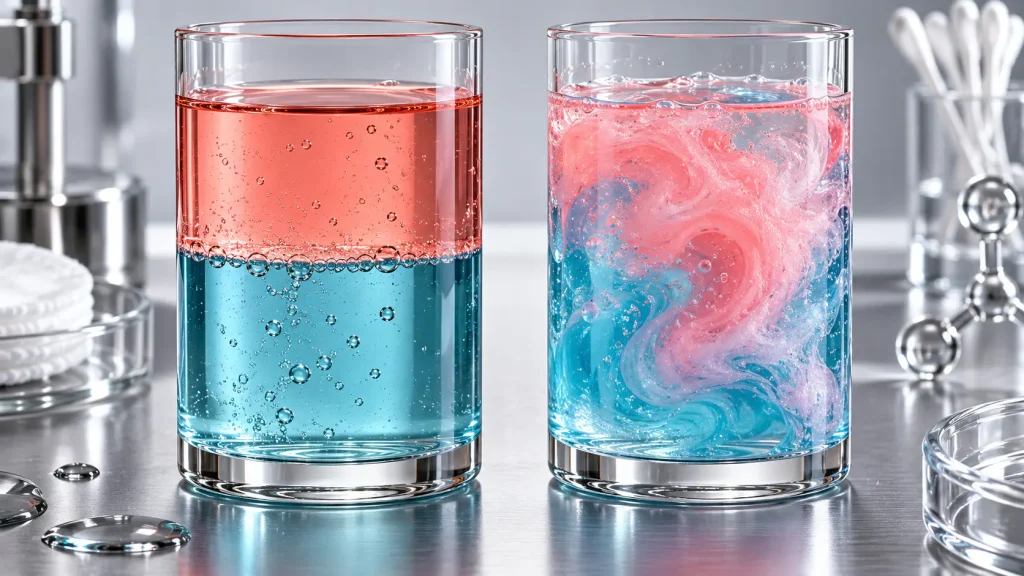
A bi-phase makeup remover contains two visibly separated liquid phases.
Before application, the consumer shakes the product so the two phases temporarily disperse together.
The format is particularly common in products positioned around:
- Eye makeup
- Lip makeup
- Waterproof cosmetics
- Long-wear makeup
- Targeted removal
- Visually distinctive product concepts
Bi-phase products often combine a more water-compatible phase with a lipophilic or oil-like phase, although the exact materials depend on the formulation.
The second phase is not necessarily a traditional botanical oil.
Different emollient and solvent systems may be used depending on the product design.
Bi-Phase Development Considerations
- Phase composition
- Phase ratio
- Visual separation
- Shake-to-mix performance
- Temporary dispersion behavior
- Re-separation time
- Makeup-removal performance
- Residue
- Eye and lip application
- Color
- Packaging clarity
- Compatibility
The goal is not to stop the phases from separating.
The goal is to create controlled and repeatable phase behavior.
For one product direction, see Gentle Eye & Lip Makeup Remover.
6. Why Bi-Phase Removers Are Often Used for Eye & Lip Makeup
Long-wear eye and lip products can contain water-resistant films, pigments, waxes, oils, and other materials designed specifically to remain on the skin.
A bi-phase remover gives formulators more flexibility to combine:
Water-Compatible Cleansing + Lipophilic Makeup Dissolution
within one shake-to-activate system.
This can make the format especially attractive for:
- Waterproof mascara
- Long-lasting eyeliner
- Long-wear lipstick
- Targeted eye and lip cleansing
However, “eye makeup remover,” “sensitive eyes,” or similar positioning should still match the actual finished formula and appropriate product evaluation.
Those claims should not be assumed simply because the formula is bi-phase.
7. Removal Performance & Skin Feel Need to Work Together
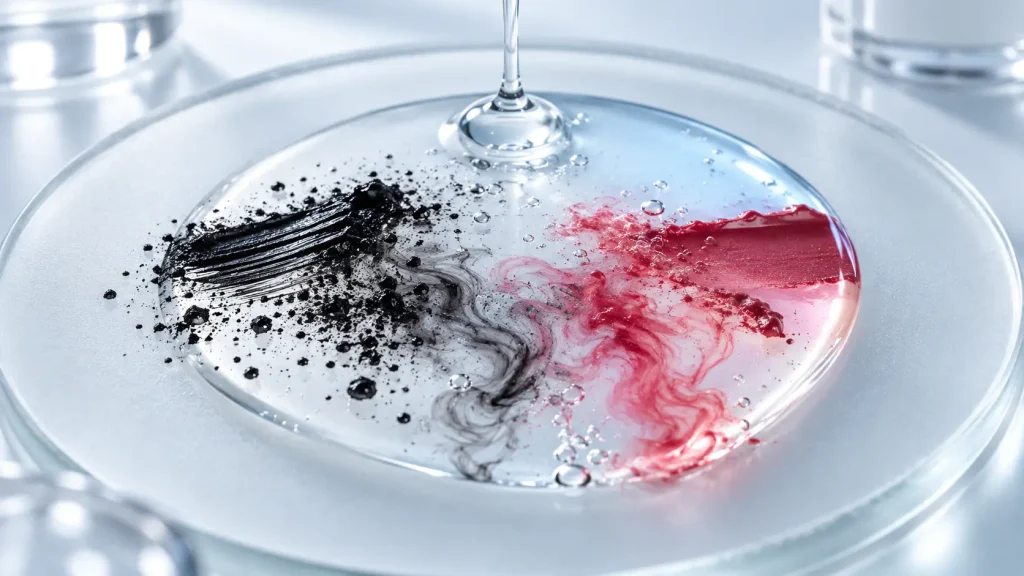
Makeup-remover development is not only about answering:
“Can the formula remove the makeup?”
The consumer also experiences what happens afterward.
Important sensory characteristics can include:
- Tightness
- Dryness perception
- Oiliness
- Stickiness
- Residue
- Softness
- Comfort
- Freshness
A product that removes makeup effectively but leaves an undesirable heavy film may create the wrong sensory experience.
Likewise, a very mild-feeling product may disappoint consumers if it cannot deliver the expected removal performance.
The goal is:
Removal Performance + Consumer Comfort + Appropriate After-Feel
8. Makeup Intensity Should Influence Format Selection
Light Everyday Makeup
A micellar or lightweight cleansing-water format may fit a simple everyday routine.
Full-Face Makeup
A cleansing milk can provide a more substantial full-face cleansing experience while maintaining a skincare-like texture.
Long-Wear or Waterproof Eye & Lip Makeup
A dedicated bi-phase remover can provide a more targeted product direction.
These are product-positioning tendencies rather than rigid performance rules.
The finished formulation ultimately determines what it can remove effectively.
9. Skin Type Should Influence the Sensory Target — Not Dictate the Format
Brands often describe cleansing milk as “for dry skin” and micellar water as “for sensitive skin.”
These can be useful positioning directions, but they should not become absolute technical rules.
Dry-Skin Positioning
Consumers may prefer:
- Creamier texture
- Soft after-feel
- Lower perception of tightness
- More skincare-like cleansing
Cleansing milk can fit naturally here.
Oily or Combination-Skin Positioning
Consumers may prioritize:
- Fresh texture
- Low residue
- Lightweight application
- Simple daily use
Micellar or lightweight cleansing-water products can support this experience.
Sensitive-Skin Positioning
The format name alone does not determine mildness.
Surfactant system, fragrance, preservatives, product pH, application method, cleansing performance, and the amount of rubbing required can all influence the user experience.
Sensitive-skin positioning should be built around the finished formulation rather than assumed from the texture category.
10. Does Micellar Water Need to Be Rinsed Off?
Not every micellar product needs to use exactly the same directions.
Many micellar waters are positioned for wipe-off or no-rinse use.
But whether a brand should make a no-rinse claim depends on:
- Actual formula
- Surfactant system
- Residue
- Consumer comfort
- Product positioning
- Directions for use
Some consumers may also use micellar water as the first step of a broader cleansing routine rather than as the final cleansing step.
The instructions should therefore match the product you actually developed.
Micellar Water ≠ Automatically No-Rinse in Every Product Concept
11. Eye-Area Products Need More Careful Development
Eye and lip makeup-removal concepts create additional product-development considerations because they are used around sensitive application areas.
Depending on the project, brands may need to consider:
- Ingredient selection
- Fragrance-free positioning
- Residue
- Application instructions
- Amount of rubbing required
- Eye-area consumer tolerance
- Finished-product testing appropriate to the intended claims
Claims such as:
- Suitable for sensitive eyes
- Suitable for contact-lens wearers
- Ophthalmologist tested
should be used only when the finished product and supporting evidence justify them.
12. Packaging Should Match the Cleansing Format
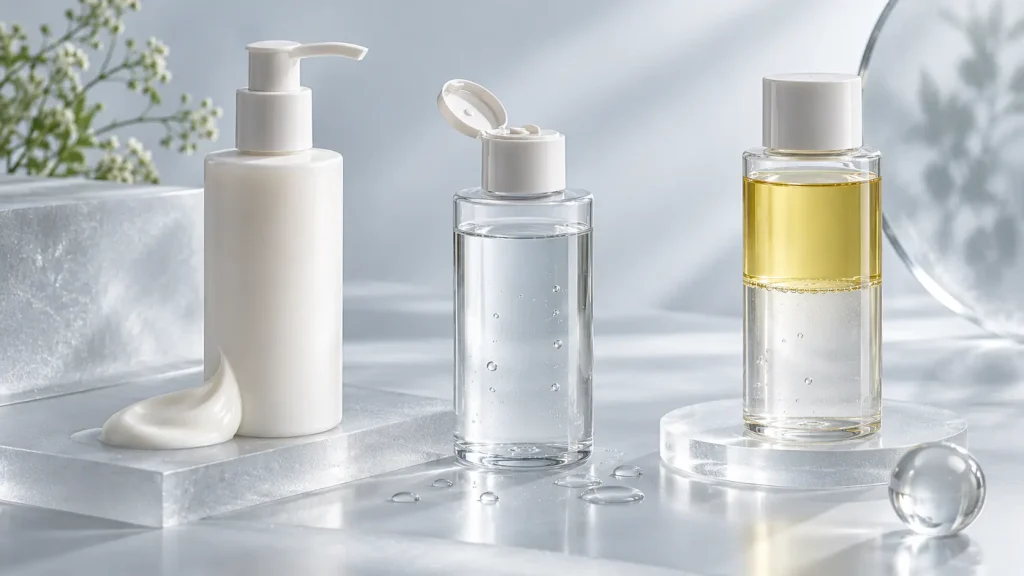
Cleansing Milk Packaging
- Pump bottle
- Standard bottle
- Tube
Micellar Water Packaging
- Bottle
- Flip-top closure
- Controlled dispensing cap
- Pump depending on the use concept
Bi-Phase Remover Packaging
A clear or semi-transparent bottle can be useful because the two-phase structure is part of the product’s visual identity.
Packaging development should also consider:
- Formula compatibility
- Leakage
- Closure security
- Dosage
- Shaking
- Consumer use
- Commercial filling
- Visual phase presentation
For more on packaging development, see How to Choose Cosmetic Packaging for Skincare & Beauty Products.
13. Stability Means Different Things for Each Format
Cleansing Milk
Evaluation may include:
- Emulsion stability
- Viscosity
- Separation
- Texture
- Color
- Odor
- Appearance
Micellar Water
Evaluation may include:
- Clarity
- Precipitation
- Color
- Odor
- pH where relevant
- Visible changes
- Packaging interaction
Bi-Phase Makeup Remover
This format needs to be interpreted differently.
Visible phase separation is intentional.
Evaluation may instead focus on whether:
- The two phases retain their intended appearance
- The phase boundary remains visually acceptable
- The product mixes appropriately when shaken
- The temporary mixed state behaves as intended
- The product re-separates consistently
- There is unwanted precipitation or permanent structural change
- The packaging continues to function correctly
For a designed bi-phase product, separation itself is not a stability failure.
The question is whether the phase behavior remains controlled and repeatable.
For more on this topic, see Cosmetic Stability Testing: What Beauty Brands Need to Know.
14. Cleansing Products Need Product-Specific Testing
The development and testing program should reflect the finished product rather than the category name alone.
Depending on the formula and target market, evaluation may include:
- Physical stability
- Microbiological quality
- Preservative efficacy where appropriate
- Packaging compatibility
- Sensory evaluation
- Cleansing or makeup-removal performance
- Consumer-use evaluation
- Eye-area testing where relevant
- Manufacturing consistency
A cleansing milk, micellar water, and bi-phase eye-and-lip remover should not automatically follow exactly the same evaluation program.
For the broader testing process, see Cosmetic Product Testing Before Mass Production.
15. Manufacturing Processes Also Differ
Cleansing Milk
Depending on the formula, commercial production may involve:
- Water and oil phase preparation
- Emulsification
- Homogenization
- Cooling
- Viscosity adjustment
- Filling
Micellar Water
Production may involve:
- Water-phase preparation
- Surfactant incorporation
- Solubilization
- Clarity control
- pH adjustment where relevant
- Controlled filling
Bi-Phase Remover
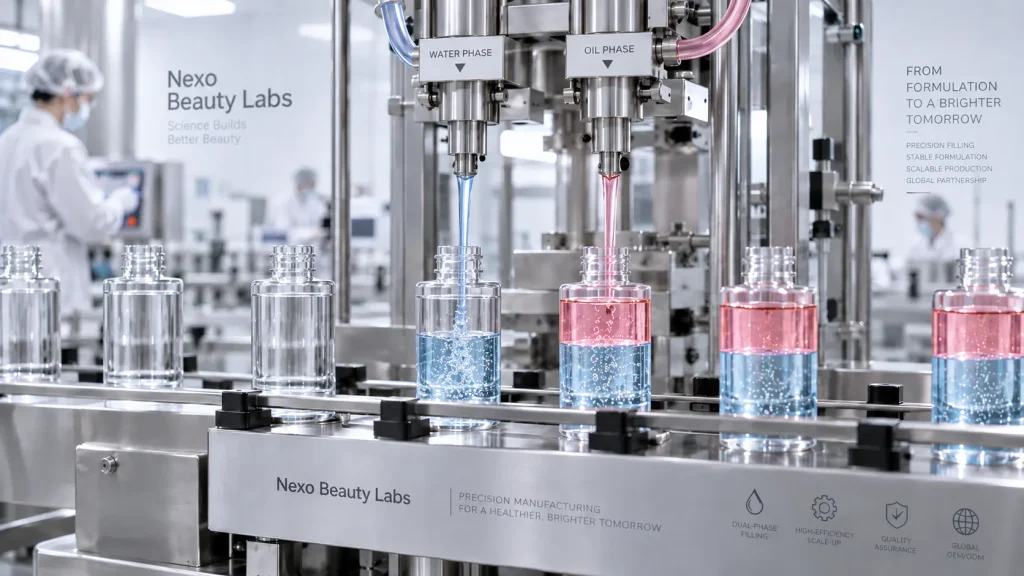
Manufacturing may require:
- Separate phase preparation
- Accurate phase ratios
- Controlled filling sequence
- Visual phase consistency
- Packaging compatibility
The commercial manufacturing process needs to reproduce the approved product structure consistently.
16. Can One Beauty Brand Develop More Than One Makeup Remover?
Yes.
Different formats can serve different makeup intensities and usage moments.
For example:
Micellar / Lightweight Cleansing Water
Everyday light makeup + convenience
↓
Cleansing Milk
Full-face cleansing + comfortable skincare-like experience
↓
Bi-Phase Eye & Lip Remover
Targeted long-wear / waterproof makeup removal
This creates a natural portfolio structure:
Light → Full Face → Targeted
rather than expecting one cleanser to solve every makeup-removal need.
17. Private Label, ODM & Custom Makeup-Remover Development
Private Label
A private label project can begin with an existing cleansing-milk, micellar-style, or makeup-removal formulation platform.
This reduces original development work while allowing branding, packaging, and selected customization depending on the manufacturer.
Customized ODM
An ODM project may adapt an existing formula direction through changes such as:
- Texture
- Surfactant system
- Emollient system
- Botanical ingredients
- Fragrance or fragrance-free direction
- Color
- Packaging
- Product positioning
Custom OEM Formulation
A custom project can be built around:
- Target consumer
- Makeup type
- Target skin feel
- Cleansing performance
- Application area
- Formula architecture
- Packaging
- Claims direction
- Target market
18. How Do Makeup-Remover Formats Affect MOQ?
Format selection also affects the commercial structure of a project.
MOQ can depend on:
- Formula batch size
- Raw materials
- Emulsion processing
- Packaging components
- Custom bottle colors
- Pumps or closures
- Decoration
- Specialized filling
- Testing requirements
A straightforward micellar-style formula in stock packaging may have a different MOQ structure from a custom bi-phase remover in a specialized decorated bottle.
But no format automatically has the lowest MOQ.
The complete finished-product specification determines the practical manufacturing minimum.
Which Cleansing Format Should Your Brand Develop?
Choose Cleansing Milk If Your Priority Is:
- Gentle full-face cleansing
- Creamy sensory experience
- Dry or comfort-focused positioning
- Skincare-first cleansing
- Soft after-feel
Choose Micellar Water If Your Priority Is:
- Lightweight cleansing
- Minimalist routines
- Convenience
- Fresh after-feel
- Travel or everyday use
- Low-residue positioning
Choose Bi-Phase Remover If Your Priority Is:
- Waterproof makeup
- Long-wear makeup
- Eye and lip makeup
- Targeted removal
- Shake-to-activate ritual
- Strong visual differentiation
A stronger development sequence is:
Target Consumer
↓
Makeup Type / Cleansing Need
↓
Application Area
↓
Desired After-Feel
↓
Formula Architecture
↓
Packaging
↓
Finished Product Format
Frequently Asked Questions
Is cleansing milk better than micellar water?
Not automatically. Cleansing milk usually creates a creamier, more skincare-like experience, while micellar water tends to support lightweight and convenient cleansing. The right choice depends on makeup intensity, skin-feel target, and product positioning.
What is the difference between cleansing milk and micellar water?
Cleansing milk is generally an emulsion-based, creamy cleansing format. Micellar water is primarily a water-based cleansing system using micellar surfactant structures. They therefore create different formula architectures and sensory experiences.
What is bi-phase makeup remover?
A bi-phase makeup remover contains two intentionally separated liquid phases that are shaken before use so they temporarily disperse together. The format is often used for targeted long-wear and waterproof makeup-removal concepts.
Is bi-phase makeup remover the same as micellar water?
Not necessarily, but the categories can overlap. Some products combine a micellar cleansing system with a two-phase structure and can therefore be described as bi-phase micellar makeup removers.
Which makeup remover is best for waterproof mascara?
A product specifically formulated and tested for waterproof makeup is the better choice. Bi-phase eye-and-lip removers are commonly developed for this positioning because the two-phase structure can combine complementary removal systems.
Can micellar water remove waterproof makeup?
Some formulas can, particularly products specifically designed for waterproof makeup or bi-phase micellar systems. A conventional lightweight micellar water should not automatically be assumed to remove every waterproof cosmetic effectively.
Can micellar water be positioned as no-rinse?
Potentially. Many micellar waters use no-rinse directions, but the intended use should reflect the actual finished formula, surfactant system, residue, consumer comfort, and product positioning.
Is cleansing milk suitable for dry skin?
Cleansing milk can fit dry-skin or comfort-oriented positioning naturally because of its creamy texture, but suitability ultimately depends on the complete formula.
Is micellar water always better for sensitive skin?
No. Mildness depends on the surfactants, preservatives, fragrance, pH, cleansing performance, application method, and complete finished formulation — not the category name alone.
Is phase separation a problem in bi-phase makeup remover?
No, when separation is part of the intended design. The important questions are whether the phases maintain the expected appearance, mix appropriately when shaken, and re-separate consistently afterward.
Does cleansing milk need stability testing?
Yes. Emulsion-based cleansing milk may need evaluation of viscosity, phase stability, texture, appearance, odor, packaging compatibility, and other relevant characteristics.
Can a brand develop several makeup-removal formats?
Yes. Micellar water, cleansing milk, and bi-phase remover can serve different consumer needs within one broader cleansing portfolio.
Which makeup-remover format has the lowest MOQ?
There is no universal answer. MOQ depends on formula batch size, raw materials, packaging, decoration, filling requirements, customization, and manufacturing setup.
Develop the Cleansing Format Around the Consumer
The choice between cleansing milk, micellar water, and bi-phase makeup remover should not begin with which format looks most fashionable.
It should begin with:
What is the consumer trying to remove?
Where will the product be used?
How should the skin feel afterward?
What role should the product play in the cleansing routine?
Once those questions are clear, the formula architecture, packaging system, and finished format become much easier to define.
At NEXO Beauty Labs, cleansing and makeup-removal development can be approached across private label, ODM, and custom OEM pathways together with formulation, sensory design, packaging, stability evaluation, product testing, scale-up, and commercial manufacturing.
Whether you are developing a creamy cleansing milk, lightweight micellar cleansing water, or targeted bi-phase eye-and-lip remover, the strongest format is the one that supports the removal performance and consumer experience your brand is actually trying to create.
Request a Cleansing & Makeup Remover OEM/ODM Consultation with NEXO Beauty Labs to discuss your formula, cleansing format, packaging, MOQ, testing, and manufacturing requirements.