Beauty Product Manufacturing Guide: From Concept to Market
A complete guide to beauty product manufacturing — from formulation and OEM vs. ODM to choosing a manufacturer and realistic timelines. Learn how to get your product to market.
Turning a beauty product idea into finished inventory involves much more than creating a formula and filling a bottle.
Beauty product manufacturing brings together product development, formulation, ingredient sourcing, testing, packaging, scale-up, production, quality control, and commercial planning before a skincare, haircare, body care, or personal care product is ready for market.
For most beauty brands, these capabilities come from working with a professional cosmetic manufacturer rather than building an in-house laboratory and production facility.
This guide explains how beauty product manufacturing works, the difference between OEM, ODM, and private label, what affects MOQ, cost, and timelines, and what to look for when choosing a manufacturing partner.
This article provides a general overview of cosmetic manufacturing and is not legal or regulatory advice. Product requirements vary by category and target market, so specific projects should be reviewed according to the applicable requirements.
What Is Beauty Product Manufacturing?
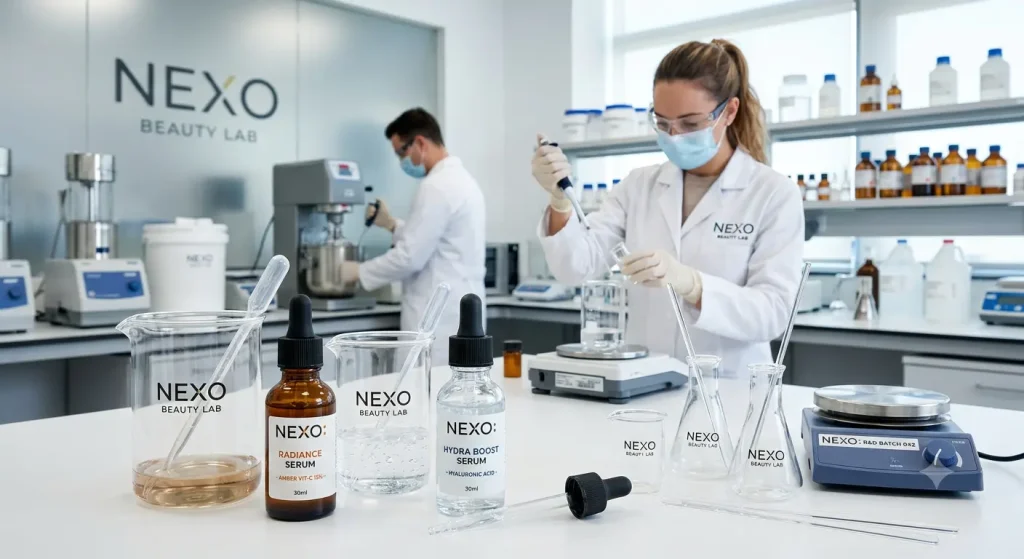
Beauty product manufacturing is the process of developing and producing cosmetic or personal care products at commercial scale.
Depending on the project, it can include:
- Product concept development
- Formula development or formula selection
- Ingredient and raw material sourcing
- Sampling and revisions
- Product testing
- Packaging sourcing and compatibility
- Pilot production and scale-up
- Commercial batch manufacturing
- Filling and packaging
- Quality control
- Finished-product release
A professional beauty product manufacturer brings these technical and production resources together so a brand can move from product concept to repeatable commercial manufacturing.
Beauty Product Manufacturing vs. Contract Manufacturing
You’ll often see the terms beauty product manufacturing and cosmetic contract manufacturing used together.
Beauty product manufacturing describes the overall process of developing and producing beauty products.
Contract manufacturing describes the business relationship in which a third-party manufacturer produces those products for another company’s brand.
Instead of investing in its own factory, a beauty brand can work with a contract manufacturer that already has:
- Cosmetic chemists and R&D resources
- Manufacturing equipment
- Production teams
- Quality-control systems
- Ingredient suppliers
- Packaging resources
- Commercial filling capabilities
This is the model used by many brands across skincare, haircare, body care, personal care, and other beauty categories.
What Types of Beauty Products Can Be Manufactured?
The capabilities of cosmetic manufacturers vary, but full-service beauty product manufacturers may support multiple categories.
Skincare
- Facial cleansers
- Toners and essences
- Serums and ampoules
- Moisturizers and creams
- Eye care
- Face masks
- Exfoliating products
Hair & Scalp Care
- Shampoos
- Conditioners
- Hair masks
- Hair oils
- Scalp serums
- Leave-in treatments
Body & Personal Care
- Body lotions and creams
- Body serums
- Body washes
- Scrubs
- Hand care
- Deodorant products
Other Specialized Categories
Depending on the manufacturer, capabilities may also include sun care, sticks, powders, oils, hydrogel products, or other specialized cosmetic formats.
Category experience matters because different product types require different formulation knowledge, processing equipment, filling systems, packaging, and testing strategies.
How Does the Beauty Product Manufacturing Process Work?
Every manufacturer has its own workflow, but most beauty products move through the same general development stages.
1. Product Concept & Brand Brief
The process starts by defining what you’re trying to create.
A useful product brief usually includes:
- Product category
- Target consumer
- Main product benefits
- Ingredient direction
- Desired texture and fragrance
- Target price positioning
- Packaging direction
- Estimated order quantity
- Target market
A strong brief gives the manufacturer enough information to recommend an appropriate formula, packaging, manufacturing model, and development route.
2. Formula Development or Selection
The next stage depends on how customized the product needs to be.
A brand looking for a faster launch may begin with an existing manufacturer-developed formula.
A brand seeking greater differentiation may require more customized R&D work involving ingredients, texture, sensory characteristics, and product specifications.
This is where OEM, ODM, and private label manufacturing begin to differ.
3. Sampling, Testing & Formula Approval
Physical samples allow the brand to evaluate characteristics such as:
- Texture
- Fragrance
- Color
- Absorption
- Viscosity
- Application
- Overall sensory experience
Depending on the product, evaluation may also involve stability, microbiological quality, preservative-system performance, formula-packaging compatibility, and other product-specific testing.
4. Packaging Development
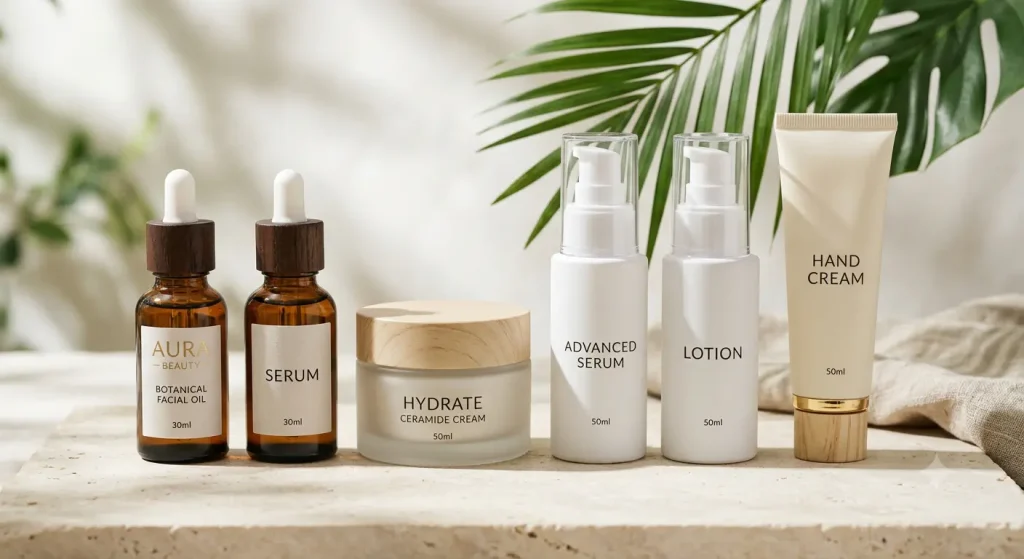
Packaging affects much more than appearance.
It can influence:
- Product protection
- Dispensing
- Formula compatibility
- Shipping
- MOQ
- Unit cost
- Consumer experience
Primary packaging includes the bottle, jar, tube, pump, dropper, or other component that directly contains the formula.
Secondary packaging can include cartons, labels, sleeves, inserts, and other external components.
5. Scale-Up & Commercial Manufacturing
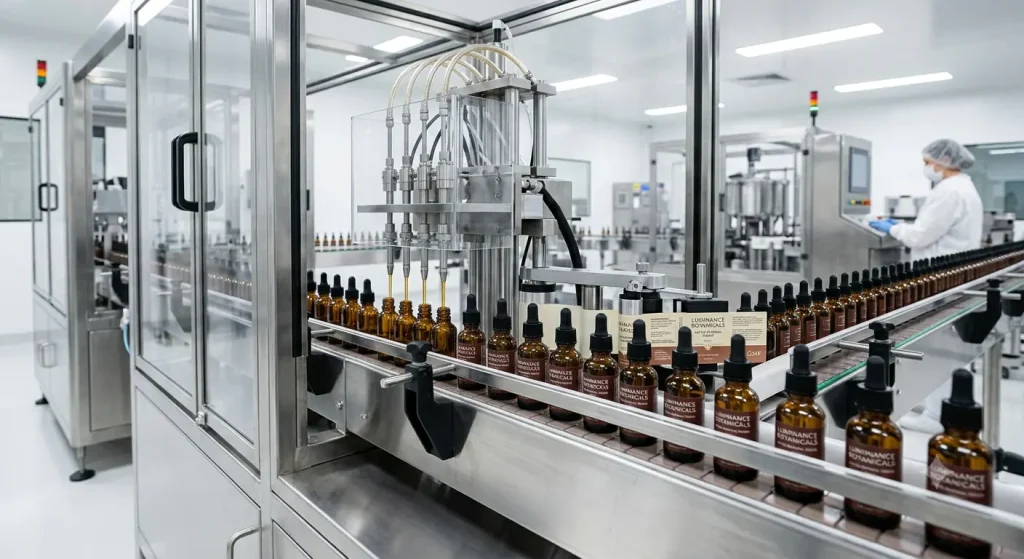
An approved laboratory sample still needs to translate successfully into commercial production.
During scale-up, the manufacturer establishes appropriate production parameters for larger equipment and batch sizes.
Once the process is approved, commercial manufacturing can involve controlled operations such as weighing, mixing, heating, cooling, emulsification, homogenization, or other product-specific processing steps.
6. Filling, Packaging & Coding
After the manufactured bulk product passes the required in-process checks, it can move into its final packaging.
This stage may include:
- Filling
- Closures and caps
- Pumps or droppers
- Sealing
- Labels
- Batch coding
- Outer cartons
7. Quality Control & Finished-Product Release
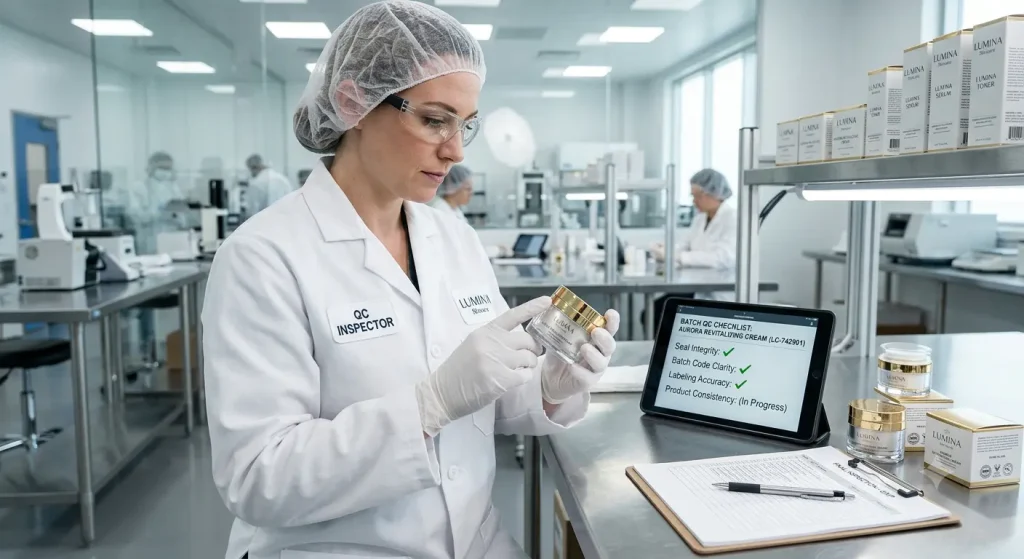
Quality control takes place throughout the manufacturing process rather than only after production is finished.
Depending on the product specification, checks may involve:
- Appearance
- Odor
- pH where applicable
- Viscosity
- Fill weight or volume
- Packaging integrity
- Labeling
- Finished-product quality
This section provides a high-level view of how a beauty product moves from concept through production. For a more detailed look at raw-material preparation, batching, scale-up, filling, packaging, quality control, and the full production workflow, continue with our Complete Cosmetic Manufacturing Process Guide.
OEM vs. ODM vs. Private Label Beauty Manufacturing
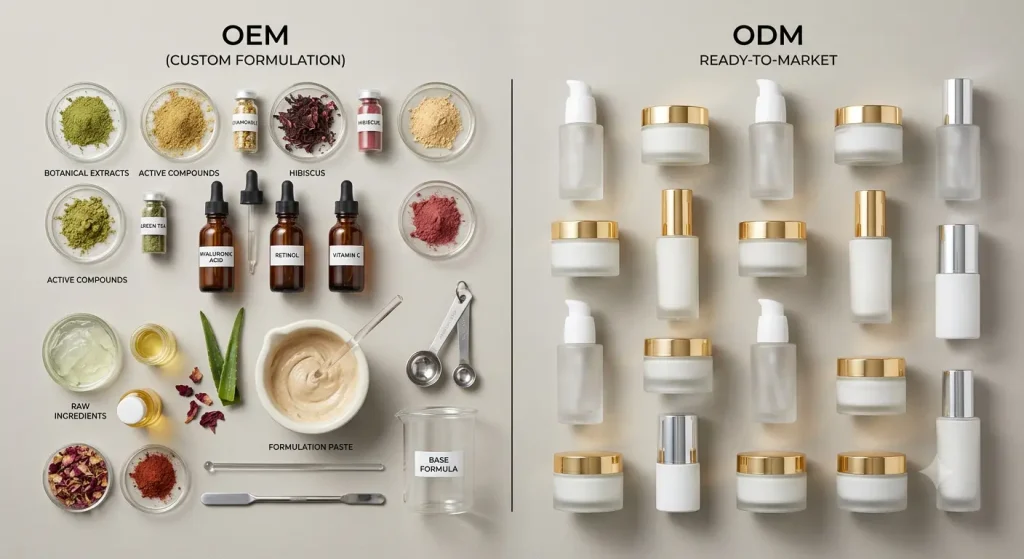
Beauty brands can outsource manufacturing through several development models.
The terminology isn’t used identically by every manufacturer, so the actual scope of work is more important than the label itself.
Before choosing a manufacturing model, confirm:
- Customization limits
- Formula ownership
- Exclusivity
- MOQ
- Testing responsibilities
- Packaging ownership
- Development fees
- Commercial terms
If you’re still deciding which development route fits your brand, our OEM vs. ODM vs. Private Label Cosmetics Guide explains the differences in customization, development responsibility, formula strategy, speed, and commercial structure in more detail.
What Should You Prepare Before Contacting a Beauty Product Manufacturer?
You don’t need a chemistry degree or a finished formula before speaking with a manufacturer.
But preparing a basic development brief makes the conversation much more productive.
Try to provide:
- Product type — serum, shampoo, body cream, mask, deodorant, or another format.
- Target consumer — who the product is being developed for.
- Main benefits — what problem or need the product should address.
- Reference products — examples that help communicate texture, packaging, or positioning.
- Ingredient direction — preferred ingredients or ingredients you want to avoid.
- Target price — your intended retail or product-cost positioning.
- Estimated quantity — an initial idea of your production volume.
- Target market — the countries or regions where you plan to sell.
- Packaging direction — stock, customized, or fully custom.
- Launch timing — when you hope to have finished inventory available.
A strong manufacturer can help turn these commercial goals into a more detailed technical development plan.
What Affects Beauty Product Manufacturing Costs?
There is no universal cost for manufacturing a cosmetic product.
The main variables include:
- Formula complexity: custom development generally involves more R&D than selecting an existing formula.
- Ingredients: ingredient selection, concentration, availability, and supplier minimums influence material cost.
- Testing: the testing program depends on the product, packaging, claims, and intended market.
- Packaging: stock components usually require less development than custom molds and highly customized decoration.
- MOQ: production and packaging quantities influence the amount of inventory investment required.
- Customization: specialized colors, textures, fragrance, decoration, packaging, and formulation requirements can increase development complexity.
The most accurate way to understand cost is to provide a detailed brief and request a project-specific quotation.
For a deeper breakdown of formulation, packaging, testing, MOQ, development, and launch-budget considerations, see our How Much Does It Cost to Create Your Own Beauty Product?
What Determines Cosmetic Manufacturing MOQ?
MOQ means minimum order quantity — the smallest quantity that can practically be produced under a specific product specification.
There is no universal MOQ for beauty manufacturing.
Minimums can be influenced by:
- Formula batch size
- Raw material supplier minimums
- Product format
- Production equipment
- Packaging supplier MOQ
- Printing and decoration
- Level of customization
A lower MOQ can reduce initial inventory exposure, but it should be evaluated together with unit economics, product quality, packaging options, and the manufacturer’s ability to support future growth.
How Long Does Beauty Product Manufacturing Take?
Beauty product manufacturing timelines depend heavily on the amount of development required.
An existing formula with readily available packaging can generally move more quickly than a highly customized project involving multiple sample rounds, specialized ingredients, custom packaging, additional testing, and production scale-up.
Common factors affecting the schedule include:
- Formula development
- Number of sample revisions
- Ingredient availability
- Testing
- Packaging sourcing
- Custom packaging production
- Artwork approval
- Manufacturing capacity
- Target-market requirements
Ask your manufacturer for a stage-by-stage development timeline instead of planning around one generic industry estimate.
Quality, Testing & Manufacturing Standards
Quality control should be built into the manufacturing process from incoming raw materials through finished-product release.
When evaluating a manufacturer, ask about:
- Raw material controls
- Supplier qualification
- Batch documentation
- Manufacturing procedures
- In-process quality checks
- Finished-product release
- Traceability
- Testing capabilities
Also discuss which quality standards the manufacturer follows and whether they have experience supporting products intended for your target market.
The appropriate testing and compliance strategy should be determined according to the actual formula, product category, packaging, claims, intended use, and destination market.
How to Choose a Beauty Product Manufacturer
Your manufacturer can influence formula development, product quality, cost, timelines, packaging, supply continuity, and your ability to scale.
Before choosing a partner, evaluate these areas:
Product Category Experience
Ask whether the manufacturer regularly works with your product category and format.
R&D Capability
In-house formulation resources can be especially valuable if you need product customization or expect to develop additional formulas later.
Quality Systems
Understand how ingredients, production batches, packaging, documentation, and finished products are controlled.
MOQ & Commercial Fit
The manufacturer’s minimum quantities should make sense for both your current launch plan and your expected growth.
Packaging Support
A manufacturer with packaging resources can help coordinate formula and packaging development as one product system.
Communication & Project Management
Clear timelines, documented approvals, realistic expectations, and responsive communication are important throughout development.
Scalability
Ask whether the manufacturer can support larger production volumes, new categories, and additional SKUs if your brand grows.
Common Beauty Product Manufacturing Mistakes
Many avoidable product-development problems begin before manufacturing starts.
- Starting without a clear product brief. Major changes later can affect formula development, packaging, testing, cost, and timelines.
- Choosing packaging too late. Formula and packaging should be considered together.
- Focusing only on MOQ. Low minimums don’t automatically mean a manufacturer is the best commercial or technical fit.
- Ignoring scale-up. A successful laboratory sample still needs to translate into repeatable commercial manufacturing.
- Leaving testing until the end. Testing strategy should be considered as part of development.
- Setting an unrealistic launch date. Formula revisions, packaging lead times, testing, and sourcing can all affect the schedule.
- Assuming OEM or ODM determines formula ownership. Ownership and exclusivity should be confirmed through the actual commercial agreement.
Frequently Asked Questions
What is beauty product manufacturing?
Beauty product manufacturing is the commercial development and production of skincare, haircare, body care, personal care, and other cosmetic products. It can include formulation, testing, sourcing, packaging, scale-up, production, filling, quality control, and finished-product release.
Do I need my own formula before contacting a manufacturer?
No. Depending on the manufacturer, you may select an existing formula, customize an existing product platform, or develop a more customized formula with an R&D team.
What is the difference between OEM and ODM beauty manufacturing?
OEM generally involves manufacturing according to a more customized product brief or specification, while ODM commonly begins with the manufacturer’s existing formulation resources or product platforms. Exact definitions vary between manufacturers, so compare the actual development scope.
Is private label the same as ODM?
Not always. Private label generally starts closer to an existing ready-developed product, while ODM can involve a greater level of manufacturer-led development or customization. The boundaries vary between suppliers.
What is the MOQ for beauty product manufacturing?
There is no universal MOQ. Minimum production quantities depend on formula batch size, raw materials, product format, packaging, decoration, and the manufacturer’s production setup.
How long does it take to manufacture a beauty product?
The timeline depends on the level of customization, formula revisions, testing, ingredient sourcing, packaging, production scheduling, and target-market requirements.
How much does beauty product manufacturing cost?
Cost depends on formula development, ingredients, testing, MOQ, packaging, customization, and production requirements. A project-specific quotation is more useful than a generic industry estimate.
What testing may be required?
The appropriate testing depends on the formula, packaging, claims, intended use, product category, and target market. Stability, microbiological quality, preservative-system evaluation, compatibility, and other product-specific testing may need to be considered.
How do I choose a reliable beauty product manufacturer?
Evaluate category experience, R&D capability, manufacturing and quality systems, testing resources, packaging support, MOQ, communication, commercial terms, and scalability.
Can a manufacturer help with packaging?
Many full-service beauty product manufacturers can assist with primary packaging, secondary packaging, decoration, labels, and packaging sourcing alongside formula development.
Ready to Develop Your Beauty Product?
Successful beauty product manufacturing begins with a clear product strategy and a manufacturing partner whose capabilities match what you’re trying to build.
NEXO Beauty Labs supports brands across skincare, haircare, body care, sun care, and personal care through private label, ODM, and custom OEM product development.
From formulation and sampling through packaging, testing, commercial manufacturing, and repeat production, our goal is to help brands turn product concepts into scalable finished products.
Request an OEM/ODM Consultation with NEXO Beauty Labs to discuss your product concept, formulation direction, packaging, MOQ, target market, and next steps.