Barrier Repair Cream vs Lotion vs Gel: Which Texture Is Right for Your Skincare Brand?
Compare barrier repair creams, lotions and gels from a skincare development perspective, including texture, ingredients, packaging and consumer positioning.
Barrier-focused skincare has become an important direction in modern beauty.
But a barrier-care product does not need to come in one specific texture.
A rich cream, lightweight lotion, fresh gel, or gel-cream can all support hydration, comfort, dryness care, and healthy-looking skin-barrier positioning while creating very different sensory experiences.
For beauty brands, the better question isn’t:
“Which texture is best for barrier repair?”
It is:
“Which texture best fits the target consumer, skin type, usage scenario, formula strategy, and brand positioning?”
The strongest product-development approach is therefore:
Consumer Need → Formula Architecture → Sensory Target → Packaging → Finished Texture
rather than choosing “cream,” “lotion,” or “gel” first and forcing the formula to fit that decision.
Quick Answer: Barrier Cream vs Lotion vs Gel
No texture is automatically more effective simply because it is richer.
Barrier-focused performance depends on the complete formula and supporting evidence, while texture determines how that formula is delivered and experienced by the consumer.
1. What Does “Barrier Repair” Mean in Cosmetic Product Development?
From a cosmetic product-development perspective, barrier-focused skincare can be built around areas such as:
- Moisturization
- Skin comfort
- Dryness care
- Sensitive-skin positioning
- Supporting a healthy-looking skin barrier
- Reducing the feeling of tightness
- Improving softness and smoothness
- Helping reduce moisture loss depending on the formulation
Barrier care is not created by one ingredient and is not defined by one texture.
A formulation may combine several functional systems:
- Humectants
- Emollients
- Occlusive ingredients where appropriate
- Ceramides or other lipid-related systems
- Soothing ingredients
- Botanical or biotech ingredients
- Texture-building and emulsification systems
What matters is how these systems work together in the finished formulation.
Barrier care is a formulation strategy — not simply a thick cream.
2. Cream, Lotion & Gel Are Texture Categories — Not Fixed Technical Specifications
It is useful for brands to understand that words such as cream, lotion, gel, and gel-cream are practical product descriptions rather than universally fixed formula specifications.
Two products both marketed as “cream” can have very different:
- Oil phase
- Water phase
- Viscosity
- Occlusiveness
- Emollient system
- Skin feel
Likewise, a gel-cream may contain a meaningful lipid and emollient system while still delivering a lightweight sensory profile.
This means texture names should guide product positioning, but the actual formulation architecture should guide technical development.
3. Barrier Repair Cream: Richer & More Cushioning
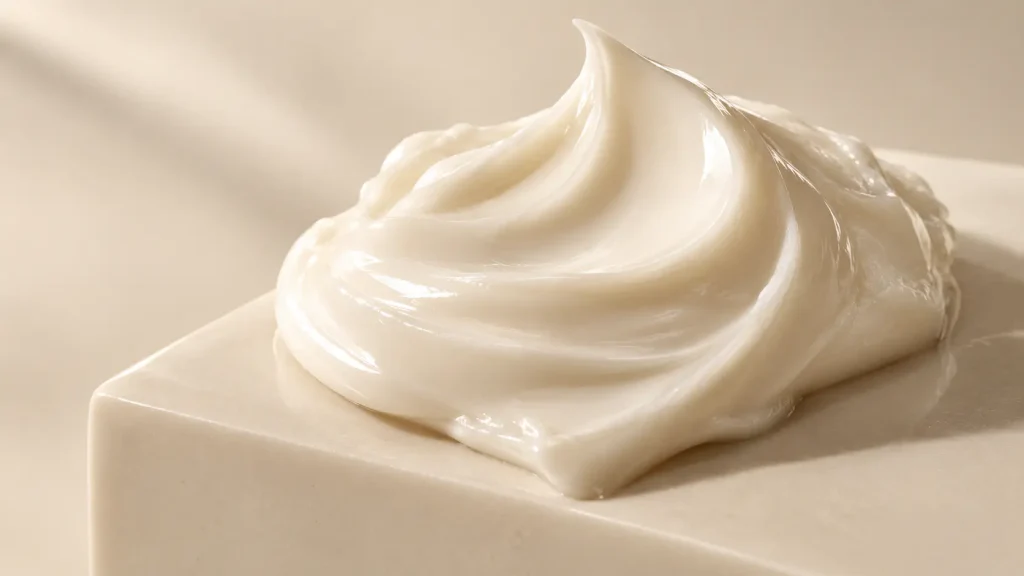
Cream is the format consumers often associate most strongly with barrier-focused skincare.
Its richer structure can naturally support positioning around:
- Dry skin
- Intensive moisturization
- Night care
- Seasonal dryness
- Comfort-focused routines
- Premium barrier care
Typical Sensory Direction
A barrier cream may aim to feel:
- Rich
- Cushioning
- Nourishing
- Silky
- Comforting
- Protective-feeling
But richness needs balance.
A cream designed for very dry skin can feel too heavy or waxy for a consumer who prefers fast absorption or lighter layering.
Key Development Considerations
- Richness
- Occlusive feel
- Spreadability
- Absorption
- Waxiness
- Oiliness
- Residue
- After-feel
- Emulsion stability
- Packaging compatibility
The goal is not to create the thickest possible cream.
It is to create the right level of richness for the intended consumer.
For one product direction, see Skin Barrier Repair Cream.
4. Barrier Repair Lotion: Balanced Everyday Moisturization
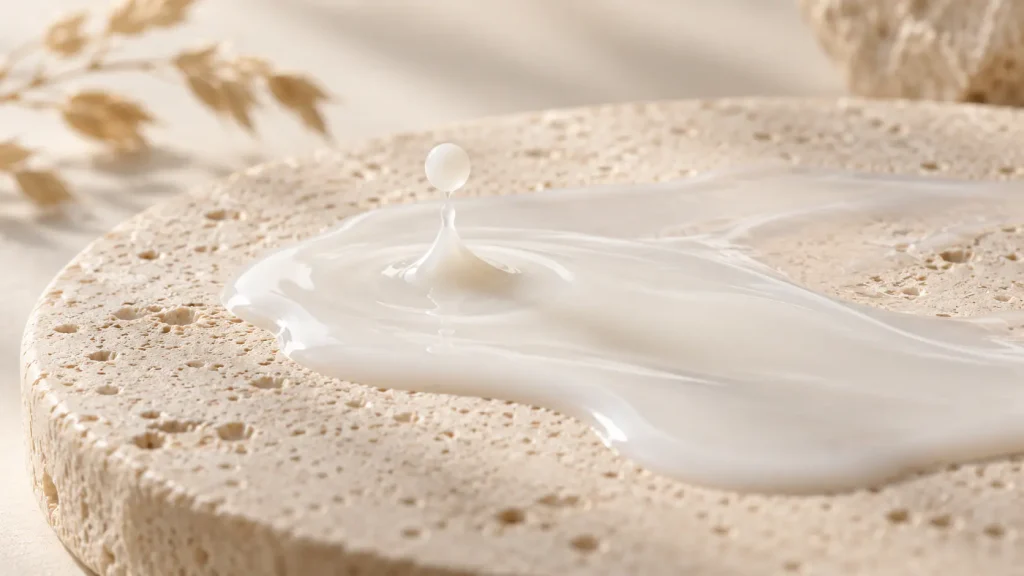
Lotion often sits between a rich cream and a lighter gel or gel-cream in sensory experience.
This makes it highly versatile.
Barrier lotion concepts can be developed around:
- Daily moisturization
- Combination-skin positioning
- Daytime skincare
- Layering under sunscreen or makeup
- Face and body care
- Lightweight barrier support
- Broad consumer use
The main advantage of lotion is balance:
Moisturization + Spreadability + Lightweight Comfort
Key Development Considerations
- Flow
- Viscosity
- Spreadability
- Moisturizing feel
- Absorption
- Non-greasy finish
- Tackiness
- Pump compatibility
- Filling behavior
For an example of this positioning, see Bletilla Striata Skin Barrier Repair Lotion.
5. Barrier Repair Gel / Gel-Cream: Lightweight Barrier Care
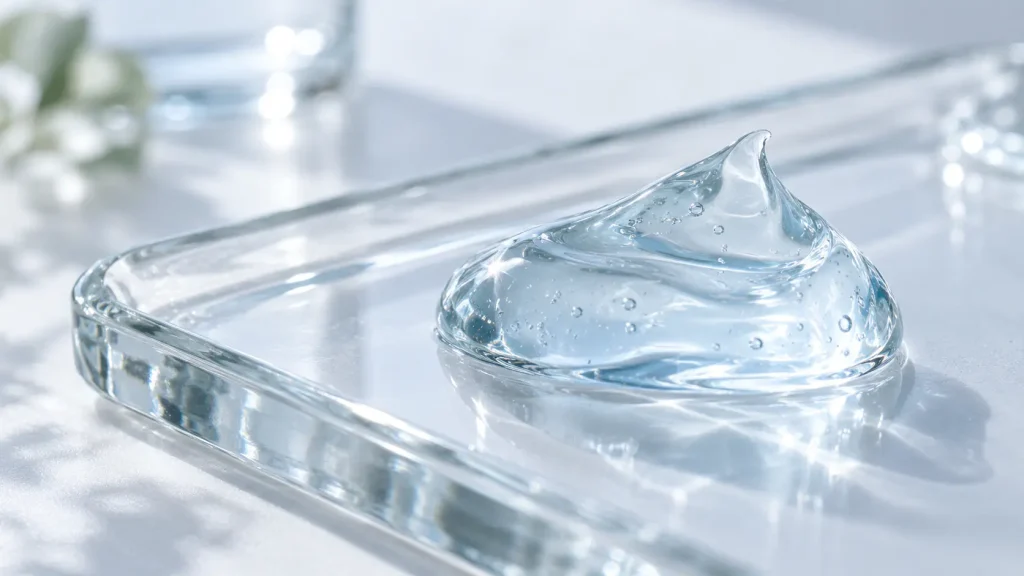
Gel creates a noticeably lighter consumer experience.
It can be especially useful for positioning around:
- Lightweight hydration
- Fresh texture
- Cooling sensation
- Fast absorption
- Oily or combination-skin routines
- Humid-climate skincare
- Layering
- Minimal residue
- Modern skincare positioning
One important misconception is that a lightweight gel must automatically provide weaker barrier-care positioning.
That is not necessarily true.
A gel or gel-cream can still contain:
- Humectants
- Selected emollients
- Ceramides or other lipid-related ingredients where technically suitable
- Soothing ingredients
- Botanical or biotech actives
The key difference is often the sensory architecture and delivery system, not simply whether the product can support a barrier-focused concept.
Key Development Considerations
- Wateriness
- Cooling feel
- Stickiness
- Pilling
- Residue
- Transparency or translucency
- Gel structure
- Viscosity
- pH where relevant
- Active compatibility
For one lightweight barrier-support direction, see Skin Rese Barrier Repair Gel.
6. Ingredient Architecture Matters More Than Texture Alone
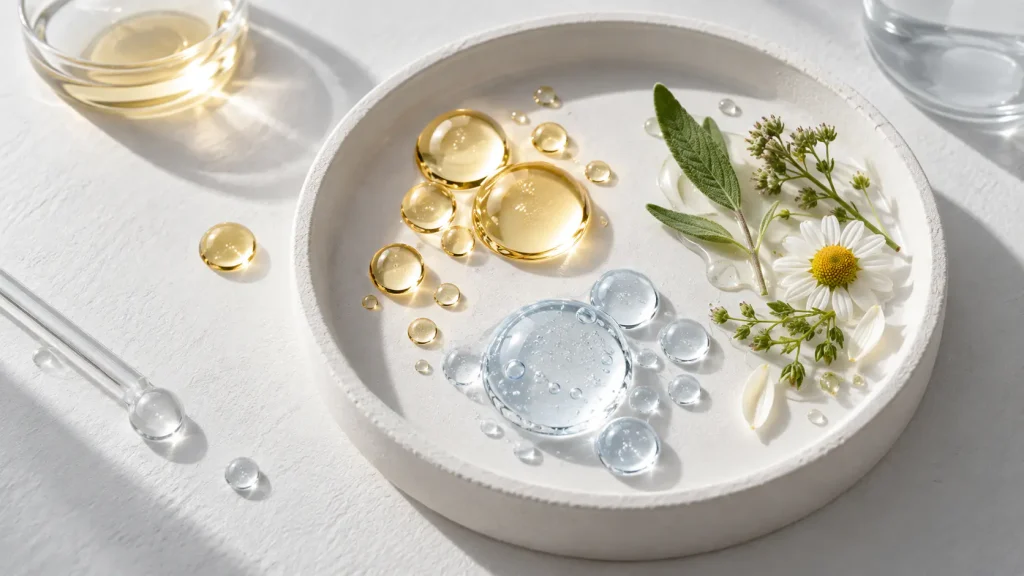
A barrier-focused moisturizer should not be built around texture alone.
The formula architecture matters more.
Humectants
Humectants help support hydration by attracting and retaining water within the stratum corneum.
Examples can include ingredients such as glycerin, hyaluronic-acid systems, or other humectants appropriate to the formulation.
Emollients
Emollients help improve softness, slip, and surface feel.
They also strongly influence whether a product feels silky, rich, dry-touch, or lightweight.
Occlusive Components
Where appropriate to the product concept, occlusive ingredients can help reduce moisture loss by forming a more protective surface film.
They are often easier to incorporate into richer textures, but lighter formulations can still use carefully selected occlusive or film-forming systems.
Lipid-Related Systems
Barrier-care formulas may use ceramides and other compatible lipid-related ingredients as part of their formulation strategy.
The value comes from how those ingredients are incorporated into the complete formula — not simply from listing a popular ingredient on the label.
Soothing Ingredients
These can support comfort-oriented or sensitive-skin positioning depending on the ingredient system and supporting evidence.
Botanical & Biotech Ingredients
Botanical extracts, fermentation-derived materials, peptides, or other biotech ingredients can add differentiation and storytelling.
But more ingredients do not automatically make a stronger barrier product.
Compatibility + Use Level + Stability + Sensory Performance + Finished-Product Evidence
matter more than ingredient count.
For more on formulation development, see Cosmetic Product Formulation: Process, Ingredients & Why It Matters.
7. Should Barrier Cream Have More Ceramides Than Gel?
Not necessarily.
Texture name alone does not determine the correct level or type of barrier-support ingredients.
A richer cream may naturally provide more room for certain emollient, lipid, and occlusive systems.
But a well-designed gel-cream can still incorporate meaningful lipid and barrier-supportive ingredients while maintaining a lighter finish.
The better formulation question is:
“What ingredient architecture delivers the target performance while maintaining the desired sensory profile?”
rather than:
“How many barrier ingredients can we fit into the formula?”
8. Match Texture to the Target Consumer
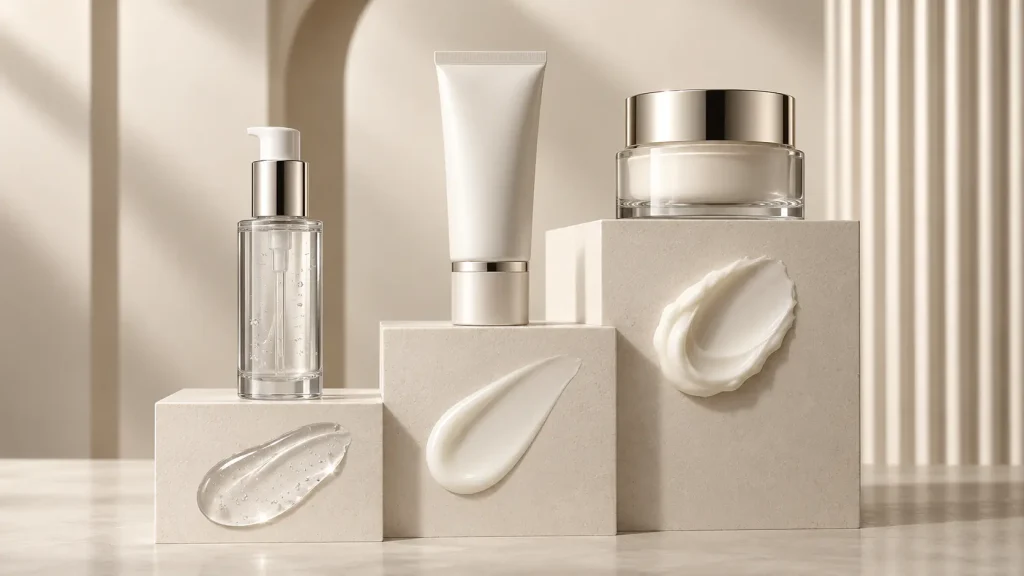
Dry-Skin Positioning
Consumers seeking greater comfort may prefer:
- Richer texture
- Cushioning
- More substantial after-feel
- Lower perception of tightness
This can naturally point toward a cream or richer lotion.
Combination-Skin Positioning
Combination-skin concepts may prioritize:
- Balanced moisturization
- Medium-weight texture
- Easy layering
- Non-greasy finish
A lotion or gel-cream can provide a useful middle ground.
Oily or Lightweight-Skincare Positioning
These consumers may prefer:
- Freshness
- Fast absorption
- Low residue
- Lightweight hydration
- Cooling sensation
A gel or gel-cream can naturally support this experience.
These are tendencies rather than fixed rules.
A lightweight cream can suit broader audiences, and a sophisticated gel can still support a strong barrier-care concept.
9. Climate & Usage Occasion Can Influence Texture Strategy
Skin type is not the only variable.
Brands can also consider:
- Hot and humid climates
- Cold or dry climates
- Day versus night use
- Summer versus winter collections
- Use under sunscreen or makeup
- Face versus body application
For example:
Hot / Humid / Daytime → Gel or Lightweight Lotion Direction
Everyday / Broad Use → Lotion or Gel-Cream Direction
Dry Climate / Night / Intensive Comfort → Richer Cream Direction
These are product-positioning strategies rather than universal rules for every consumer.
10. Sensory Experience Can Define the Product
Consumers do not experience barrier skincare primarily through the ingredient list.
They experience:
- Spreadability
- Wateriness
- Oiliness
- Smoothness
- Stickiness
- Cooling
- Residue
- Absorption
- After-feel
These characteristics influence whether a product feels:
Clinical
Premium
Fresh
Comforting
Minimal
Intensive
Two formulas can use similar hero ingredients and still feel like completely different products.
Texture is not decoration. Texture is part of product positioning.
11. “Barrier Repair” Claims Should Match the Finished-Product Evidence
Barrier-related marketing language should not be selected simply because the formula contains ceramides, glycerin, or another popular ingredient.
Depending on the intended claim and market, brands may consider finished-product evidence related to areas such as:
- Skin hydration
- Transepidermal water loss where appropriate
- Dryness appearance
- Skin softness
- Consumer comfort
- Other claim-specific endpoints
The testing strategy should match the exact claim being communicated.
For example, data showing improved hydration does not automatically support every possible statement about “repair,” “strengthening,” or sensitive-skin performance.
Claims should be reviewed according to the finished product, available evidence, and target-market requirements.
12. Packaging Should Match the Texture
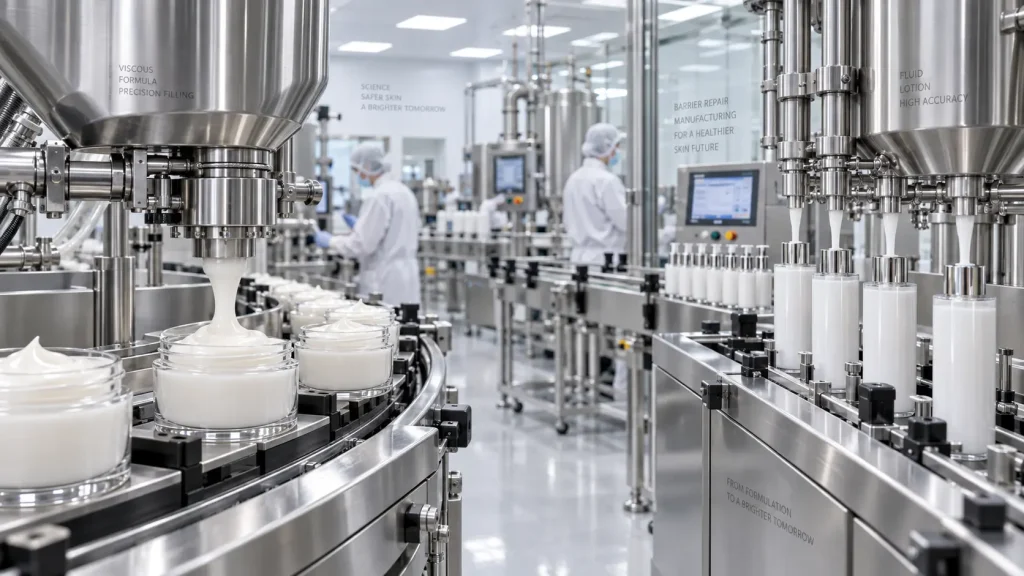
Cream Packaging
- Jar
- Tube
- Airless system
Lotion Packaging
- Pump bottle
- Airless bottle
- Tube
Gel / Gel-Cream Packaging
- Pump
- Airless system
- Tube
- Jar depending on the product concept
The final decision should depend on:
- Viscosity
- Flow behavior
- Filling method
- Pump output
- Dispensing
- Leakage
- Packaging compatibility
- Consumer dosage
- Product appearance
For more detail, see How to Choose Cosmetic Packaging for Skincare & Beauty Products.
13. Stability Requirements Differ by Texture
Cream
Evaluation may include:
- Emulsion stability
- Viscosity
- Separation
- Texture
- Odor
- Appearance
Lotion
Development may monitor:
- Emulsion stability
- Flow
- Viscosity
- Separation
- Sensory consistency
- Pump performance
Gel / Gel-Cream
Evaluation may include:
- Gel structure
- Viscosity
- Transparency or appearance
- pH where relevant
- Ingredient compatibility
- Texture change
- Pilling behavior
The finished product should continue to match its intended approved texture during storage and commercial use.
For more detail, see Cosmetic Stability Testing: What Beauty Brands Need to Know.
14. Manufacturing Also Changes With Texture
Cream, lotion, and gel can require different manufacturing conditions.
Variables may include:
- Emulsification
- Homogenization
- Mixing speed
- Shear
- Heating and cooling
- Thickener hydration
- Ingredient addition sequence
- Deaeration
- Filling temperature
- Filling equipment
A rich cream may require a very different process from a transparent hydrogel.
So texture development also needs to answer:
Can the approved sensory profile be reproduced consistently at commercial scale?
15. Barrier Care Can Be Built as a Product Portfolio
A brand does not necessarily need to choose only one barrier texture.
Different formats can serve different consumer moments.
For example:
Barrier Gel / Gel-Cream
Lightweight daytime / oily or combination-skin routines
↓
Barrier Lotion
Daily moisturizer / broad consumer use
↓
Barrier Cream
Night care / dry-skin routines / intensive comfort
This creates a natural texture progression:
Light → Medium → Rich
while allowing one broader barrier-care story to serve different consumer needs.
16. Private Label, ODM & Custom Barrier Skincare Development
Private Label
A private label route can begin with an existing barrier-focused moisturizer or formulation platform.
This can reduce original formula-development work while allowing branding, packaging, and selected customization depending on the manufacturing program.
Customized ODM
An ODM project can adapt an existing formulation direction through selected changes such as:
- Texture
- Viscosity
- Hero ingredients
- Lipid system
- Botanical ingredients
- Fragrance or fragrance-free positioning
- Packaging
Custom OEM Formulation
A custom project can be developed around a more specific brief involving:
- Target skin type
- Barrier-care positioning
- Desired sensory profile
- Ingredient system
- Texture
- Packaging
- Claims strategy
- Target market
The development route should reflect how much differentiation the brand actually needs.
17. How Do Cream, Lotion & Gel Affect MOQ?
Texture can also influence the commercial structure of a project.
MOQ may depend on:
- Formula batch size
- Manufacturing equipment
- Specialty ingredients
- Packaging
- Pump or airless components
- Custom decoration
- Filling setup
- Testing
A standard lotion in stock packaging may have a different MOQ structure from a highly customized airless cream or specialized gel formula.
There is therefore no universal rule that cream, lotion, or gel always has the lowest MOQ.
The complete product specification determines the practical minimum.
Which Barrier Texture Should Your Brand Develop?
Choose Cream If Your Priority Is:
- Rich sensory experience
- Dry-skin positioning
- Intensive moisturization
- Cushioning after-feel
- Night-care concept
- Premium or treatment-led positioning
Choose Lotion If Your Priority Is:
- Everyday use
- Broad consumer appeal
- Balanced moisturization
- Lightweight comfort
- Layering
- Face and body flexibility
Choose Gel / Gel-Cream If Your Priority Is:
- Lightweight hydration
- Fresh sensory experience
- Oily or combination-skin positioning
- Fast absorption
- Low residue
- Cooling effect
- Modern skincare positioning
The better sequence is:
Target Consumer
↓
Skin Type & Usage Scenario
↓
Barrier-Care Benefit
↓
Sensory Target
↓
Ingredient Architecture
↓
Packaging
↓
Texture Format
Frequently Asked Questions
Is barrier repair cream better than lotion?
Not automatically. Cream usually provides a richer, more cushioning texture, while lotion can offer lighter everyday moisturization. The better option depends on formula design, target skin type, consumer preference, and intended use.
Can a gel support skin barrier care?
Yes. A barrier-focused gel or gel-cream can combine humectants, emollients, compatible lipid-related ingredients, and soothing systems while maintaining a lightweight sensory profile.
Is gel moisturizer weaker than cream?
Not simply because it is a gel. Creams generally offer a richer sensory profile and can accommodate more substantial emollient or occlusive systems, while gel and gel-cream formulas can still provide meaningful hydration and barrier-support positioning when appropriately formulated.
Which barrier texture is best for oily skin?
Gel, gel-cream, and lightweight lotion formats often fit oily or combination-skin positioning because they can be designed for low residue and faster absorption. The final suitability still depends on the actual formula.
Which barrier texture is best for dry skin?
Richer creams often align naturally with dry-skin positioning because they can deliver a more cushioning and occlusive sensory profile. However, well-designed lotions may also be suitable depending on the product.
What ingredients are commonly used in barrier skincare?
Barrier-focused moisturizers can combine humectants, emollients, occlusive ingredients, ceramides or other lipid-related systems, soothing ingredients, and additional functional actives according to the product concept.
Are ceramides only suitable for barrier creams?
No. Ceramides and other lipid-related ingredients can potentially be incorporated into different product architectures, including creams, lotions, and some gel-cream systems, depending on formulation compatibility and processing.
Does barrier repair mean the same thing as moisturization?
Not necessarily. Moisturization is one part of a barrier-focused strategy. Broader barrier-related claims should be aligned with the complete formula and appropriate supporting evidence.
Does packaging matter for barrier cream, lotion, and gel?
Yes. Formula viscosity, filling, dispensing, compatibility, package protection, and consumer use should all be considered before the packaging is finalized.
Can a brand develop cream, lotion, and gel in the same barrier-care line?
Yes. Different textures can target different skin types, climates, routines, seasons, and consumer preferences while maintaining one overall barrier-care positioning.
Which barrier texture usually has the lowest MOQ?
There is no universal answer. MOQ depends on formula batch size, ingredients, packaging, filling, customization, manufacturing setup, and supplier minimums.
Develop the Texture Around the Consumer
Barrier-care product development should not begin with:
“Should we make a cream, lotion, or gel?”
It should begin with:
Who is the consumer?
How should the product feel?
When and where will they use it?
What barrier-care role should the product play in their routine?
Once these questions are clear, texture becomes much easier to define.
At NEXO Beauty Labs, barrier-care development can be approached across private label, ODM, and custom OEM pathways together with formulation, sensory design, packaging, stability evaluation, testing, scale-up, and commercial manufacturing.
Whether you are developing a rich barrier cream, lightweight daily lotion, or fresh gel / gel-cream system, the best texture is the one that supports the product experience and consumer need your brand is actually trying to address.
Request a Barrier Skincare OEM/ODM Consultation with NEXO Beauty Labs to discuss your formulation, texture, ingredients, packaging, MOQ, testing, and manufacturing requirements.