The Complete Cosmetic Manufacturing Process: From Formula Development to Finished Product
How do cosmetics actually get made? Follow the full process from formula development to finished product, step by step, in plain English.
What actually happens between a beauty product idea and thousands of finished bottles ready for sale?
The cosmetic manufacturing process brings together formulation science, raw material sourcing, testing, scale-up, production, quality control, filling, packaging, and logistics. Each stage needs to work together to turn a concept into a consistent, market-ready cosmetic product.
Although the exact process varies between skincare, haircare, body care, and other cosmetic formats, most products follow the same general path from concept to commercial production.
Here’s how cosmetic manufacturing works, step by step.
Cosmetic Manufacturing Process: 9 Steps From Concept to Finished Product
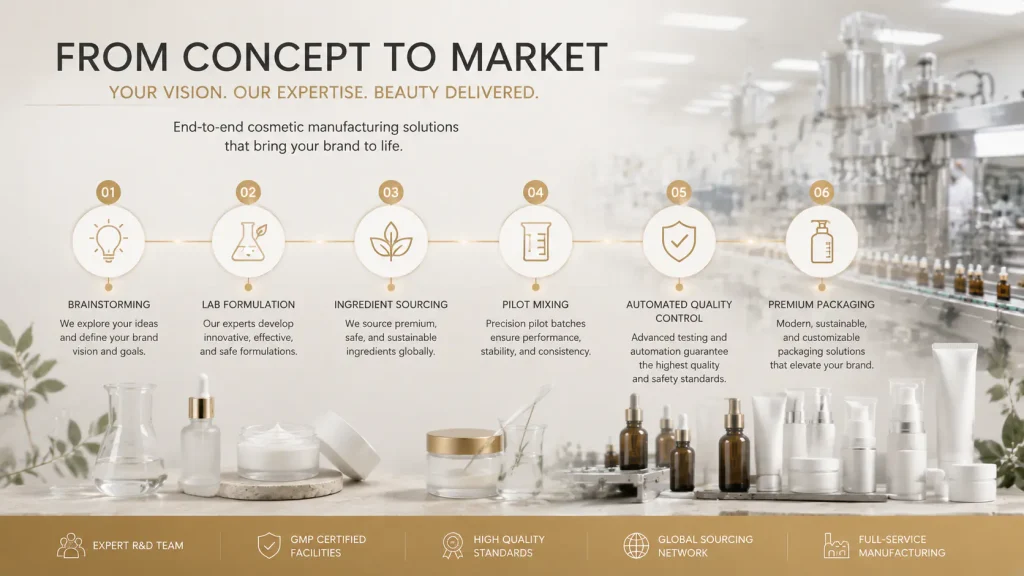
Step 1: Product Concept & Development Brief
Every cosmetic product begins with a clear concept.
Before formulation starts, the brand and manufacturer need to understand what the finished product is supposed to achieve.
A product brief may include:
- Product category and format
- Target consumer
- Main product benefits and positioning
- Preferred active or botanical ingredients
- Ingredients to avoid
- Desired texture, fragrance, and appearance
- Target retail price
- Packaging direction
- Estimated order quantity
- Target market or countries
This is also the stage where you decide how customized the product needs to be.
You might begin with an existing formulation for a faster ODM or private label project, or work with the manufacturer’s R&D team on a more customized OEM formulation.
A detailed brief helps the manufacturer evaluate whether the concept is realistic before significant development work begins.
Step 2: Cosmetic Formula Development
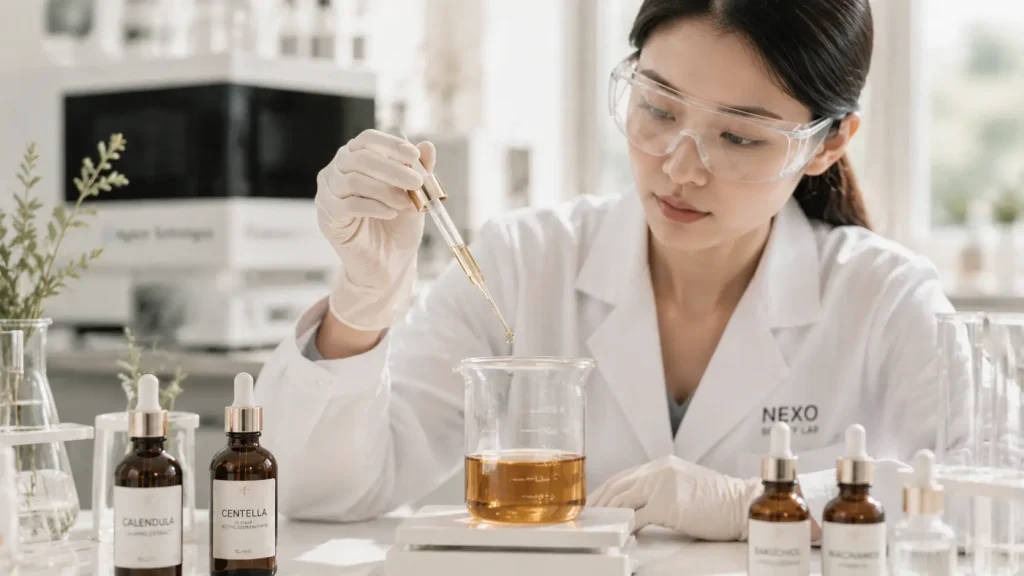
Once the product direction is clear, formulation begins.
Cosmetic chemists need to balance several factors at the same time:
- Product performance
- Texture and sensory experience
- Ingredient compatibility
- Formula stability
- Manufacturing feasibility
- Target cost
- Packaging compatibility
For an ODM project, development may begin with an existing formula that is adjusted according to the agreed customization options.
For a more customized OEM project, the R&D team may develop and refine prototypes around the brand’s product brief.
Several sample rounds may be needed before the formula reaches the desired appearance, texture, fragrance, and overall product experience.
For a deeper look at how ingredients, formulation architecture, texture, stability, cost, and manufacturability are considered during development, see our Cosmetic Product Formulation Guide.
Step 3: Ingredient Selection & Raw Material Sourcing
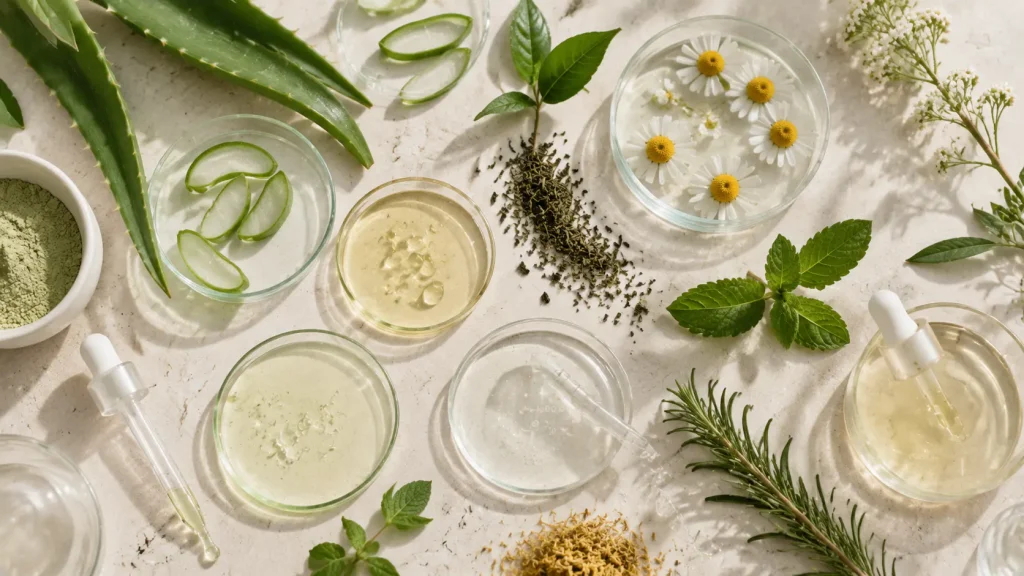
Raw material selection happens alongside formulation development and becomes increasingly important as the formula moves toward commercial production.
Manufacturers need reliable sources for ingredients such as:
- Emollients and oils
- Humectants
- Surfactants
- Emulsifiers
- Thickeners and rheology modifiers
- Preservative systems
- Active ingredients
- Botanical extracts
- Fragrance and color materials
The identity, specification, consistency, availability, and cost of raw materials can all affect the finished product.
Manufacturing quality systems therefore include procedures for receiving, identifying, inspecting, approving, storing, and tracing raw materials before use.
Step 4: Samples, Stability & Product Testing
Before moving into commercial production, the brand evaluates physical samples of the proposed formula.
This is your opportunity to review:
- Texture
- Color and appearance
- Fragrance
- Spreadability
- Absorption
- Skin or hair feel
- Dispensing experience
Technical evaluation also takes place before launch. The appropriate testing program depends on the product, formula, packaging, claims, intended use, and target market.
Common areas can include:
- Stability testing — evaluating how the formula changes under defined environmental and storage conditions over time.
- Packaging compatibility testing — evaluating how the formula and its intended packaging perform together.
- Microbiological testing — evaluating the microbiological quality of the product.
- Preservative-system evaluation — where applicable, assessing whether the preservation system provides appropriate protection against microbial contamination.
- Additional product-specific testing — depending on product category, claims, and target market.
Important: Testing shouldn’t be treated as a fixed checklist with the same protocol for every cosmetic. The appropriate testing plan should be determined according to the actual product, packaging, intended use, claims, and market.
Step 5: Pilot Batch & Scale-Up
A laboratory prototype is produced on a very different scale from a commercial manufacturing batch.
For products that require scale-up evaluation, a pilot or pre-production batch can help determine whether the approved formula performs consistently when transferred to larger manufacturing equipment.
The manufacturing team may evaluate factors such as:
- Mixing speed
- Mixing time
- Heating and cooling profiles
- Order of ingredient addition
- Homogenization
- Viscosity development
- Filling behavior
This step helps translate a laboratory formula into a repeatable commercial manufacturing process.
Not every product or project follows exactly the same pilot-batch approach, so the scale-up plan depends on the formula and manufacturing process.
Step 6: Full-Scale Cosmetic Production
Once the formulation and production parameters are approved, the product can move into commercial batch manufacturing.
The exact process depends heavily on the product format.
For an emulsion such as a cream or lotion, manufacturing may involve separately preparing different phases, controlled heating, mixing, emulsification or homogenization, cooling, and the addition of temperature-sensitive ingredients at appropriate stages.
Other products — such as gels, shampoos, oils, powders, balms, and sticks — require different production methods.
Across these formats, manufacturers typically control defined process parameters such as:
- Ingredient weights
- Order of addition
- Mixing conditions
- Temperature
- Processing time
- Batch identification and documentation
The goal is to manufacture each batch according to an established specification and production procedure.
Step 7: In-Process & Finished-Product Quality Control
Quality control isn’t only a final inspection after manufacturing is finished.
Checks can take place from incoming raw materials through production, filling, packaging, and finished-product release.
Depending on the product and its specifications, quality-control checks may include:
- Appearance — checking characteristics such as color, clarity, or homogeneity.
- pH — where relevant, confirming the batch falls within its defined specification.
- Viscosity — checking that thickness and flow behavior meet the approved specification.
- Odor — confirming consistency with the approved product.
- Fill weight or volume — confirming finished units meet the required specification.
- Packaging integrity — checking closure, sealing, dispensing, and presentation where applicable.
If a batch falls outside an established specification, it should be investigated and handled according to the manufacturer’s quality procedures before release.
Step 8: Filling, Packaging & Labeling
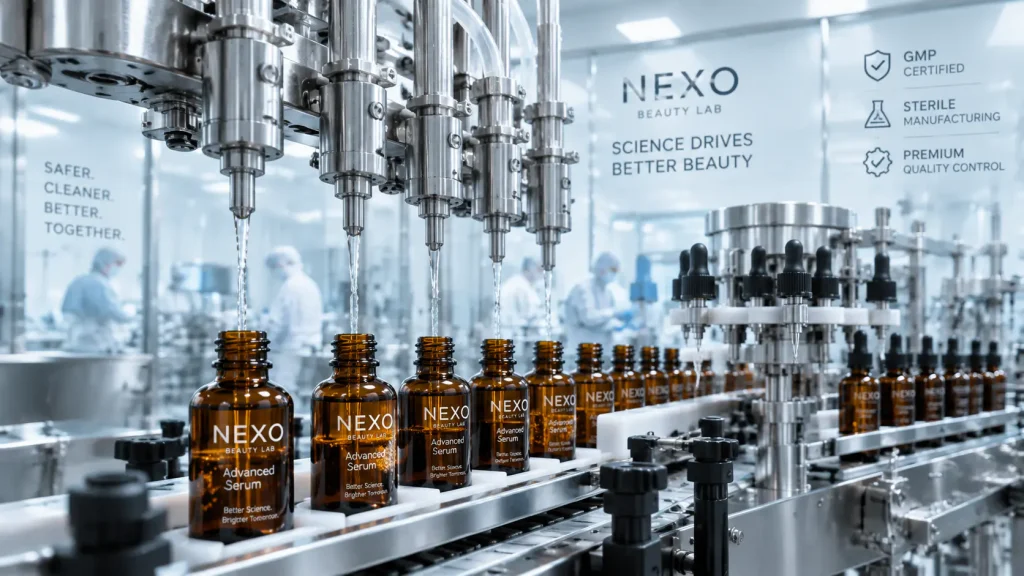
Once the bulk product is ready for filling, it moves into the selected primary packaging.
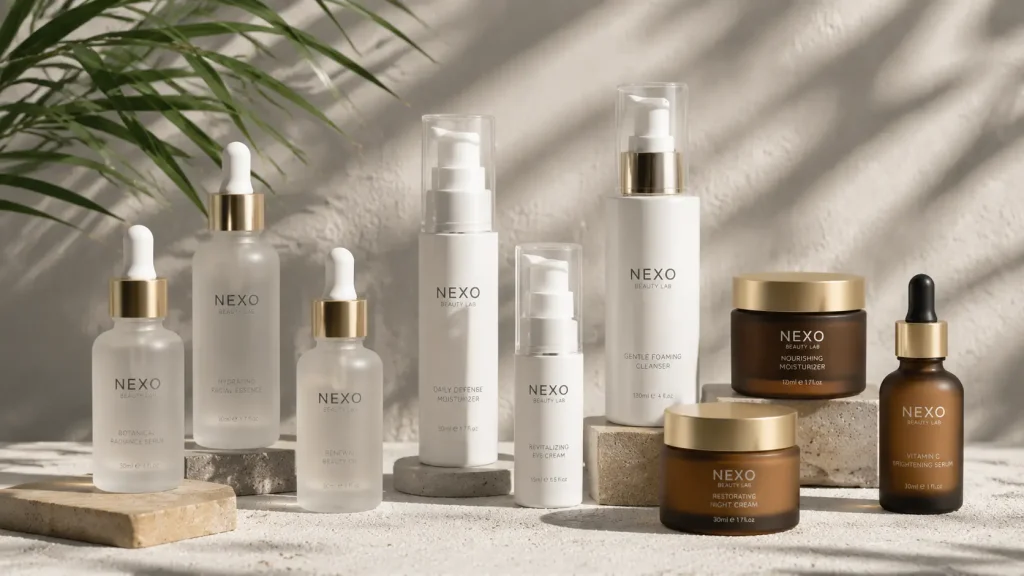
Depending on the product, this may include:
- Bottles
- Jars
- Tubes
- Pumps
- Droppers
- Roll-ons
- Sticks
- Sachets
Filling needs to be controlled so the correct amount of product reaches each package while minimizing contamination and packaging defects.
The process can then include closures, sealing, coding, labeling, cartons, and other secondary packaging components.
Packaging is more than a branding decision. It also needs to work with the formula throughout expected storage, transportation, dispensing, and consumer use.
If you’re deciding between bottles, jars, tubes, pumps, droppers, airless systems, or other packaging formats, our Guide to Choosing Cosmetic Packaging explains how formula compatibility, dispensing, positioning, cost, MOQ, and user experience should influence the final choice.
Step 9: Final Release, Storage & Distribution
Before finished products leave the manufacturing facility, the batch goes through the required release process according to the manufacturer’s quality procedures.
Final checks may include:
- Finished-product specifications
- Fill weight or volume
- Packaging integrity
- Batch and date coding
- Label and artwork accuracy
- Carton and finished-goods inspection
Once released, products are stored under appropriate conditions and prepared for shipment to the brand’s warehouse, fulfillment center, distributor, or other agreed destination.
How the Cosmetic Manufacturing Process Varies by Product Type
The nine stages above describe the overall manufacturing journey, but the actual production method isn’t identical for every cosmetic.
For example:
- Creams & lotions: often involve controlled emulsification, heating, homogenization, and cooling.
- Serums & gels: may require controlled hydration, thickening, mixing, and viscosity adjustment depending on the formula.
- Facial oils: generally rely more heavily on blending, ingredient compatibility, oxidation control, and filling conditions.
- Shampoos & body washes: require careful management of surfactants, viscosity, foam characteristics, and mixing conditions.
- Balms & sticks: can involve melting, blending, controlled cooling, and specialized filling or molding.
- Powder products: may involve sieving, blending, particle distribution, moisture control, and specialized filling processes.
This is why experience in the specific product category matters when choosing a cosmetic manufacturer.
OEM vs. ODM vs. Private Label Cosmetic Manufacturing
Beauty brands don’t need to own a factory to develop cosmetic products. Many work with contract manufacturers through OEM, ODM, or private label development.
These terms are used somewhat differently across the industry, so it’s better to focus on the actual development scope rather than the label alone.
The exact boundaries between these models vary by manufacturer.
Before beginning a project, confirm the actual scope of customization, formula ownership, exclusivity, testing responsibilities, MOQ, packaging options, and commercial terms.
If you’re still deciding which development model fits your brand, read our OEM vs. ODM vs. Private Label Cosmetics Guide for a more detailed comparison of customization, development responsibility, cost, MOQ, formula ownership, and launch speed.
How Long Does the Cosmetic Manufacturing Process Take?
There isn’t one standard timeline for every cosmetic product.
An existing formulation with readily available stock packaging can generally move through development faster than a highly customized product requiring multiple formulation rounds, specialized ingredients, extensive testing, and custom packaging.
Factors that can affect the timeline include:
- Private label, ODM, or custom OEM route
- Formula complexity
- Number of sample revisions
- Ingredient sourcing
- Testing requirements
- Packaging availability
- Custom packaging production
- Artwork approval
- Production scheduling
- Target-market requirements
For planning purposes, ask your manufacturer for a project-specific timeline covering formulation, testing, packaging, production, and delivery rather than relying on a single generic industry estimate.
For a more detailed look at how each stage can affect your launch schedule, see our Cosmetic Product Development Timeline Guide.
Why Cosmetic Stability Testing Can’t Be Reduced to One Fixed Timeline
It’s common to see cosmetic stability testing described online using a single number of weeks or months, but stability programs aren’t identical for every product.
The appropriate protocol depends on factors such as:
- Formula type
- Packaging
- Expected shelf life
- Storage conditions
- Target market
- Product characteristics
The purpose is to gather appropriate information about how the finished formula and packaging perform over time and under defined conditions.
Your manufacturer or qualified testing partner should recommend a program based on the actual product rather than treating one universal testing duration as appropriate for every cosmetic.
Frequently Asked Questions
What is the cosmetic manufacturing process?
The cosmetic manufacturing process generally moves from product concept and formulation through ingredient sourcing, testing, scale-up, batch production, quality control, filling, packaging, final release, and distribution. The exact steps vary according to the product and manufacturing model.
How long does cosmetic manufacturing take?
The timeline depends on formula complexity, sample revisions, ingredient sourcing, testing, packaging, production capacity, and the level of customization required. Existing formulas and stock packaging can generally move faster than fully customized projects.
Does every cosmetic need a pilot batch?
Not necessarily. Pilot or scale-up batches can be useful when confirming how a laboratory formula behaves at commercial scale, but the appropriate scale-up process depends on the formula, equipment, batch size, and manufacturer’s production procedures.
What testing is needed before cosmetic production?
The appropriate testing depends on the product, formula, packaging, claims, intended use, and target market. Stability, microbiological quality, preservation, packaging compatibility, and product-specific evaluations may all need to be considered.
What’s the difference between a lab sample and a production batch?
A lab sample is a small prototype used during formulation development and sensory evaluation. A commercial production batch is manufactured according to defined production parameters at a much larger scale for filling into finished inventory.
Why is packaging compatibility important?
The formula and packaging need to function as a complete system. Compatibility evaluation can help identify issues involving interaction with packaging materials, dispensing, leakage, appearance, or other changes that may develop during storage.
Do I need a chemistry background to work with a cosmetic manufacturer?
No. Your role as a brand is to provide a clear product vision, target consumer, positioning, commercial requirements, and feedback. The manufacturer’s R&D and production teams handle the technical formulation and manufacturing work within the agreed development scope.
What is the difference between OEM and ODM cosmetic manufacturing?
ODM generally begins with manufacturer-developed formulas or product platforms that are customized for a brand, while OEM commonly involves manufacturing according to a more customized product brief or specification. However, these terms are used differently across the industry, so the actual development scope should always be confirmed with the manufacturer.
Ready to Bring Your Cosmetic Product Idea to Life?
Understanding how cosmetics are manufactured is the first step. The next is turning your own concept into a realistic formulation, testing, packaging, and production plan.
NEXO Beauty Labs supports beauty brands across private label, ODM, and custom OEM product development, from initial formulation and samples through manufacturing, filling, packaging, and finished production.
Request an OEM/ODM Consultation with NEXO Beauty Labs to discuss your product concept, formula direction, packaging, MOQ, target market, and next steps.