
Climate-Adaptive Skincare for Hot and Humid Markets: What Beauty Brands Need to Build Differently
Explore how beauty brands can develop climate-adaptive skincare for hot and humid markets, with a focus on texture, cooling sensory design, product format, packaging, stability and positioning.
A moisturizer that feels elegant in a cool, dry environment may feel noticeably heavier when used in hot, humid conditions.
A sunscreen that works comfortably during an indoor morning routine may create a very different experience during outdoor heat, sweat, and repeated application.
A body cream that feels nourishing in winter may become inconvenient when the consumer needs to apply it across a large area before getting dressed in humid weather.
These examples point to a broader product-development question:
Should climate be part of the cosmetic product brief?
Increasingly, it can be.
Climate should not be treated only as a seasonal marketing theme.
Temperature, humidity, UV exposure, sweat, indoor air conditioning, travel, and outdoor activity can all influence how consumers experience a cosmetic product.
So the development question is not simply:
“How do we make a cooling product?”
It is:
“How should this product behave in the environment where consumers will actually use it?”
1. Make Climate Part of the Product Brief
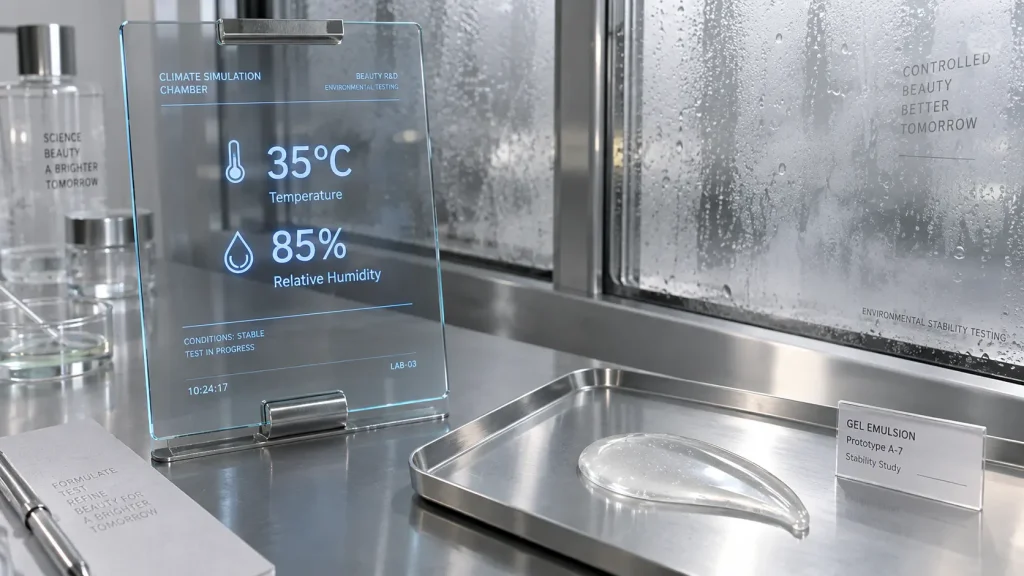
Traditional cosmetic briefs usually begin with factors such as:
- Target consumer
- Skin concern
- Product category
- Hero ingredient
- Desired texture
- Price positioning
- Target market
A climate-adaptive brief adds another question:
What environmental conditions will shape the way this consumer actually uses the product?
For example, the same consumer may move through:
Outdoor Heat
↓
Humid Commute
↓
Air-Conditioned Office
↓
Outdoor Heat Again
The formula does not necessarily need to physically change every time the environment changes.
Rather, it should be designed around the environmental conditions and usage scenarios that matter most to the consumer.
This makes climate another part of:
Consumer + Usage Scenario + Sensory Target + Product Performance
Instead of:
“We need a summer moisturizer.”
a stronger brief might say:
“We need a lightweight daily moisturizer for consumers living in hot and humid urban environments who frequently move between outdoor heat and air-conditioned interiors.”
That gives the formulation team a much clearer development target.
2. Define the Environment Before Designing the Formula
“Hot climate” is still too broad.
Different environmental conditions can create different formulation and sensory priorities.
Hot and Humid Conditions
Depending on the consumer and product, development may place more emphasis on:
- Fast spreading
- Lower tack
- Controlled oiliness
- Limited residue
- Comfortable layering
- Lightweight after-feel
- Easy reapplication
This does not mean everyone in a humid market wants an ultra-light gel.
Skin type, age, product purpose, routine, and positioning still matter.
Climate should influence the brief — not replace consumer segmentation.
Hot and Dry Conditions
The product may place greater emphasis on:
- Hydration
- Skin comfort
- Barrier-support positioning
- Suitable richness
- Low heaviness
- Environmental exposure
The objective may be to provide meaningful moisturization without creating an unnecessarily heavy sensory profile.
Outdoor and High-UV Conditions
Additional considerations may include:
- Sun care
- Reapplication
- Sweat
- Portability
- Product finish
- Packaging
- Consumer instructions
Heat-to-Air-Conditioning Transitions
This is particularly relevant to urban lifestyles.
Consumers may repeatedly move between:
Hot / Humid Outdoors
and
Cool / Dry Indoor Air
That makes a product brief based only on “summer freshness” potentially too simplistic.
Define the real environment first. Build the formula and sensory strategy around it second.
3. Treat Texture as Part of Product Performance
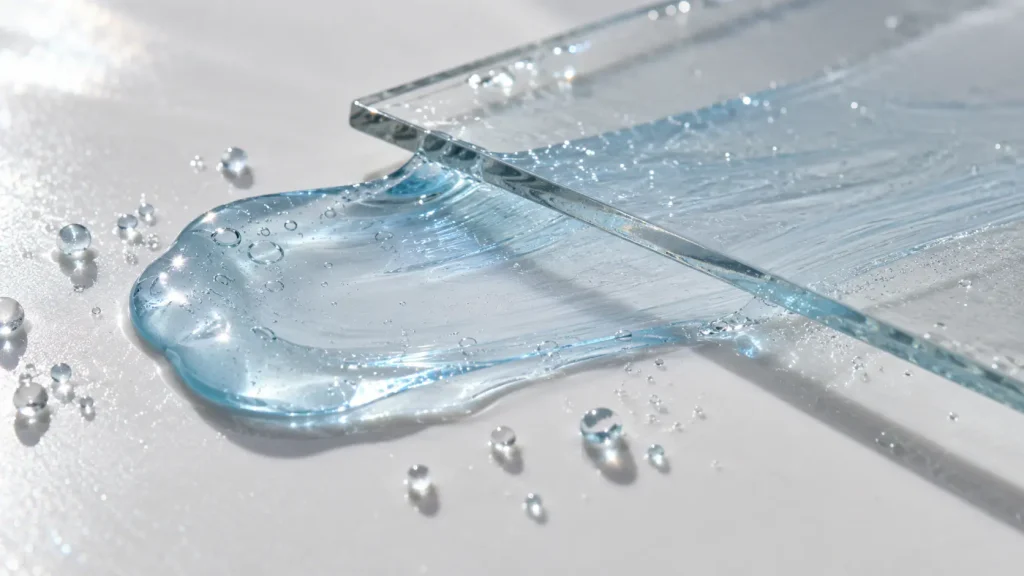
Climate-adaptive skincare is not only about active ingredients.
In hot and humid conditions, certain sensory characteristics may become much more noticeable.
These can include:
- Stickiness
- Oiliness
- Heavy residue
- Slow absorption
- Shine
- Pilling
- Poor layering
- Film feel
That makes texture part of product performance.
Different formats create different development opportunities.
Water Gel
May support:
Fresh + Lightweight + Fast-Spreading
Gel-Cream
May support:
Hydration + Cushion + Lower Heaviness
Lightweight Emulsion
May support:
Daily Moisturization + Comfortable Spread + Familiar Routine
Milky Serum
May support:
Barrier-Oriented Care + Hydration + Lighter Sensory Profile
None is automatically the ideal climate-adaptive texture.
The correct format should reflect:
Consumer + Skin Need + Environment + Usage Occasion
A hot-weather product can still provide meaningful moisturization.
The objective is not simply to make everything thinner.
It is to deliver the intended skincare benefit in a sensory profile that fits the environment.
4. Separate Sensory Cooling From Measurable Cooling
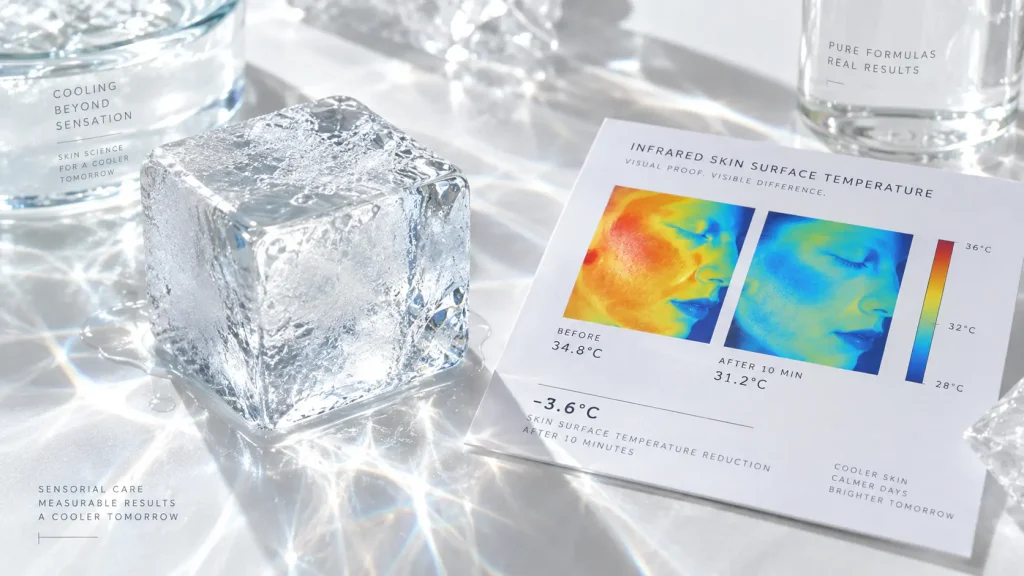
Cooling beauty is one possible branch of climate-adaptive product development.
But brands should distinguish two different ideas.
Sensory Cooling
This describes what the consumer experiences during or after application:
- Cooling sensation
- Freshness
- Refreshment
- Cold-touch application
Measurable Cooling
This involves a quantified performance statement such as:
“Reduces skin temperature by X°C.”
These are different claim questions.
A consumer can experience a refreshing or cooling sensation without the brand making a quantified temperature-reduction claim.
Likewise:
- Mint fragrance does not prove measurable cooling.
- A metal applicator does not prove the formula reduces skin temperature.
- A cooling ingredient does not automatically substantiate a finished-product temperature claim.
So brands should decide early whether they are developing:
A Refreshing Sensory Story
or
A Measurable Cooling-Performance Story
The formulation, evaluation, evidence, and claims strategy may differ.
Cooling intensity also needs balance.
The question should not be:
“How cold can we make it?”
It should be:
“What level of cooling supports this consumer and usage occasion?”
A stronger cooling sensation is not automatically a better cosmetic experience.
5. Define What “Climate-Adaptive” Actually Means
The word “adaptive” can easily imply more than the product actually does.
In this guide, climate-adaptive beauty is used as a product-development concept: a product designed around defined environmental conditions, usage scenarios, and consumer needs.
It should not automatically imply:
a formula that senses temperature or humidity and changes itself in real time.
Those are very different technical propositions.
A lightweight gel-cream developed specifically for humid environments can be climate-informed without claiming that it dynamically adapts to every climate.
Likewise, a sunscreen designed around outdoor heat and frequent reapplication can be climate-aware without making an “automatic climate response” claim.
This distinction helps keep both the development brief and the finished-product claims realistic.
6. Use Sun Care as a Climate-Adaptive Product Opportunity
Sun care naturally combines several environmental and usage variables:
UV Exposure + Heat + Sweat + Outdoor Activity + Reapplication
That makes it one of the clearest opportunities for climate-related product development.
A daily sunscreen may prioritize:
Protection + Lightweight Texture + Comfortable Daily Wear
A sport concept may prioritize:
Protection + Portability + Outdoor Use + Appropriate Finish
A stick or mist creates another application strategy entirely.
But cooling or lightweight sensory positioning does not replace protection performance.
A refreshing sunscreen still needs its protection claims to reflect the tested finished product and the requirements of the intended market.
For a deeper comparison of format choices, see:
Sunscreen Stick vs Lotion vs Mist: Which SPF Format Is Right for Your Beauty Brand?
The important principle is:
Climate can shape the sunscreen experience. Protection remains fundamental.
7. Develop Scalp Care Around Heat, Sweat and Residue
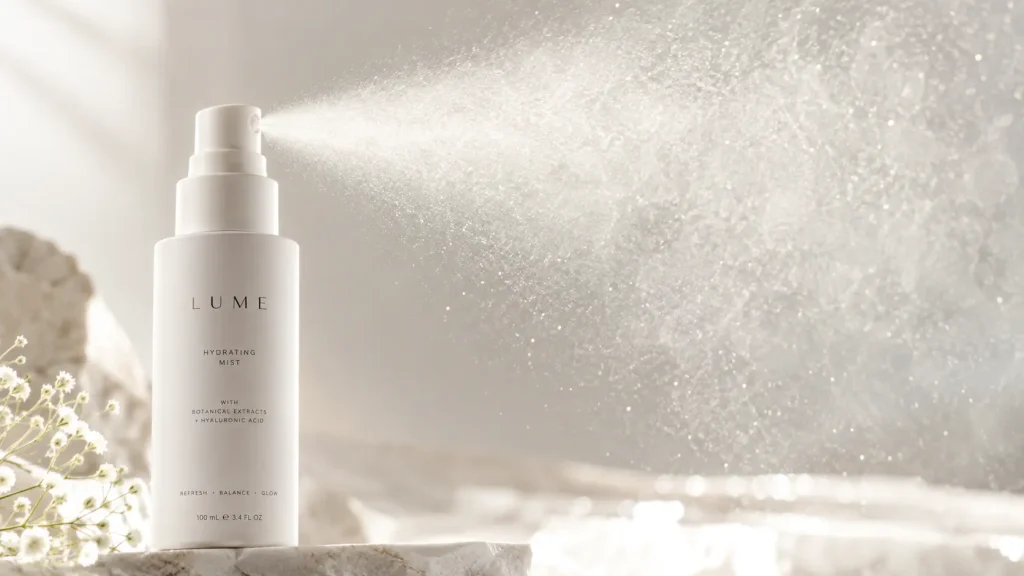
Heat and humidity create a different set of consumer needs at the scalp.
Possible concerns can include:
- Sweat
- Oily roots
- Heavy scalp feel
- Frequent washing
- Product residue
- Styling disruption
That creates opportunities for formats such as:
- Lightweight scalp serum
- Fine mist
- Targeted scalp spray
- Watery tonic
- Precision applicator
A climate-related scalp product does not need exaggerated hair-growth language to create a compelling concept.
It can focus instead on:
Freshness
Comfort
Low-Residue Application
Root-Friendly Sensory Experience
Hot-Weather Routine
For more on this category, see:
How to Develop a Scalp Serum: From Formula to OEM/ODM Production
The key development challenge is creating a product that supports the intended scalp-care routine without leaving the surrounding hair feeling heavy, greasy, or difficult to style.
8. Adapt Body Care to Climate and Large-Area Use
Climate adaptation is not limited to facial skincare.
Body products are used over much larger areas, which can amplify sensory problems.
For hot and humid usage scenarios, development may need to pay greater attention to:
- Large-area spreadability
- Absorption
- Tack
- Oiliness
- Clothing contact
- Sweat
- Fragrance
- Residue
- Cooling sensation
Different formats can solve different problems.
Lightweight Body Serum
May support:
Treatment + Fast Spread + Low Tack
Body Milk
May support:
Daily Hydration + Fluid Texture + Large-Area Use
Gel
May support:
Freshness + Hydration + Cooling-Oriented Sensory Experience
Body Oil
May support:
Slip + Glow + Sensory Ritual
depending on the intended consumer and climate context.
For a deeper format comparison, see:
Body Oil vs Body Serum vs Body Cream: Which Format Should Your Beauty Brand Develop?
The goal is not to assume every hot-market consumer wants the lightest possible formula.
It is to match:
Benefit + Texture + Usage Area + Environment
9. Develop Packaging for the Real-World Environment
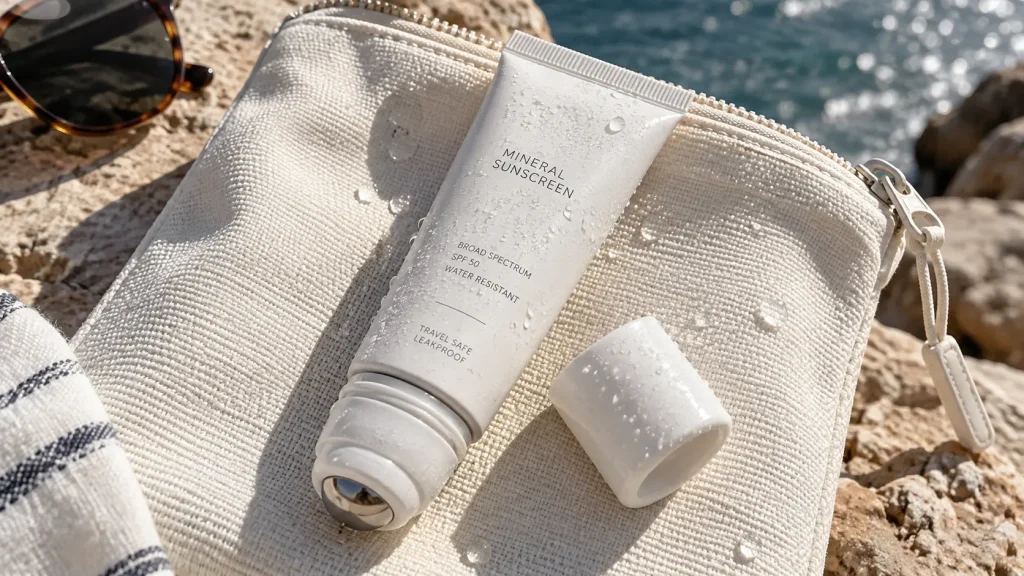
A climate-adaptive formula still needs packaging appropriate to the intended product and usage environment.
Brands should think beyond how the package looks in a product photograph.
Real-world conditions may involve:
- Heat exposure
- Travel
- Outdoor carrying
- Humid bathrooms
- Repeated opening
- One-hand use
- Temperature transitions
- Transport and warehousing
Depending on the format, development may need to evaluate:
- Leakage
- Formula viscosity
- Pump performance
- Spray pattern
- Nozzle clogging
- Stick structure
- Seal performance
- Product pickup
- Dispensing consistency
A fine mist needs to remain a fine mist.
A pump needs to dispense the intended amount consistently.
A stick needs to maintain appropriate structure.
And if a product is intentionally positioned for chilled or refrigerated use, those storage and usage conditions should be evaluated rather than assumed to be beneficial.
For more detail, see:
Cosmetic Packaging for Skincare Brands: How to Choose the Right Packaging for Your Formula
Climate-aware packaging is not about looking tropical or futuristic. It is about functioning in the intended environment.
10. Design Stability Evaluation Around the Product System
There is no universal rule such as:
“Tropical product = one fixed temperature for one fixed number of weeks.”
The appropriate stability and compatibility strategy depends on:
- Formula
- Packaging
- Product format
- Target market
- Distribution conditions
- Intended storage
- Project requirements
Depending on the product, evaluation may include:
- Appearance
- Color
- Odor
- pH where relevant
- Viscosity
- Separation
- Precipitation
- Texture
- Packaging compatibility
- Functional dispensing
Accelerated conditions can help identify potential risks earlier.
But accelerated testing should not be treated as a universal mathematical shortcut that automatically proves a specific shelf life.
Real-time observation and product-specific interpretation remain important.
For more detail, see:
Cosmetic Stability Testing Explained
Climate-adaptive positioning makes environmental context more important — not stability science simpler.
11. Build Climate-Related Claims Around Evidence
Climate-related language can easily become stronger than the evidence available for the finished product.
Claims such as:
“Climate Proof”
“Anti-Heat”
“Prevents Heat Aging”
“Automatically Adapts to Any Climate”
can imply broader or more specific performance than a cosmetic product has actually demonstrated.
A more practical product strategy may focus on appropriately supported characteristics such as:
- Lightweight
- Refreshing
- Cooling sensation
- Low residue
- Hydrating
- Comfortable
- Fast-spreading
- Designed for hot or humid routines
The exact language still needs to reflect the finished formula, product evaluation, intended use, supporting evidence, and target market.
A quantified claim — for example, a specific temperature reduction — creates a different substantiation question from a general sensory statement such as “refreshing” or “cooling sensation.”
The principle is straightforward:
Climate can shape the product brief. Evidence should shape the claim.
12. Separate Target Market From Climate Context
A country is not one climate.
Likewise, consumers travel between climates and between indoor and outdoor environments.
A brand entering Southeast Asia, the Middle East, Southern Europe, or the southern United States should not simply reduce each region to:
“Hot market.”
More specific development questions may include:
- Is the environment humid or dry?
- How strong are seasonal changes?
- How significant is UV exposure?
- How common is air conditioning?
- Is the product used primarily indoors or outdoors?
- Is sport or travel relevant?
- What does the daily routine actually look like?
The target market helps determine areas such as:
Regulatory Requirements + Claims + Ingredient Considerations + Documentation + Commercial Positioning
The climate context helps shape:
Texture + Sensory Target + Usage Occasion + Format + Consumer Experience
Both matter.
They answer different product-development questions.
13. Build the Portfolio Around Climate Moments
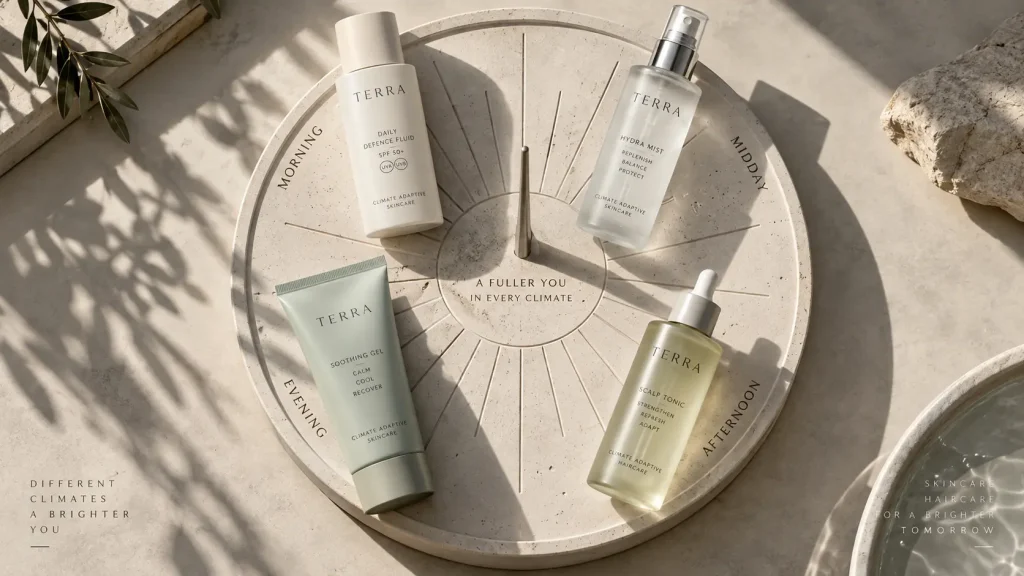
A climate-adaptive portfolio does not need five products all communicating:
“Cooling.”
Instead, each product can solve a different real-world problem.
For example:
Morning
Lightweight Daily SPF
→ Protection + Wearability
Midday / Outdoor
Portable Refreshing Mist
→ Refreshment + Convenient Application
Scalp
Lightweight Scalp Serum or Spray
→ Freshness + Low-Residue Root Care
Body
Fast-Absorbing Body Serum
→ Hydration + Comfortable Large-Area Use
Treatment
Cooling Hydrogel Mask
→ Refreshing Ritual + Targeted Treatment
Now the products share a broader climate concept without repeating the same function.
Climate adaptation becomes more valuable when each SKU solves a different real-world usage problem.
14. Turn Climate Insight Into a Development-Ready Brief
Compare:
Weak Brief
“We want a cooling moisturizer for Asia.”
This tells the development team very little.
Now consider:
Stronger Brief
“We want a lightweight daily gel-cream for consumers living in hot and humid urban environments.
The formula should spread quickly, maintain low tack after application, layer comfortably under sunscreen, and provide hydration without leaving a heavy residual film.
A mild refreshing sensory profile may support the positioning, but the concept should not depend on exaggerated temperature claims.
The packaging should be practical for daily use and appropriate for the intended formula viscosity and target market.”
Now R&D understands:
Target Consumer
↓
Climate
↓
Usage Scenario
↓
Product Category
↓
Texture
↓
Sensory Target
↓
Cooling Strategy
↓
Packaging
↓
Claim Boundary
That is much closer to a development-ready brief.
15. Connect Climate Strategy to Manufacturing Feasibility
A climate-led concept may sound innovative.
Commercial development still asks practical questions.
Can the ingredients remain compatible?
Can the intended viscosity be maintained?
Does the package continue to function appropriately?
Can the product be filled consistently?
Can the texture be reproduced at larger batch sizes?
Can future batches maintain the same sensory profile?
Can the product withstand its intended storage and distribution conditions?
The development path still needs to address:
Ingredient Compatibility
↓
Stability
↓
Sensory Consistency
↓
Packaging Compatibility
↓
Claims & Evidence
↓
Filling
↓
Scale-Up
↓
Batch Consistency
↓
Commercial Manufacturing
Climate adaptation does not replace normal cosmetic development.
It gives those development decisions a more specific environmental and consumer context.
Frequently Asked Questions
What makes skincare “climate-adaptive”?
Climate-adaptive skincare is best understood as skincare developed with specific environmental conditions and usage scenarios in mind.
These may include temperature, humidity, sun exposure, sweat, seasonal changes, air conditioning, travel, and transitions between environments.
It does not necessarily mean the formula literally changes itself in response to the weather.
Is cooling beauty the same as climate-adaptive skincare?
No.
Cooling is one possible strategy within climate-adaptive development, particularly for hot-weather products.
Climate-adaptive product development can also involve:
- Texture
- Hydration
- Barrier support
- Finish
- Portability
- Packaging
- Sun care
- Product format
without necessarily creating a cooling sensation.
Do hot and humid markets always need gel textures?
No.
Gel and gel-cream formats can support lightweight positioning, but the appropriate texture depends on the target consumer, skin need, product role, desired sensory experience, and brand positioning.
Climate should inform the formula — not replace consumer segmentation.
Do hot and humid markets need different sunscreen products?
They may benefit from different sensory and product priorities, such as lightweight wear, portability, comfortable reapplication, and an appropriate finish.
However, sunscreen protection, testing, labeling, permitted systems, and regulatory requirements still depend on the actual product and intended target market.
Can climate-adaptive products make specific temperature-related claims?
Specific temperature claims require evidence appropriate to the finished product and the exact statement being made.
A general refreshing or cooling-sensation positioning is different from claiming that a product reduces skin temperature by a specified amount.
Should products intended for hot climates undergo different stability testing?
The stability strategy should reflect the actual formula, packaging, storage conditions, distribution environment, intended use, and project requirements.
There is no single universal “tropical stability test” that applies identically to every cosmetic product.
Is climate-adaptive skincare only relevant for summer?
Not necessarily.
Hot and humid environments may persist for much of the year in some regions, while travel, sport, urban heat, outdoor use, and indoor/outdoor climate transitions can create relevant usage occasions beyond a short summer season.
Design for the Environment Where the Product Will Actually Be Used
Climate-adaptive beauty should not begin with:
“What cooling ingredient should we add?”
It should begin with:
Where will the consumer use this product?
What becomes uncomfortable or inconvenient in that environment?
How should the texture behave?
Which format makes the routine easier?
What does the packaging need to do?
Which claims can the finished product actually support?
A useful development framework is:
Environment
↓
Target Consumer
↓
Usage Scenario
↓
Skin / Scalp / Body Need
↓
Product Role
↓
Texture & Sensory Target
↓
Cooling Strategy Where Relevant
↓
Format & Packaging
↓
Claims & Evaluation
↓
Stability
↓
Manufacturing Feasibility
↓
Climate-Adaptive Beauty Product
At NEXO Beauty Labs, climate-led product development can connect consumer positioning, custom formulation, sensory design, packaging, stability evaluation, product testing, scale-up, and OEM/ODM manufacturing.
Hotter and more humid environments can influence what consumers expect from skincare, sun care, scalp care, and body care.
The opportunity is not simply to make products feel colder.
It is to develop beauty products that make more sense in the environments where consumers actually use them.
Request a consultation with NEXO Beauty Labs to discuss your climate-adaptive skincare, sun-care, scalp-care, or body-care product development project.