
Natural Deodorant: How It Works, Ingredients & What to Expect
How does natural deodorant actually work, and how is it different from antiperspirant? Here's what to know before you make the switch.
Natural deodorant has moved from a niche alternative to a familiar part of the personal care aisle. But one question still comes up again and again: How does natural deodorant actually work if it doesn’t stop you from sweating?
The short answer is that deodorant and antiperspirant solve two different problems. Antiperspirant is designed to reduce sweat. Deodorant focuses primarily on controlling body odor.
Understanding that difference — along with the ingredients, application, and skin considerations involved — makes it much easier to decide whether natural deodorant is right for you.
What Is Natural Deodorant?
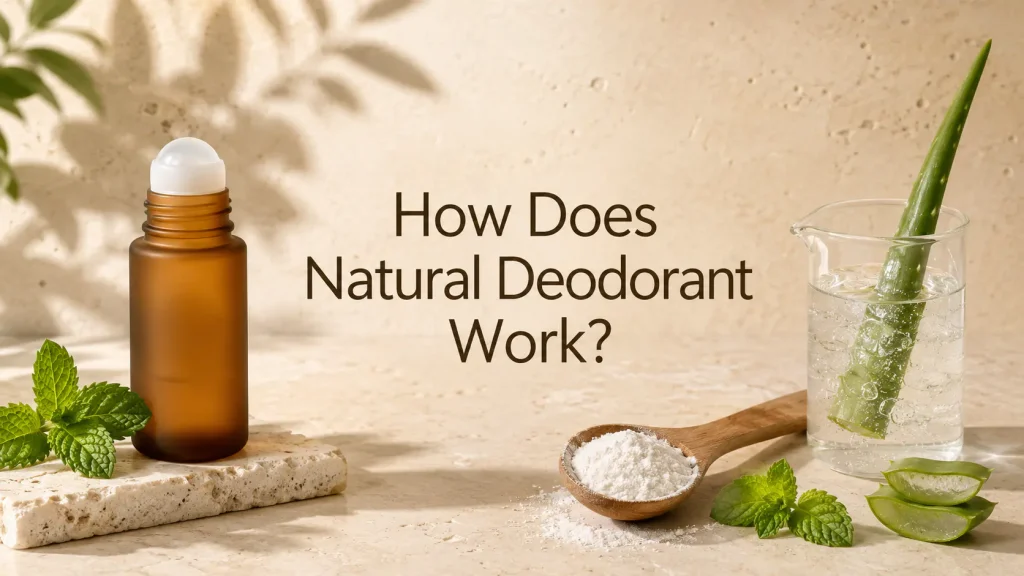
Natural deodorant generally refers to deodorant formulated without conventional aluminum-based antiperspirant actives and often with ingredients such as mineral powders, plant-derived ingredients, botanical extracts, oils, or naturally derived fragrances.
There isn’t one universal formula for a natural deodorant. Depending on the brand, you may find sticks, roll-ons, creams, balms, sprays, or even fragrance-free formulas designed for sensitive skin.
What most of these products have in common is their purpose:
- Help control or neutralize body odor
- Manage odor-causing bacteria or the environment they thrive in
- Absorb some moisture at the skin’s surface
- Add fragrance or freshness if desired
- Allow normal perspiration to continue
That last point is important.
Natural deodorant is generally not the same thing as an antiperspirant.
Why Do Underarms Smell in the First Place?
Understanding body odor makes it easier to understand how deodorant works.
Fresh sweat itself isn’t usually the main cause of strong underarm odor. Odor develops when microorganisms living naturally on the skin break down components of sweat and other secretions.
The underarm area is particularly suited to this process because it’s warm, often moist, and contains apocrine glands associated with body odor.
This means an effective deodorant doesn’t necessarily need to stop sweat.
Instead, it can target the conditions that allow noticeable odor to develop.
Natural Deodorant vs. Antiperspirant: What’s the Difference?
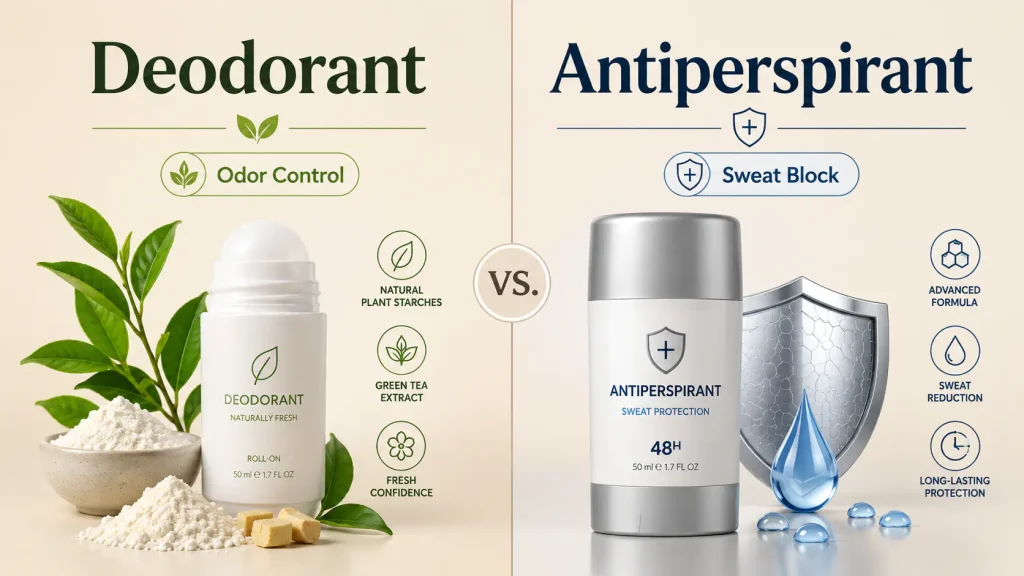
Although the terms are often used interchangeably, deodorant and antiperspirant have different jobs.
Antiperspirants use aluminum-based active ingredients to temporarily reduce the amount of sweat reaching the skin’s surface.
Deodorants take a different approach. Rather than preventing perspiration, they help reduce, neutralize, or mask the odor associated with it.
Neither approach is automatically better.
If staying dry is your main priority, an antiperspirant may make more sense. If you’re comfortable sweating and mainly want to manage odor, an aluminum-free or natural deodorant may be enough.
Two Different Underarm-Care Product Directions
For beauty brands, the difference between deodorant and antiperspirant also creates two distinct product-development directions. The right choice depends on whether the core consumer need is primarily odor management or sweat reduction plus odor control.
BOTANICAL DEODORANT DIRECTION
For brands exploring botanical storytelling, everyday odor care, and a familiar roll-on experience, a botanical deodorant can provide a clear personal-care positioning.
ANTIPERSPIRANT DIRECTION
When the product concept prioritizes sweat reduction as well as odor management, the project should be developed as an antiperspirant direction with the appropriate formulation, claims, testing, and target-market requirements.
How Does Natural Deodorant Work?
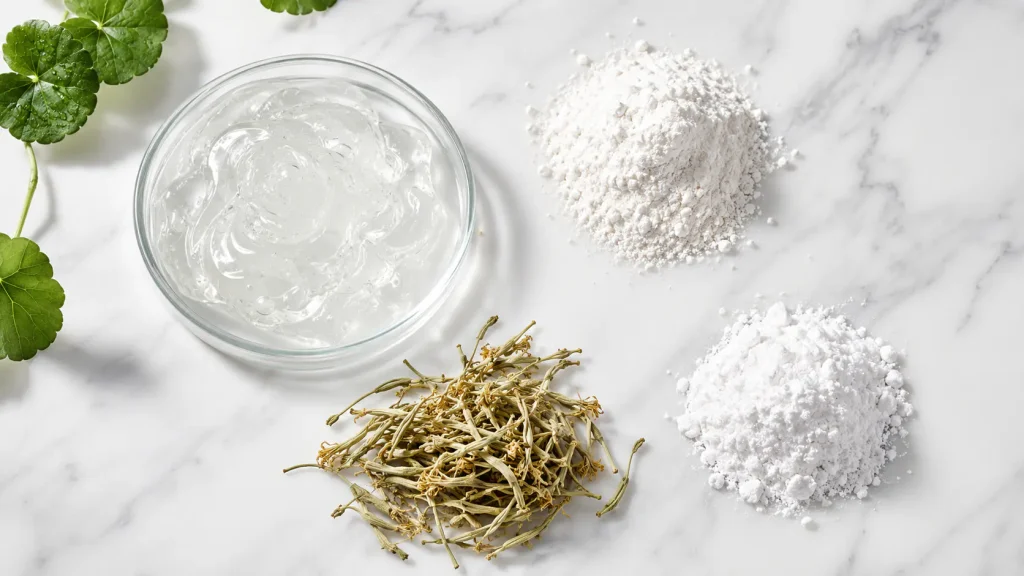
A well-designed natural deodorant often combines several strategies instead of relying on one ingredient.
1. Odor Control
Some ingredients help create an underarm environment in which odor is less noticeable or odor-causing microorganisms are less active.
Common examples include:
- Baking soda
- Magnesium hydroxide
- Mineral salts
- Selected botanical ingredients
The exact mechanism depends on the ingredient and formulation.
2. Moisture Absorption
Natural deodorant doesn’t normally prevent sweat production, but some formulas contain powders that absorb moisture once it reaches the skin.
Common examples include:
- Arrowroot powder
- Tapioca starch
- Cornstarch
- Other absorbent mineral or plant-derived powders
These ingredients can help the underarm area feel less damp, although they don’t provide the same sweat reduction as an antiperspirant.
3. Odor-Neutralizing Ingredients
Some deodorant formulas use ingredients specifically selected to interact with odor molecules rather than simply covering them with fragrance.
This allows formulators to build deodorants that remain effective without relying entirely on a strong perfume.
4. Fragrance
Fragrance, essential oils, and botanical aromatic ingredients can also contribute to the overall feeling of freshness.
However, fragrance isn’t the same as odor control.
A strong deodorant formula should ideally be designed around odor management first, with fragrance supporting the sensory experience rather than simply covering unwanted smells.
5. Skin-Conditioning Ingredients
The underarm area can be sensitive, particularly after shaving or frequent deodorant application.
That’s why modern deodorant formulas increasingly incorporate skin-conditioning ingredients such as:
- Aloe vera
- Panthenol
- Centella asiatica
- Glycerin
- Selected botanical extracts
This is especially relevant for products positioned around sensitive underarm care.
Common Natural Deodorant Ingredients
Different ingredients perform different jobs, so it’s more useful to evaluate the complete formula than to look for one “hero” ingredient.
Baking Soda
Baking soda is commonly used for odor control and can work well for many people.
However, some users find baking soda irritating, particularly with frequent use or on freshly shaved skin.
A baking-soda-free formula may be a better choice if you’ve experienced underarm redness or discomfort before.
Magnesium Hydroxide
Magnesium hydroxide is another popular ingredient in aluminum-free deodorants.
It’s commonly used as an alternative odor-control ingredient in formulas designed without baking soda.
Arrowroot & Tapioca Starch
Plant-based starches can help absorb surface moisture and improve the dry feel of a deodorant.
They don’t stop perspiration, but they can make wetness less noticeable.
Botanical Extracts
Plant extracts are increasingly used to support deodorant positioning, skin feel, fragrance concepts, and overall formula differentiation.
The specific benefit depends on the extract, concentration, formulation, and supporting evidence.
Essential Oils & Fragrance
Essential oils and fragrance can provide a fresh sensory experience, but both natural and synthetic fragrance materials may cause irritation in sensitive users.
If your skin reacts easily, a fragrance-free formula may be worth considering.
Does Natural Deodorant Stop You From Sweating?
Usually, no.
That’s one of the most important things to understand before switching.
Natural and aluminum-free deodorants are generally designed for odor control rather than sweat prevention.
You may still notice moisture during:
- Exercise
- Hot weather
- Stress
- Long workdays
- High-humidity conditions
Absorbent powders can help manage some surface moisture, but they don’t function like antiperspirant active ingredients.
If controlling visible sweat is your main goal, an antiperspirant is usually the more appropriate product category.
Is There Really a “Detox” When Switching to Natural Deodorant?
You’ve probably seen claims that switching to natural deodorant requires an “armpit detox.”
That description is misleading.
Your body doesn’t need to purge aluminum or toxins from your underarms before natural deodorant can work.
What can happen is much simpler.
If you’ve been using an antiperspirant and stop, you’re no longer reducing the amount of sweat reaching the skin. As a result, you may suddenly notice more wetness than you’re used to.
Changes in your underarm routine can also influence the local skin environment and how noticeable body odor feels.
For some people, switching is barely noticeable. Others need some trial and error before finding a formula and routine that provide enough odor control.
Rather than thinking of this as detoxification, it’s more useful to think of it as adjusting your expectations and routine when moving from sweat control to odor control.
What to Expect When Switching
If you’re moving from an antiperspirant to natural deodorant, a few practical changes may help:
- Expect to continue sweating
- Apply to clean, completely dry skin
- Reapply when necessary on hot or active days
- Wash away product buildup regularly
- Try another formula if irritation develops
- Consider a baking-soda-free or fragrance-free option for sensitive skin
There’s no rule saying you have to tolerate weeks of discomfort for natural deodorant to eventually “start working.”
If a formula consistently causes irritation or doesn’t provide enough odor control, it may simply not be the right formula for you.
How to Apply Natural Deodorant
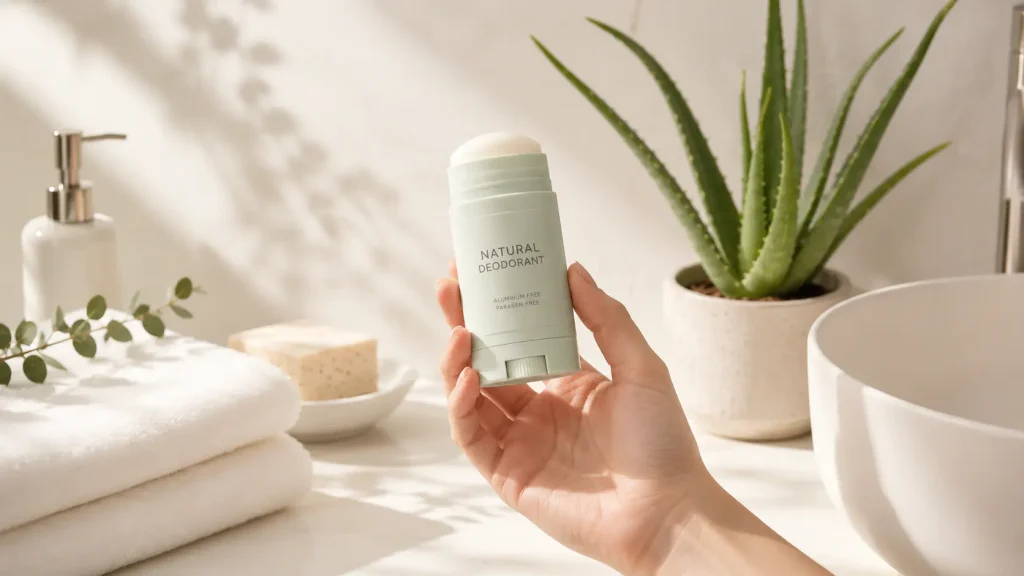
Application can make a noticeable difference in performance.
1. Start With Clean, Dry Underarms
Natural deodorant usually works best when applied to clean skin.
Make sure your underarms are fully dry before applying.
2. Use a Thin, Even Layer
More product doesn’t necessarily mean better odor control.
Apply enough to create an even layer without leaving excessive product on the skin.
3. Warm Solid Formulas if Necessary
Some natural sticks and balms contain waxes, butters, or oils that become softer with body heat.
Holding the product against your skin briefly before applying can make it glide more easily.
4. Be Careful After Shaving
Freshly shaved skin can be more sensitive.
If you notice stinging or irritation, give the skin time to settle before applying deodorant or switch to a gentler formula.
5. Reapply When Needed
Performance varies based on your activity level, climate, body chemistry, and formula.
A second application may be useful after exercise or during particularly hot days.
Can Natural Deodorant Irritate Sensitive Skin?
Yes.
“Natural” doesn’t automatically mean non-irritating.
Ingredients that may work perfectly well for one person can bother another. Common examples include:
- Baking soda
- Fragrance
- Essential oils
- Certain botanical extracts
If you have sensitive underarms, look for simpler formulas designed around skin compatibility rather than the longest possible ingredient list.
Fragrance-free and baking-soda-free options may also be worth considering.
Persistent redness, burning, swelling, or discomfort is a reason to stop using the product rather than trying to “push through” an adjustment period.
How to Choose the Right Natural Deodorant
There isn’t one formula that works best for everyone.
Consider these factors before choosing:
Your Main Goal
Do you mainly want to control odor, or do you also need significant sweat reduction?
If sweat control matters most, you may be looking for an antiperspirant rather than a deodorant.
Skin Sensitivity
If you’ve reacted to deodorant before, check for common irritants such as baking soda, fragrance, or essential oils.
Format
Natural deodorants come in:
- Roll-ons
- Sticks
- Creams
- Balms
- Sprays
The right choice often comes down to texture, drying time, convenience, and personal preference.
Climate & Activity Level
A formula that works well during an air-conditioned office day may perform differently during summer, sports, or travel in a humid climate.
Fragrance Preference
Choose scented, lightly scented, or fragrance-free based on your skin and personal preference.
And remember: fragrance quality and deodorizing performance are two separate parts of the formula.
Is Natural Deodorant Better Than Antiperspirant?
Not necessarily.
They’re different product categories designed around different priorities.
A natural deodorant may be a good fit if you:
- Mainly want odor control
- Don’t mind normal underarm perspiration
- Prefer an aluminum-free formula
- Prefer particular plant-based or naturally derived ingredients
- Have found a formula that works comfortably with your skin
An antiperspirant may be more suitable if:
- Visible underarm wetness is your main concern
- You sweat heavily
- You need stronger sweat management for work, exercise, or climate
- Deodorant alone isn’t giving you the performance you want
Choosing one over the other is mostly about performance needs, skin tolerance, and personal preference.
Frequently Asked Questions
Does natural deodorant actually work?
Natural deodorant can be effective at controlling odor, but it won’t normally reduce sweating the way an antiperspirant does. Performance varies depending on the formula, your activity level, climate, and individual body chemistry.
Is aluminum-free deodorant the same as natural deodorant?
Not necessarily.
“Aluminum-free” tells you that the product does not contain aluminum-based antiperspirant actives. It doesn’t automatically tell you whether every ingredient is natural or naturally derived.
Will I sweat more after switching?
You may notice more underarm wetness if you’re switching from an antiperspirant because you’re no longer using ingredients designed to reduce perspiration.
That doesn’t necessarily mean your body suddenly produces dramatically more sweat.
Do you need to detox before using natural deodorant?
No special underarm detox is necessary.
Good hygiene, clean and dry skin, and choosing a formula that suits your needs are generally more useful than detox masks or aggressive scrubbing.
Why does natural deodorant sometimes cause a rash?
Potential causes include baking soda, fragrance, essential oils, botanical ingredients, friction, or applying the product to freshly shaved or already irritated skin.
Stop using a product if irritation persists.
How often should natural deodorant be reapplied?
It depends on the formula and your routine.
Some people are comfortable with one daily application, while others may prefer to reapply after exercise or during hot weather.
For Beauty Brands: What Makes a Good Natural Deodorant Formula?
For beauty and personal-care brands, developing an effective natural deodorant is more complex than simply removing aluminum.
A strong formula needs to balance several areas at once:
- Odor-control performance
- Moisture management
- Skin compatibility
- Texture and application
- Drying time
- Fragrance experience
- Packaging compatibility
- Target-market claims
This is where formulation strategy becomes important.
A deodorant that performs well but leaves a sticky residue may struggle with repeat purchases. A beautifully scented product that doesn’t provide enough odor control has the opposite problem. And a powerful formula that irritates sensitive underarms creates another challenge altogether.
The strongest products balance efficacy, skin feel, sensory experience, and positioning rather than optimizing only one of them.
How a Botanical Roll-On Concept Comes Together
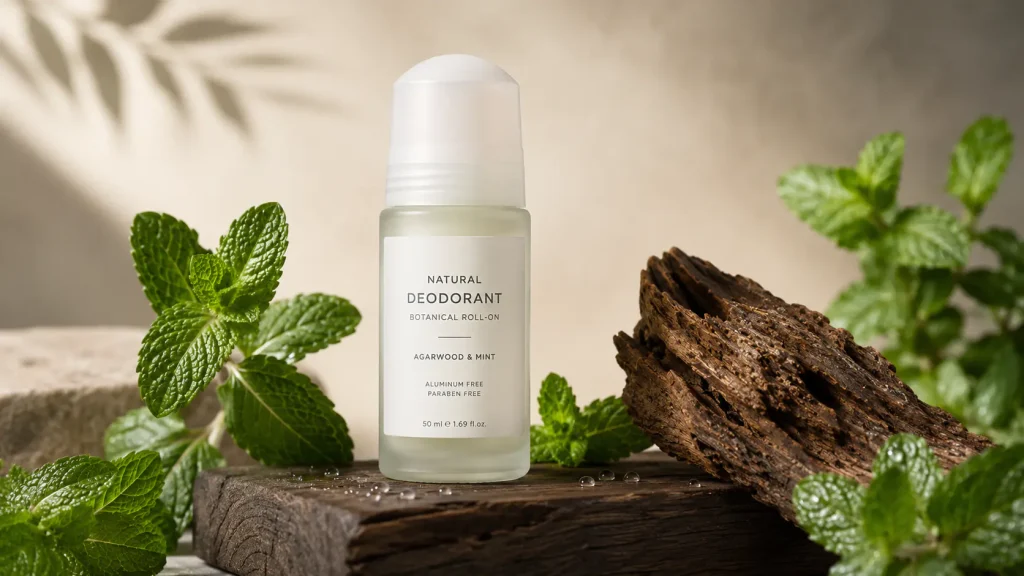
A botanical deodorant concept becomes stronger when the ingredient story, odor-care strategy, skin feel, fragrance, and application format are developed as one product system.
NEXO Beauty Labs’Agarwood & Mint Botanical Roll-On Deodorant provides one example of this type of development direction.
The concept combines a botanical blend including:
- Agarwood
- Persimmon
- Green tea
- Honeysuckle
It also incorporates skin-conditioning ingredients such as:
- Centella asiatica
- Aloe vera
- Panthenol
- Dipotassium glycyrrhizate
Together, these elements support a lightweight roll-on concept built around everyday odor care, comfortable skin feel, easy application, and a fresh mint-inspired sensory profile.
For brands, the broader development direction can then be customized according to the intended positioning and target market.
Customization Options
- Natural or aluminum-free deodorant positioning
- Botanical extract combinations
- Odor-control ingredient systems
- Baking-soda-free options
- Fragrance, essential oil, or fragrance-free concepts
- Sensitive-skin positioning
- Formula color and texture
- Roll-on size and packaging
- Bottle decoration and labeling
- Private label branding
- Vegan or cruelty-free product directions
Brands developing an antiperspirant rather than a deodorant should treat this as a separate formulation and regulatory direction. Active ingredients, claims, testing, and regulatory requirements depend on the target market.
Developing a Natural Deodorant with NEXO Beauty Labs

Whether you’re developing a ready-to-launch ODM deodorant or building a more differentiated OEM formula, development should begin with the performance your target consumer actually expects.
That may include:
- Stronger odor protection
- Sensitive-skin positioning
- Fast-drying roll-on textures
- Botanical concepts
- Fragrance-free formulas
- Sports or hot-climate positioning
- Premium fragrance profiles
- Customized packaging
- Deodorant and antiperspirant product-line strategies
From concept and formulation through sampling, testing, packaging, and production, the goal is to turn that positioning into a product consumers will actually want to use every day.
Request an OEM/ODM Consultation with NEXO Beauty Labs to discuss your natural deodorant, aluminum-free deodorant, or antiperspirant product concept and explore the right formulation direction for your brand.