
Body Oil vs Body Serum vs Body Cream: Which Format Should Your Beauty Brand Develop?
Compare body oils, body serums and body creams from a beauty product development perspective, including texture, ingredients, packaging and positioning.
Body care is increasingly borrowing the language, ingredients, and product-development logic of facial skincare.
Instead of offering only a traditional body lotion, beauty brands can now develop lightweight treatment serums, botanical oils, rich creams, barrier-focused moisturizers, shimmer oils, exfoliating treatments, and other specialized body-care formats.
But the better question isn’t:
“Which body-care format is best?”
It is:
“Which format best supports the target consumer, skin concern, sensory experience, usage scenario, and brand positioning we want to create?”
Body oil, body serum, and body cream can all fit within a strong body-care line — but they create very different formulation systems and consumer experiences.
This guide compares the three formats from a beauty-brand formulation and OEM/ODM product-development perspective.
Quick Answer: Body Oil vs Body Serum vs Body Cream
None of these formats is automatically more advanced or more effective.
The right format is the one that supports the intended formula, consumer need, sensory experience, claims strategy, packaging, and commercial manufacturing plan.
1. Body Oil, Body Serum & Body Cream Are Different Product Architectures
These names are useful commercial categories, but they should not be treated as globally standardized technical specifications.
In market usage:
Body Oil usually describes an anhydrous or predominantly oil-phase product.
Body Serum is a broader treatment-oriented category that can use several different formulation architectures.
Body Cream generally describes a richer emulsion-based moisturizer.
However, actual formulas can overlap.
For example:
- A body serum can contain oils
- A body cream can contain active ingredients typically associated with serums
- A dry-touch body oil can feel lighter than some serums
- A serum-cream hybrid can combine treatment positioning with a richer texture
That means the product name should describe the intended consumer experience — while the actual formula specification guides technical development.
2. What Is a Body Oil?
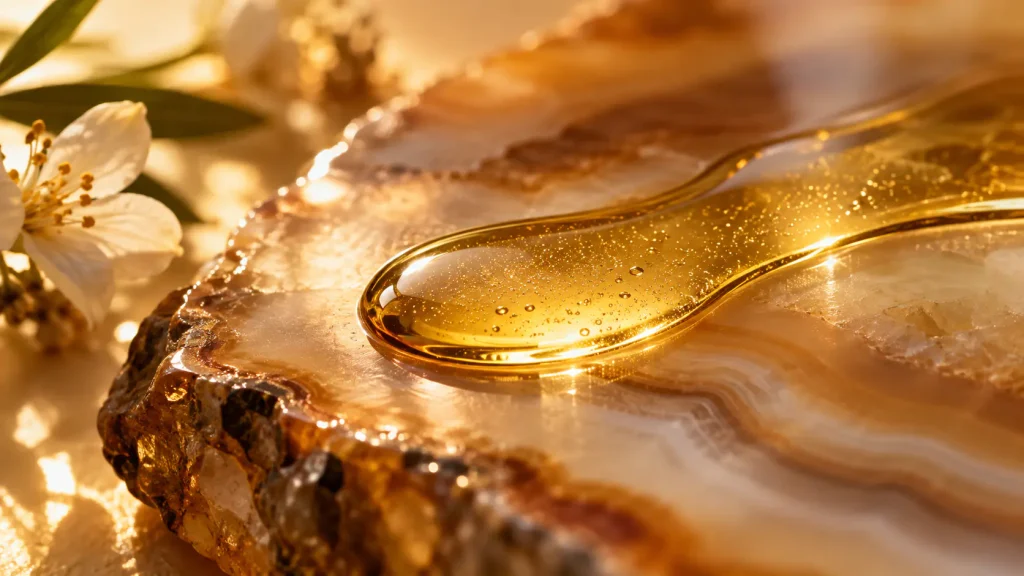
Body oil is generally built around an oil-based or predominantly oil-phase system.
This makes the format naturally suited to positioning around:
- Softness
- Glow
- Dry-feeling skin
- Massage
- Botanical ingredients
- Spa rituals
- Fragrance
- Premium sensory experiences
But body oil does not automatically mean heavy or greasy.
Modern oil systems can range from rich botanical blends to lighter dry-touch formulas designed for fast spreading and controlled residue.
Body Oil Development Considerations
- Oil and emollient selection
- Spreadability
- Slip
- Greasiness
- Surface residue
- Gloss level
- Fragrance
- Oxidative stability
- Ingredient compatibility
- Dosage
- Packaging
The target sensory profile should be defined early.
A massage-oriented botanical oil may intentionally provide longer-lasting slip, while a daily body oil may need to absorb perceptually faster and allow consumers to dress soon after application.
For one premium botanical direction, see Rose-Deluxe Supercritical Rose Extract Body Oil.
3. Body Oil Does Not Replace Water-Based Hydration
This is an important distinction when developing products for dry-feeling skin.
Most conventional body oils contain little or no water.
They can provide:
- Emolliency
- Surface softness
- Lubrication
- Gloss
- A more occlusive finishing layer depending on the formula
But an oil-only product does not provide the same water-based moisturization architecture as a lotion, serum, or cream containing water and humectants.
This is one reason body oils can work well:
- On slightly damp skin
- Over a water-based moisturizer
- As a finishing layer
- On targeted dry-feeling areas
For brands, this creates an opportunity to position oil as a complementary body-care step rather than trying to make it replace every moisturizer in the routine.
4. What Is a Body Serum?
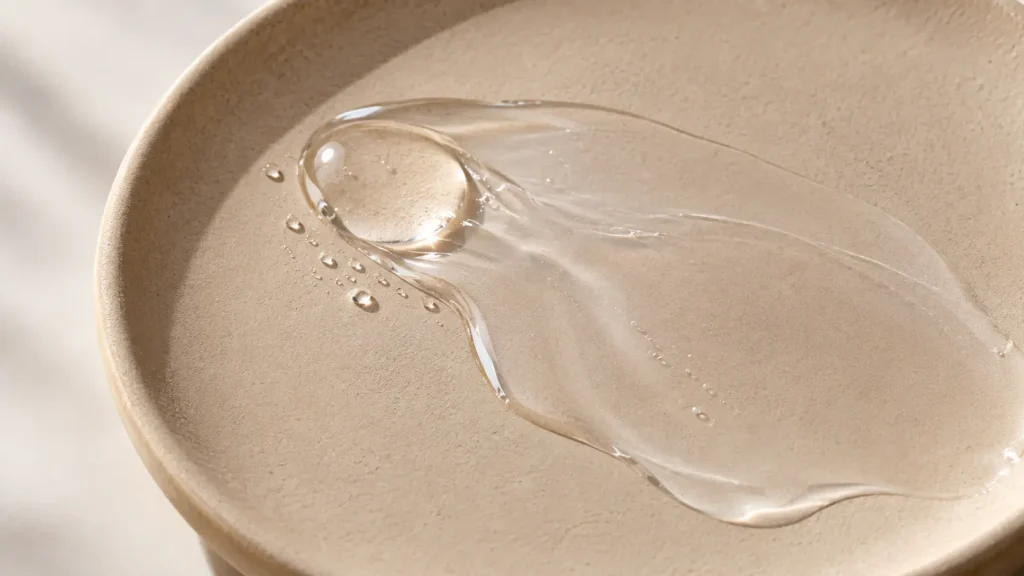
Body serum is a broader and more flexible category.
It is commonly positioned as a targeted body-skincare treatment rather than simply another moisturizer.
Depending on the concept, a body serum may be:
- Water-based
- Gel-serum based
- Emulsion-based
- Oil-serum based
- Bi-phase
- Hybrid
This gives brands room to develop body-serum concepts around:
- Lightweight hydration
- Radiance
- Uneven-looking tone
- Texture care
- Antioxidant positioning
- Barrier support
- Smoothing
- Exfoliating or renewal concepts where appropriate
- Other targeted body-skin concerns
For one skincare-first direction, see THD Ascorbate & Ceramide Radiance Body Serum.
5. Does Body Serum Always Contain More Active Ingredients?
No.
This is a common marketing simplification.
The word serum does not automatically guarantee:
- A higher active concentration
- Faster penetration
- Deeper delivery
- Greater efficacy
Those characteristics depend on the actual formula, ingredients, use levels, delivery system, skin interaction, and supporting evidence.
In product development, body serum is more usefully understood as a format that often communicates:
Targeted Treatment + Lightweight Sensory + Ingredient-Led Positioning
rather than as a technical guarantee about active concentration or penetration.
Body Serum Development Considerations
- Wateriness
- Viscosity
- Spreadability across large body areas
- Stickiness
- Residue
- Absorption perception
- Active compatibility
- pH where relevant
- Stability
- Packaging
A facial-serum texture cannot simply be enlarged and assumed to work well on the body.
Body products need to spread efficiently over larger areas without creating excessive tack, cost per application, or difficult dosing.
6. What Is a Body Cream?
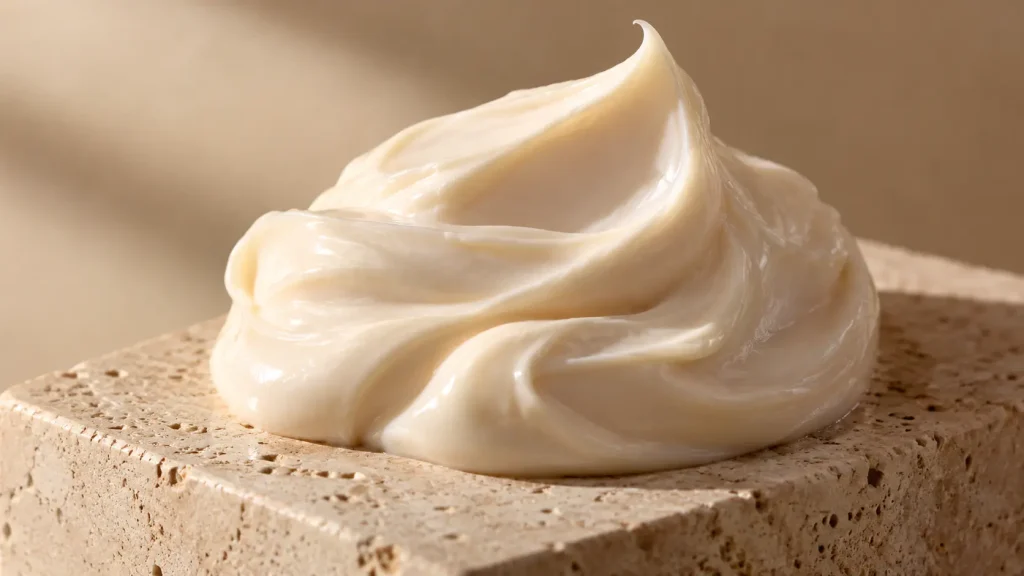
Body cream usually creates the richest and most cushioning experience of these three formats.
It can naturally support concepts around:
- Dry skin
- Intensive moisturization
- Night care
- Cold-weather routines
- Barrier-focused body care
- Premium nourishment
- Longer-lasting comfort
A body cream can be designed to feel:
- Rich
- Cushioning
- Silky
- Comforting
- Protective-feeling
But richer does not automatically mean better.
The target should be the right richness for the consumer and usage scenario.
Body Cream Development Considerations
- Emulsion structure
- Richness
- Spreadability
- Occlusive feel
- Oiliness
- Waxiness
- Residue
- Absorption perception
- Viscosity
- Stability
- Packaging
For one richer body-care concept, see Wild Yam Nourishing Body Cream.
7. Body Serum vs Body Lotion: What Is the Difference?
This is one of the most common body-care search questions.
There is no single universal formula specification that separates every body serum from every body lotion.
In market positioning, the distinction is often:
Body Serum → Targeted Treatment / Ingredient Story / Lighter Sensory
Body Lotion → Everyday Moisturization / Broad Use / Easy Full-Body Application
But those categories can overlap.
A modern body lotion can contain sophisticated active ingredients.
A body serum can be formulated as an emulsion and provide significant moisturization.
A “serum lotion” can intentionally combine both concepts.
For brands, the label should follow the consumer proposition rather than creating artificial technical rules that the actual formula does not support.
8. Choose Body Oil When Ritual, Glow & Sensory Luxury Matter
Body oil can be a strong direction when your brand prioritizes:
- Glow
- Softness
- Dry-feeling skin
- Botanical ingredient stories
- Massage
- Spa positioning
- Fragrance rituals
- Premium finishing
The application ritual itself can become a major part of the product story.
Body oil also creates opportunities for visually differentiated formats.
For example, Liquid Gold Body Shimmer Oil combines an oil-based sensory format with a visible radiance effect.
In this type of product, shimmer distribution, settling behavior, dosage, and packaging become additional development considerations.
9. Choose Body Serum When Treatment Positioning Matters
Body serum can be especially useful when a brand wants consumers to think:
“I am treating the skin on my body with the same level of intention as my facial skincare.”
Possible directions include:
- Radiance
- Uneven-looking tone
- Texture
- Antioxidant care
- Lightweight hydration
- Barrier-focused treatment
- Exfoliating body skincare
- Age-support positioning
The format can therefore become a strong bridge between traditional body care and facial-skincare language.
10. Choose Body Cream When Comfort & Intensive Moisturization Matter
Body cream can be a stronger direction when your brand prioritizes:
- Dry-skin care
- Rich moisturization
- Barrier-focused positioning
- Cold-weather use
- Night care
- Comfort
- Premium nourishing routines
The format naturally communicates:
Comfort + Nourishment + Rich Moisturization
while body serum more commonly communicates:
Treatment + Actives + Lightweight Sensory
11. Skin Concern Should Guide the Formula — Not the Product Name
Instead of deciding the format first, define the body-skin concern.
Dry or Tight-Feeling Skin
Possible priorities include:
- Humectants
- Emollients
- Occlusive components where appropriate
- Lipid-related ingredients
- Comfortable after-feel
A cream may naturally fit this profile, with oil potentially serving as a complementary finishing layer.
Dull or Uneven-Looking Skin
A body serum can support ingredient-led radiance or tone-focused positioning when the formula and claims strategy are designed appropriately.
Rough Texture
A treatment-oriented serum or lotion may support exfoliating, smoothing, or renewal positioning depending on the ingredient system.
Glow & Sensory Finish
Body oil can provide a strong sensory and visual direction, particularly when combined with botanical or shimmer concepts.
The important principle is:
Concern → Formula Strategy → Sensory Target → Format
rather than:
Trend → Format → Try to Find a Benefit Later
12. Can Body Oil, Serum & Cream Be Layered?

Yes — and this can create a strong portfolio strategy.
A possible routine is:
Body Serum
→ Targeted treatment
Body Cream
→ Moisturization and comfort
Body Oil
→ Finishing, softness, glow, or additional surface emolliency
This creates:
Treat → Moisturize → Finish
But consumers do not necessarily need all three products every time.
The routine should remain flexible according to:
- Skin dryness
- Climate
- Season
- Time of day
- Product textures
- Consumer preference
A successful portfolio gives each product a distinct role rather than making three products deliver the same experience.
13. Texture Is Part of Body-Care Positioning
Consumers experience body care directly through:
- Spreadability
- Oiliness
- Wateriness
- Stickiness
- Smoothness
- Absorption perception
- Residue
- Gloss
- After-feel
A premium body oil might aim for:
Silky + Glossy + Aromatic + Ritualistic
A modern body serum might aim for:
Fluid + Lightweight + Fast-Spreading + Treatment-Led
A barrier-focused cream might aim for:
Rich + Cushioning + Comforting + Protective-Feeling
These are not minor formulation details.
Texture is part of the brand experience.
14. Packaging Should Match the Formula
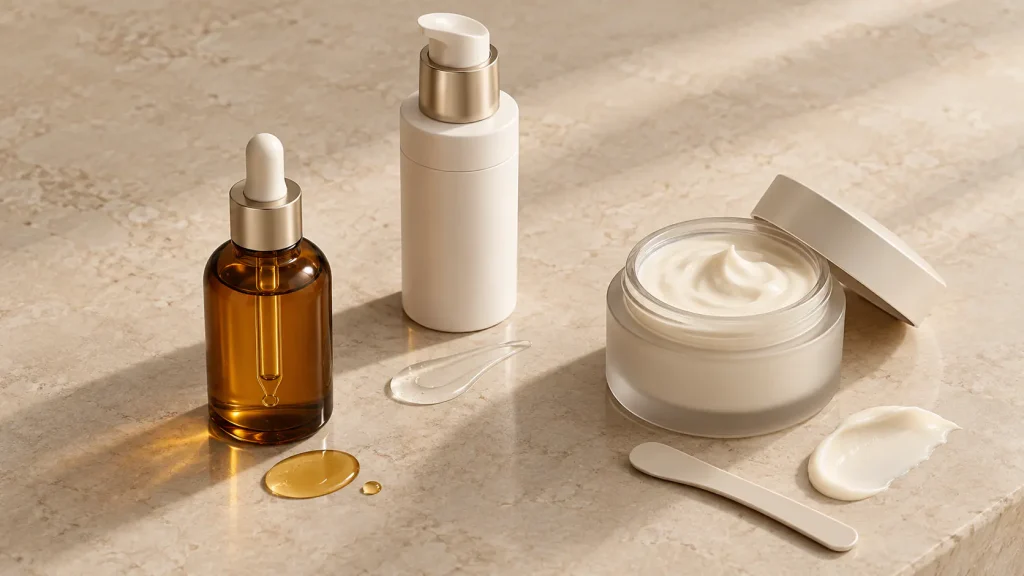
Body Oil Packaging
Possible formats include:
- Pump
- Controlled-dose bottle
- Dropper for suitable product sizes and concepts
Body Serum Packaging
Possible systems include:
- Pump
- Airless bottle
- Controlled-dose bottle
- Specialized dispenser
Body Cream Packaging
Depending on viscosity:
- Jar
- Tube
- Pump
- Airless system
Packaging selection should consider:
- Formula viscosity
- Flow behavior
- Filling
- Dose per actuation
- Leakage
- Product recovery
- Consumer use
- Formula-package compatibility
An oversized pump dose can make a lightweight serum feel less elegant than intended.
A restrictive pump can make a rich cream difficult to dispense.
For more on packaging development, see How to Choose Cosmetic Packaging for Skincare & Beauty Products.
15. Stability Questions Differ by Body-Care Format
Body Oil
Evaluation may focus on:
- Oxidation-related changes
- Color
- Odor
- Clarity or appearance
- Ingredient compatibility
- Shimmer suspension where applicable
- Packaging interaction
Body Serum
Depending on formula architecture, evaluation can include:
- pH where relevant
- Viscosity
- Precipitation
- Emulsion or phase stability
- Active compatibility
- Color
- Texture
- Sensory consistency
- Packaging compatibility
Body Cream
Evaluation may include:
- Emulsion stability
- Viscosity
- Separation
- Texture
- Color
- Odor
- After-feel
- Packaging performance
The testing plan should reflect the actual product rather than applying one identical stability checklist to every body-care format.
For more detail, see Cosmetic Stability Testing: What Beauty Brands Need to Know.
16. Manufacturing Requirements Are Different Too
Body Oil
Commercial manufacturing may involve:
- Oil and emollient blending
- Oil-phase ingredient incorporation
- Antioxidant incorporation
- Fragrance addition
- Shimmer dispersion where applicable
- Controlled filling
Body Serum
Depending on the system, manufacturing may involve:
- Mixing
- Solubilization
- Active incorporation
- Emulsification where relevant
- Homogenization
- Viscosity control
- Controlled filling
Body Cream
Production commonly requires:
- Phase preparation
- Emulsification
- Homogenization
- Heating and cooling control
- Viscosity management
- Filling suitable for richer textures
A successful concept therefore needs to answer:
Can this sensory profile be reproduced consistently at commercial scale?
Formula format is also a manufacturing decision.
17. Body-Care Claims Should Follow the Finished Formula
Modern body-care products increasingly use facial-skincare language such as:
- Brightening
- Barrier support
- Smoothing
- Firming
- Antioxidant care
- Texture improvement
But the product format itself does not prove these benefits.
A body serum is not automatically more effective because it is called a serum.
A rich cream does not automatically “repair the barrier.”
A botanical oil does not automatically correct dryness beyond what the finished formulation and evidence support.
Claims should therefore align with:
Formula + Use Level + Finished-Product Testing + Target Market + Claim Wording
18. How Do Body Oil, Serum & Cream Affect MOQ?
Format can also change the commercial structure of the project.
MOQ may be influenced by:
- Formula batch size
- Specialty oils
- Active ingredients
- Packaging components
- Pumps or airless systems
- Custom jars or bottles
- Shimmer materials
- Decoration
- Filling setup
- Testing
A simple body oil in stock packaging may create a very different MOQ structure from a highly active body serum in a custom airless bottle.
But there is no universal rule that one format always has the lowest MOQ.
The complete finished-product specification determines the practical manufacturing minimum.
For more detail, see Cosmetic MOQ Explained: What Determines Minimum Order Quantity?.
19. Private Label, ODM & Custom Body-Care Development
Private Label Body Care
A private label route can begin with an existing developed body oil, serum, cream, lotion, or other body-care formulation.
This can reduce original R&D work while allowing branding, packaging, and selected customization depending on the manufacturer’s program.
Customized ODM
An ODM project can adapt an existing platform through changes such as:
- Texture
- Selected active ingredients
- Botanical ingredients
- Oil system
- Fragrance
- Color
- Shimmer
- Packaging
Custom OEM Formulation
A more customized project can be developed around:
- Target consumer
- Skin concern
- Desired sensory profile
- Ingredient strategy
- Formula architecture
- Packaging
- Claims direction
- Target market
The appropriate development route depends on how much formula and product differentiation the brand actually needs.
20. One Brand Can Build a Complete Body-Care Routine
Body oil, serum, and cream do not need to compete.
They can serve different stages of one routine:
Body Serum
→ Targeted treatment
Body Cream
→ Moisturization and comfort
Body Oil
→ Sensory finishing, softness and glow
This creates a natural:
Treat → Moisturize → Finish
portfolio structure.
A brand can also expand into:
- Body wash
- Exfoliating treatment
- Body lotion
- Shimmer oil
- Hand and foot care
- Targeted neck or body-area treatments
Body care can therefore be developed as a complete skincare category rather than one standalone moisturizer.
Which Body-Care Format Should Your Brand Develop?
Choose Body Oil If Your Priority Is:
- Glow
- Softness
- Botanical ingredient storytelling
- Massage
- Fragrance ritual
- Premium sensory experience
- Shimmer or finishing concepts
Choose Body Serum If Your Priority Is:
- Targeted body skincare
- Lightweight texture
- Ingredient-led positioning
- Radiance or tone-focused concepts
- Texture-care concepts
- Antioxidant positioning
- Modern “skinification of body care” storytelling
Choose Body Cream If Your Priority Is:
- Dry-skin positioning
- Rich moisturization
- Barrier-focused concepts
- Comfort
- Night care
- Cold-weather use
- Premium nourishing routines
The stronger development sequence is:
Target Consumer
↓
Skin Concern
↓
Usage Scenario
↓
Desired Sensory Experience
↓
Ingredient Strategy
↓
Formula Architecture
↓
Packaging
↓
Final Product Format
Frequently Asked Questions
Is body oil better than body cream?
Neither is automatically better. Body oil usually emphasizes emolliency, slip, glow, and sensory ritual, while body cream typically provides a richer water-and-oil emulsion system for moisturization and comfort. The better option depends on the consumer need and actual formula.
What is the difference between body serum and body cream?
Body serum is generally positioned as a lighter, more treatment-led body-skincare format, while body cream typically emphasizes richer moisturization and comfort. However, these are market categories rather than universally fixed formulation specifications.
What is the difference between body serum and body lotion?
Body serum is often positioned around targeted concerns, active ingredients, and lighter skincare-inspired textures. Body lotion is commonly positioned around everyday moisturization and broad full-body use. The two categories can overlap substantially depending on formulation.
Does body serum absorb deeper than body lotion?
This should not be assumed from the product name. Skin delivery depends on the actual ingredients, molecule characteristics, vehicle, concentration, and complete formulation rather than whether the product is called a serum or lotion.
Does body serum always have more active ingredients?
No. “Serum” does not guarantee a particular active concentration. Ingredient levels should be determined according to formulation requirements, safety, stability, efficacy strategy, claims, and target market.
Can body serum contain oils?
Yes. A body serum may contain oils, use an emulsion structure, or be developed as an oil-serum or hybrid system.
Can body oil moisturize dry skin?
Body oil can provide emolliency and help reduce moisture loss depending on the formula, but most oil-only products do not provide the same water-based hydration system as a lotion, serum, or cream containing water and humectants.
Should body oil be applied before or after body cream?
When both are used, oil is commonly used after a water-based moisturizer as a finishing layer. However, the exact routine should reflect the specific products and directions for use.
Which body-care format is best for dry skin?
Richer creams often fit dry-skin positioning naturally, while oils can provide additional emolliency or a finishing layer. The final suitability depends on the complete formulation and consumer preference.
Is body shimmer oil the same as regular body oil?
It belongs to the broader body-oil category but adds visible-effect materials such as shimmer or radiance particles, creating additional considerations around suspension, appearance, dispensing, packaging, and stability.
Does packaging affect body-care formulation?
Yes. Viscosity, filling, dose, dispensing, leakage, formula-package compatibility, and consumer usage should all be considered during development.
Can a brand develop body oil, serum, and cream in one line?
Yes. The formats can play complementary roles such as treatment, moisturization, and finishing within one broader body-care portfolio.
Which body-care format usually has the lowest MOQ?
There is no universal answer. MOQ depends on formula batch size, ingredients, packaging, decoration, filling requirements, testing, customization, and manufacturing setup.
Develop the Format Around the Body-Care Experience
Body oil, body serum, and body cream should not be treated as three interchangeable containers for the same product idea.
Each creates a different combination of:
Formula + Sensory Experience + Skin Concern + Packaging + Usage Occasion + Manufacturing + Brand Positioning
The strongest format is the one that supports the consumer experience and product strategy your brand is actually trying to create.
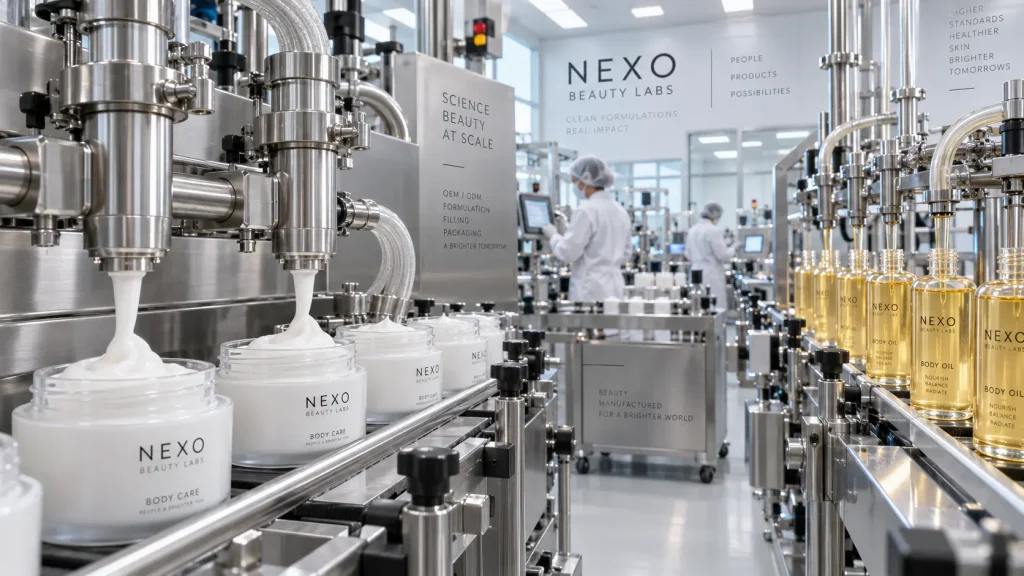
At NEXO Beauty Labs, body-care development can be approached across private label, ODM, and custom OEM pathways together with formulation, sensory design, packaging, stability evaluation, product testing, scale-up, and commercial manufacturing.
Whether you are developing a botanical body oil, lightweight active serum, rich nourishing cream, or a visually differentiated format such as a shimmer oil, the right product architecture should begin with the consumer need — not the trend.
Request a Body Care OEM/ODM Consultation with NEXO Beauty Labs to discuss your body oil, body serum, body cream, formulation, packaging, MOQ, testing, and manufacturing requirements.