Hydrogel Mask vs Sheet Mask vs Eye Patches: Which Treatment Format Should Your Skincare Brand Develop?
Compare hydrogel masks, sheet masks and eye patches from a skincare development perspective, including material, formula, packaging, positioning and manufacturing.
Facial masks are no longer one single skincare format.
Beauty brands can develop traditional sheet masks, premium hydrogel masks, targeted eye patches, and other treatment systems — each creating a different consumer ritual, sensory experience, material structure, packaging system, manufacturing process, and price position.
For product developers, the better question isn’t:
“Which mask is better?”
It is:
“Which treatment format best fits the consumer, treatment area, desired sensory experience, formula strategy, and product positioning we want to create?”
In mask development, the format itself becomes part of the product.
This guide compares sheet masks, hydrogel masks, and eye patches from a beauty-brand formulation and OEM/ODM development perspective.
Quick Answer: Hydrogel Mask vs Sheet Mask vs Eye Patches
No format is automatically more effective simply because it looks more premium.
The better format is the one that allows the material, formula, packaging, consumer experience, manufacturing process, and price position to work together.
1. Sheet Mask, Hydrogel & Eye Patch Are Not Exactly the Same Type of Classification
These three terms are useful for comparing consumer products, but technically they do not describe exactly the same thing.
Sheet Mask
Usually describes a full-face treatment using a sheet-like substrate saturated with a separate essence or serum.
Hydrogel
Describes a gel-based treatment material or matrix.
Hydrogel can be used for:
- Full-face masks
- Two-piece face masks
- Eye patches
- Lip patches
- Other targeted treatment shapes
Eye Patch
Primarily describes the treatment area and product shape.
An eye patch may itself be made from hydrogel or another suitable material system.
This means:
Hydrogel Eye Patch
is not a contradiction — it is a targeted eye-area patch made using a hydrogel treatment structure.
For brands, this distinction helps separate two decisions:
Where should the product be used?
and:
What material or delivery structure should the product use?
2. What Is a Sheet Mask?
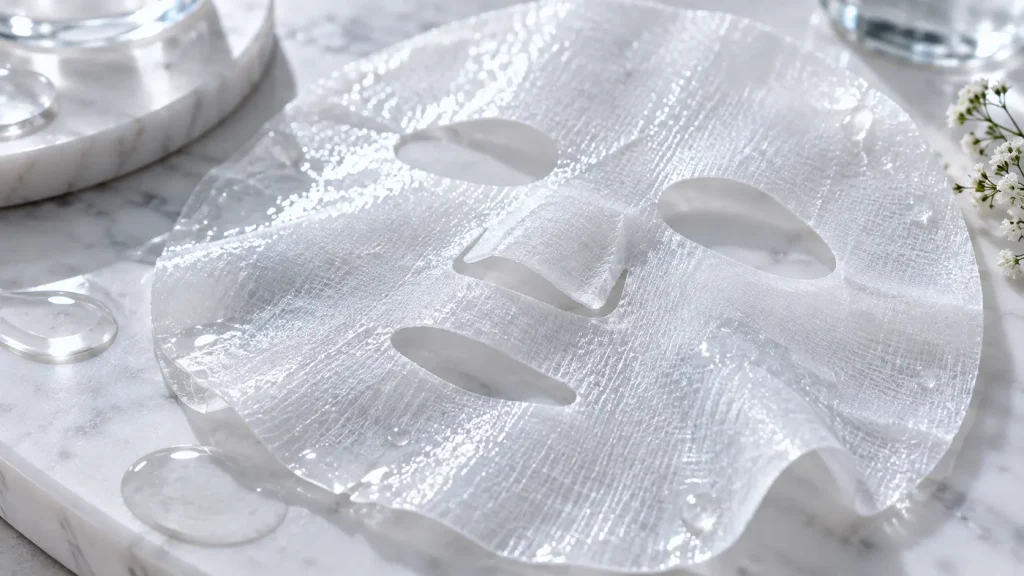
Sheet masks remain one of the most familiar treatment formats in skincare.
They generally use a separate substrate that absorbs and holds an essence or serum against the skin during application.
The format can support concepts such as:
- Hydration
- Soothing
- Radiance and brightening-oriented positioning
- Weekly or frequent-use treatment
- Sensitive-skin-oriented concepts
- Accessible skincare routines
- Larger mask collections
One of the main advantages of sheet masks is flexibility.
Brands can change both:
Substrate + Essence
to create different product experiences.
Sheet Mask Substrate Matters
Depending on the product concept and supplier capabilities, substrate directions can include materials such as:
- Nonwoven materials
- Cellulose-based sheets
- Tencel-type substrates
- Bio-cellulose
- Other specialty sheet materials
Substrate selection can influence:
- Essence loading
- Skin fit
- Flexibility
- Thickness
- Wet strength
- Adhesion
- Consumer perception
- Cost
The Essence Matters Too
The essence may need to be designed around:
- Viscosity
- Substrate absorption
- Distribution
- Dripping
- Stickiness
- Residue
- Fragrance
- Skin feel
- Ingredient compatibility
A sheet mask should therefore not be developed as:
Sheet First → Essence Later
but as:
Sheet + Essence = One Treatment System
3. What Is a Hydrogel Mask?
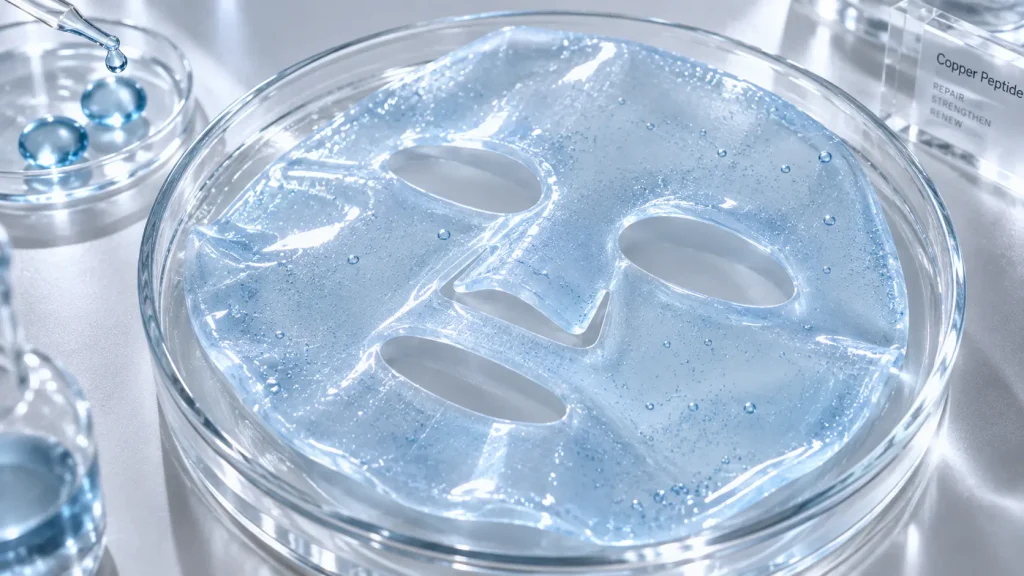
A hydrogel mask creates a fundamentally different material experience from a conventional fabric or cellulose sheet mask.
Instead of relying only on a dry sheet that is saturated with a separate essence, hydrogel uses a water-rich gel matrix as an integral part of the treatment structure.
This can naturally support positioning around:
- Premium skincare
- Cooling sensory experience
- Close skin contact
- Barrier-care concepts
- Smoothing
- Firming-related positioning where appropriately supported
- Technology-led skincare
- Hero treatment products
Why Hydrogel Feels Different
Consumers may notice:
- Cooling sensation
- Close adhesion
- Flexibility
- Thickness
- Translucency
- Moist feel
- Premium appearance
This sensory profile often becomes part of the product’s marketing identity.
Hydrogel Development Considerations
- Gel strength
- Flexibility
- Adhesion
- Thickness
- Transparency or translucency
- Cooling sensation
- Moisture retention
- Ingredient compatibility
- Deformation resistance
- Storage stability
- Packaging protection
A hydrogel mask is therefore not simply a conventional sheet mask made from a more expensive material.
The gel matrix itself becomes part of the product-delivery and sensory system.
For one product direction, see Copper Peptide Barrier Repair Hydrogel Mask.
4. Does Hydrogel Automatically Deliver Ingredients Better Than Sheet Masks?
Not automatically.
Hydrogel can create a close-fitting, moist, and more occlusive-feeling treatment environment.
But that does not mean every hydrogel mask automatically delivers active ingredients more deeply or produces stronger efficacy than every sheet mask.
Finished-product performance also depends on:
- Ingredient system
- Formula concentration
- Gel or substrate compatibility
- Contact time
- Product fit
- Skin application
- Supporting performance data
The stronger B2B position is:
Hydrogel changes the delivery environment and consumer experience.
It should not automatically be presented as proof of superior ingredient penetration or efficacy.
5. What Are Hydrogel Eye Patches?
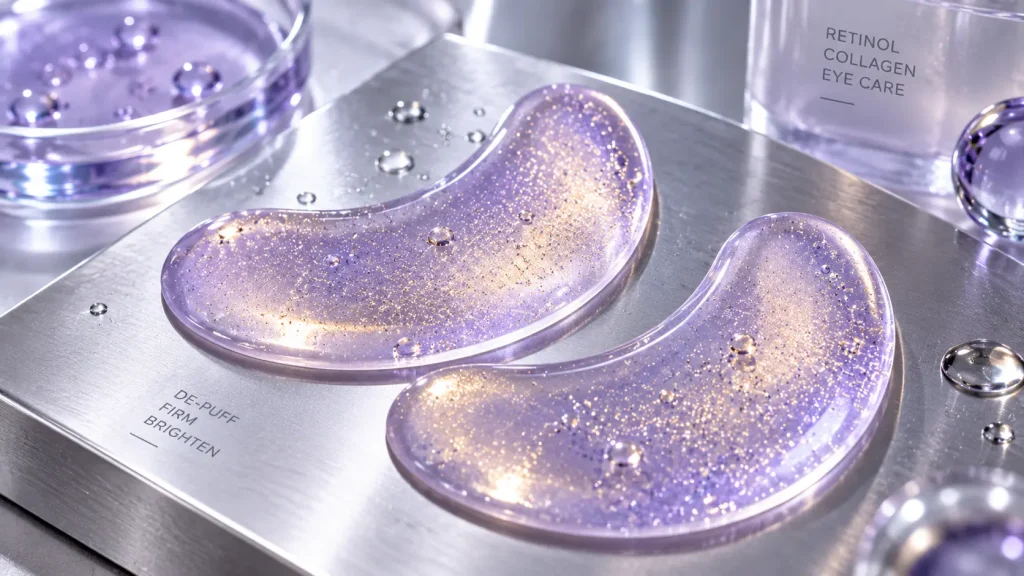
Hydrogel eye patches use a related gel-based concept but are designed specifically around the under-eye area.
This format can support positioning around:
- Hydration
- Cooling
- Smoothing
- Appearance of tired-looking eyes
- Puffiness-related cosmetic positioning where supported
- Premium eye care
- Quick treatment routines
- Travel-friendly skincare
The value of an eye patch is not that it is automatically more technologically advanced than a full-face mask.
Its main strength is:
Targeted Treatment.
Eye Patch Development Considerations
- Patch shape
- Patch dimensions
- Thickness
- Adhesion
- Sliding
- Gel strength
- Moisture
- Cooling sensation
- Comfort
- Removal
- Packaging
Because the eye area is smaller and moves during facial expressions, shape and adhesion can become especially important.
For one product direction, see our Retinol & Collagen Firming Hydrogel Eye Patches.
6. Why Do Hydrogel Masks & Eye Patches Sometimes Slide?
Sliding is one of the most noticeable consumer-experience problems in gel-based treatment formats.
It can be influenced by:
- Patch shape
- Mask dimensions
- Gel structure
- Thickness
- Surface moisture
- Formula content
- Adhesion
- Face movement
- Application position
A product can look extremely premium in packaging and still create a frustrating consumer experience if it constantly moves during wear.
This makes adhesion a genuine product-development variable rather than simply a subjective preference.
7. Does a Hydrogel Mask Turning Transparent Mean the Ingredients Were Fully Absorbed?
Brands should be careful with this type of claim.
Some hydrogel products may become more translucent during wear as the gel system changes over time.
But a visible change in transparency should not automatically be treated as proof that:
- All serum has entered the skin
- All active ingredients have been absorbed
- The treatment is complete
- The product has delivered stronger efficacy
Visual transformation can be an interesting part of the consumer ritual.
It should not be turned into a scientific efficacy claim without appropriate supporting evidence.
8. Choose a Sheet Mask When Familiarity & Formula Flexibility Matter
Sheet masks can be a strong direction when the brand wants:
- Broad consumer familiarity
- Flexible essence concepts
- Hydration-focused ranges
- Soothing routines
- Frequent-use treatments
- Larger SKU collections
- Accessible price positioning
The substrate can stay relatively familiar while differentiation comes from:
- Essence formula
- Ingredient story
- Sheet material
- Cut and fit
- Packaging
- Collection concept
9. Choose a Hydrogel Mask When Premium Treatment Experience Matters
Hydrogel can be attractive when your brand prioritizes:
- Cooling sensory experience
- Close skin fit
- Premium treatment positioning
- Strong visual identity
- Technology-led storytelling
- Hero SKU potential
- Barrier, smoothing, or intensive-treatment concepts
In this type of product, format itself becomes part of the brand story.
10. Choose Eye Patches When Targeted Care Matters
Eye patches can support brands building:
- Dedicated eye-care ranges
- Quick treatment routines
- Premium skincare extensions
- Travel products
- Targeted treatment concepts
- Visually distinctive routines
They also fit naturally into an eye-care sequence such as:
Eye Serum → Eye Cream → Eye Patches
rather than asking one eye product to serve every use occasion.
11. Formula & Material Need to Work Together

The treatment material should never be considered separately from the formula.
For example:
- A very thin sheet-mask essence may drip excessively
- A thick essence may distribute poorly through some substrates
- A sticky formula may create unpleasant residue
- A sheet may hold too much or too little essence for the desired experience
- A hydrogel matrix may lose structure if the formulation system is not compatible
- A heavily loaded eye patch may slide during use
Development can involve:
- Viscosity
- Essence loading
- Distribution
- Material compatibility
- Ingredient compatibility
- Adhesion
- Wetness
- Residue
- Skin feel
The substrate or gel matrix is part of the formulation-delivery system — not simply packaging for the serum.
12. Sensory Experience Can Determine Repeat Use
Mask products are unusually experiential.
Consumers immediately notice:
- Cooling
- Wetness
- Adhesion
- Sliding
- Thickness
- Flexibility
- Comfort
- Dripping
- Residue
- Skin feel after removal
A hydrogel mask may look luxurious but become frustrating if it constantly slips.
An eye patch may contain an attractive formula but feel inconvenient if the consumer needs to reposition it every few minutes.
A sheet mask may contain a strong essence concept but create a poor experience if excessive liquid drips down the face.
That is why:
Claims and ingredients can attract the first purchase. Sensory experience helps determine repeat use.
13. Packaging Requirements Differ by Mask Format
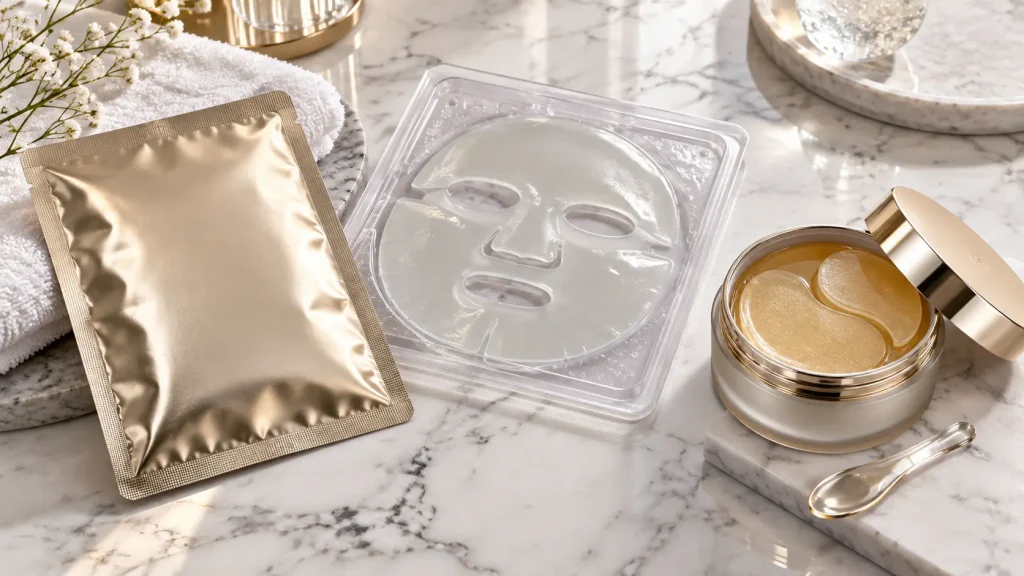
Sheet Mask Packaging
Common formats include:
- Single pouch
- Flexible sachet
The package needs to protect both the substrate and the essence.
Hydrogel Mask Packaging
Possible systems include:
- Protective tray
- Tray + pouch
- Other structured protective formats
Structured packaging can help protect against deformation and moisture loss.
Eye Patch Packaging
Possible formats include:
- Jar + spatula
- Individual tray
- Pouch
- Multi-pair container
The packaging decision should consider:
- Moisture protection
- Seal integrity
- Deformation
- Hygiene
- Consumer convenience
- Product removal
- Manufacturing
- Transportation
- Visual presentation
For more on packaging development, see How to Choose Cosmetic Packaging for Skincare & Beauty Products.
14. Stability Means More Than Testing the Essence Alone

Sheet Mask
The relevant system can include:
Essence + Substrate + Pouch
Evaluation may consider whether:
- The essence maintains its intended properties
- The sheet maintains the expected wet strength and fit
- The intended amount of essence remains available
- The package maintains seal integrity
- The final product continues to look and feel as intended
Hydrogel Mask
The system can include:
Gel Matrix + Ingredients + Protective Packaging
Evaluation may include:
- Gel integrity
- Adhesion
- Deformation
- Transparency
- Moisture
- Ingredient compatibility
- Packaging protection
Eye Patches
The system can include:
Patch + Gel / Essence + Container
The product may need to maintain:
- Shape
- Adhesion
- Moisture
- Appearance
- Ease of removal
- Consumer usability
A stable mask product therefore means the complete treatment system remains fit for its intended use.
For more detail, see Cosmetic Stability Testing: What Beauty Brands Need to Know.
15. Mask Products Still Need Product-Specific Testing
The appropriate testing program depends on the finished format.
Depending on the formula, product and intended claims, development may involve:
- Physical stability
- Microbiological quality
- Preservative-system evaluation where relevant
- Material compatibility
- Packaging compatibility
- Adhesion
- Sensory evaluation
- Finished-product performance
- Eye-area evaluation where applicable
- Manufacturing consistency
A sheet mask, full-face hydrogel mask and under-eye patch should not automatically be expected to follow exactly the same evaluation program.
For the broader testing process, see Cosmetic Product Testing Before Mass Production.
16. Manufacturing Requirements Also Differ
Sheet Masks
Commercial manufacturing can involve:
- Substrate cutting or preparation
- Folding
- Essence dosing
- Pouch filling
- Sealing
Hydrogel Masks
Depending on the manufacturing system, production can involve:
- Gel preparation
- Forming or molding
- Controlled setting or cooling
- Cutting or shaping
- Tray placement
- Protective packaging
Hydrogel Eye Patches
Production may involve:
- Gel preparation
- Patch forming or cutting
- Shape control
- Loading or filling
- Jar / tray / pouch assembly
Specialized treatment formats therefore need to answer:
Can this product be reproduced consistently at commercial scale?
not simply:
Does the first sample look premium?
17. How Do Mask Formats Affect MOQ & Cost?
Mask format can change the commercial structure of a project significantly.
MOQ and cost may be influenced by:
- Formula or essence batch size
- Substrate supplier minimums
- Hydrogel production setup
- Custom mask shapes
- Die-cutting requirements
- Tray specifications
- Jar or pouch packaging
- Printing and decoration
- Number of pairs or masks per retail unit
- Testing
- Order volume
A standard sheet mask using an available substrate and pouch can have a very different commercial structure from a custom-shaped hydrogel treatment with a dedicated tray.
But there is no universal rule that one mask type always has the lowest MOQ.
The complete finished-product specification determines the practical manufacturing minimum.
18. Private Label, ODM & Custom Mask Development
Private Label Masks
A private label program can begin with an existing mask substrate, hydrogel system, eye patch, or treatment formula.
This can reduce original development work and allow brands to focus more heavily on branding, packaging, positioning, and available customization.
Customized ODM
An ODM project can adapt an existing product platform through changes such as:
- Essence formula
- Selected active ingredients
- Botanical ingredients
- Fragrance or fragrance-free direction
- Substrate selection
- Hydrogel color or appearance
- Patch shape
- Packaging
Custom OEM Development
A more customized mask project can be developed around:
- Target consumer
- Treatment area
- Desired sensory experience
- Formula strategy
- Material system
- Shape and fit
- Packaging
- Claims direction
- Target price point
- Target market
19. Can One Brand Develop Multiple Mask Formats?
Yes.
Sheet masks, hydrogel masks, and eye patches can serve different roles rather than competing with one another.
For example:
Sheet Mask
Everyday / accessible hydration treatment
↓
Hydrogel Mask
Premium / intensive full-face treatment
↓
Eye Patches
Targeted / quick eye-care treatment
This creates a natural portfolio hierarchy:
Everyday → Intensive → Targeted
and allows the brand to serve multiple consumer moments within one skincare treatment category.
Which Mask Format Should Your Brand Develop?
Choose Sheet Mask If Your Priority Is:
- Familiar consumer format
- Broad appeal
- Flexible essence development
- Frequent-use treatment
- Large SKU collections
- Accessible positioning
Choose Hydrogel Mask If Your Priority Is:
- Premium treatment positioning
- Cooling sensory experience
- Close skin fit
- Hero SKU potential
- Strong visual differentiation
- Technology-led product storytelling
Choose Eye Patches If Your Priority Is:
- Targeted eye care
- Quick treatment
- Premium routine extensions
- Travel convenience
- Eye-care portfolio building
- Strong visual identity
A stronger development sequence is:
Target Consumer
↓
Treatment Area
↓
Consumer Need
↓
Desired Sensory Experience
↓
Material + Formula System
↓
Shape & Fit
↓
Packaging
↓
Price Position
↓
Final Treatment Format
Frequently Asked Questions
Is a hydrogel mask better than a sheet mask?
Not automatically. Hydrogel and conventional sheet masks use different materials and create different fit, sensory, packaging, manufacturing, and price-positioning opportunities. Finished-product performance depends on the complete formulation and product system.
What is the main difference between hydrogel and sheet masks?
A conventional sheet mask generally uses a separate substrate saturated with an essence. A hydrogel mask uses a gel-based matrix as an integral part of the treatment structure.
Is a hydrogel mask a type of sheet mask?
The terminology varies across the beauty industry. Some suppliers use “hydrogel sheet mask” as a product category because the hydrogel forms a sheet-like face mask, while others distinguish hydrogel from conventional fabric or cellulose sheet masks. Product specifications are more useful than terminology alone.
Are hydrogel eye patches the same as hydrogel face masks?
They use related gel-based technology but are designed for different treatment areas, shapes, packaging formats, adhesion requirements, and consumer routines.
Do hydrogel masks deliver ingredients deeper than sheet masks?
This should not be assumed from the format alone. Hydrogel can create close skin contact and a moist treatment environment, but ingredient delivery and finished-product performance depend on the formula, material system, application and supporting evidence.
Does a hydrogel mask turning transparent mean all ingredients were absorbed?
Not necessarily. A visual change during wear should not automatically be interpreted as proof of complete ingredient absorption or superior efficacy.
Why do hydrogel masks sometimes slide?
Sliding can be influenced by shape, dimensions, gel structure, thickness, surface moisture, adhesion, formula loading, and consumer movement.
What packaging is suitable for hydrogel masks?
Hydrogel masks often use protective trays, pouches, or structured systems designed to help maintain moisture, shape, hygiene, and product integrity.
Can active ingredients be customized in hydrogel masks?
Potentially, depending on the product-development system. Ingredient compatibility with the gel matrix, stability, sensory characteristics, claims strategy, and manufacturing process all need to be considered.
What materials can be used for sheet masks?
Depending on supplier capabilities and product positioning, sheet-mask substrates can include nonwoven, cellulose-based, Tencel-type, bio-cellulose, and other specialty materials. Each creates different fit, essence-loading, sensory, and cost characteristics.
Can one skincare brand develop sheet masks, hydrogel masks and eye patches?
Yes. The three formats can serve different treatment occasions within one portfolio — for example everyday hydration, premium full-face treatment, and targeted eye care.
Which mask format usually has the lowest MOQ?
There is no universal answer. MOQ depends on formula, substrate or gel system, custom shape, packaging, printing, manufacturing setup, testing, and supplier minimums.
Develop the Treatment Format Around the Consumer
The right mask format should not be selected simply because one material looks more premium than another.
The development process should begin with:
Who is the consumer?
Which area are we treating?
What should the treatment feel like?
How should the product fit into the skincare routine?
Once those questions are clear, the formula, material, fit, packaging, and manufacturing direction become much easier to define.
At NEXO Beauty Labs, mask and treatment development can be approached across private label, ODM, and custom OEM pathways together with formulation, material selection, sensory design, packaging, stability evaluation, product testing, and commercial manufacturing.
Whether you are developing a familiar sheet mask, premium hydrogel treatment, or targeted hydrogel eye patch concept, the strongest format is the one that supports the consumer experience and product strategy your brand is actually trying to create.
Request a Skincare Mask OEM/ODM Consultation with NEXO Beauty Labs to discuss your sheet mask, hydrogel mask, eye patch, formula, substrate, packaging, MOQ, testing, and manufacturing requirements.