Cosmetic Product Testing Before Mass Production: What Beauty Brands Need to Know
Learn what cosmetic testing may be needed before mass production, including stability, compatibility, microbiological, sensory and packaging evaluation.
You have approved the formula sample.
The texture feels right, the appearance matches your concept, and the product performs as expected in the laboratory.
So why not move directly into mass production?
Because approving a laboratory sample only confirms that the formula works under a relatively small and controlled set of conditions.
Before commercial cosmetic manufacturing begins, the development team still needs to understand how the formula behaves over time, how it interacts with its packaging, whether its microbiological quality and preservation strategy are appropriate, whether the desired claims can be supported, and whether the manufacturing process can reproduce the approved sample consistently at scale.
That is where cosmetic product testing becomes essential.
For beauty brands, testing is not simply a box to check before launch. It is part of turning a promising laboratory formula into a stable, repeatable, commercially manufacturable product.
Why Cosmetic Product Testing Matters Before Production
A laboratory sample may represent only a small batch. Commercial manufacturing can involve much larger quantities, followed by filling, packaging, storage, transportation, retail handling, and consumer use.
During that journey, product characteristics can change.
Depending on the formula, areas worth monitoring may include:
- Color
- Odor
- Appearance
- Viscosity
- Texture
- pH where relevant
- Microbiological quality
- Dispensing performance
- Packaging interaction
- Consumer sensory experience
The real question is therefore not only:
Does the laboratory sample look good today?
It is:
Can the finished product remain within appropriate specifications and perform reliably throughout manufacturing, storage, distribution, and intended consumer use?
What Types of Cosmetic Product Testing May Be Needed?
There is no single test package that applies identically to every cosmetic product.
The appropriate program depends on the formula, packaging, intended use, claims, target consumer, manufacturing process, and sales market.
1. Cosmetic Stability Testing
Cosmetic stability testing evaluates how a formula behaves over time and under defined storage or stress conditions.
Depending on the product and development program, evaluation may include conditions involving:
- Elevated temperature
- Lower temperature
- Light exposure
- Temperature cycling
- Real-time or extended storage
Characteristics monitored may include:
- Appearance
- Color
- Odor
- Viscosity
- Texture
- Separation
- Precipitation
- pH where relevant
The goal is to identify changes that may not be visible immediately after formulation.
For example, an emulsion may appear completely uniform when freshly made but begin separating later. A serum may gradually discolor. A cream may become significantly thicker or thinner.
These problems are much easier to investigate during product development than after commercial inventory has already been produced.
Accelerated & Stress-Based Evaluation
Some development programs use accelerated or stress conditions to help identify formulation weaknesses earlier.
However, there is no single temperature-and-time protocol that proves stability for every cosmetic product.
The testing plan should be designed around the actual formula, packaging, intended shelf life, storage conditions, and product category.
2. Physical & Chemical Evaluation
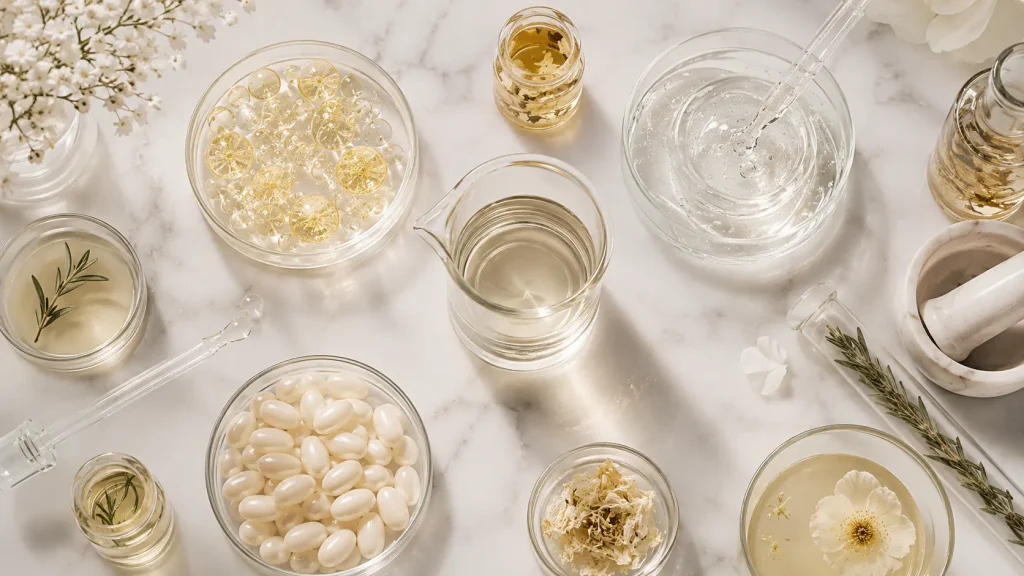
Physical and chemical evaluation helps determine whether the formula remains within its intended specifications.
Depending on the product, relevant parameters may include:
- pH
- Viscosity
- Appearance
- Color
- Odor
- Density or specific gravity
- Other product-specific characteristics
These measurements can affect both manufacturing and consumer experience.
For example, viscosity can influence:
- Spreadability
- Filling accuracy
- Pump or dropper performance
- Product appearance
- Consumer perception
Once defined, appropriate specifications can also become part of the standard used to evaluate future production batches.
3. Microbiological Testing & Preservative Efficacy
Microbiological quality is a critical consideration in cosmetic product development, particularly for formulas that can support microbial growth.
Potential microorganisms of concern can include:
- Bacteria
- Yeast
- Mold
The appropriate microbiological strategy depends on factors such as:
- Formula type
- Water content and water activity
- Preservation system
- Packaging
- Manufacturing conditions
- Intended use
- Target consumer
- Target market
Microbiological Quality Testing
Microbiological testing evaluates the microbiological condition of raw materials, bulk product, or finished cosmetics as appropriate to the quality program.
Preservative Efficacy / Challenge Testing
For products requiring a preservation system, preservative efficacy evaluation may be used to assess whether that system provides appropriate protection against microbial contamination under defined test conditions.
This is different from simply testing whether a finished sample currently contains microorganisms.
One evaluates the product’s microbiological condition at a point in time; the other evaluates how effectively the preservation system responds to microbial challenge under a defined method.
The need and appropriate method should be determined for the specific product rather than assumed to be identical for every cosmetic.
4. Formula & Packaging Compatibility Testing
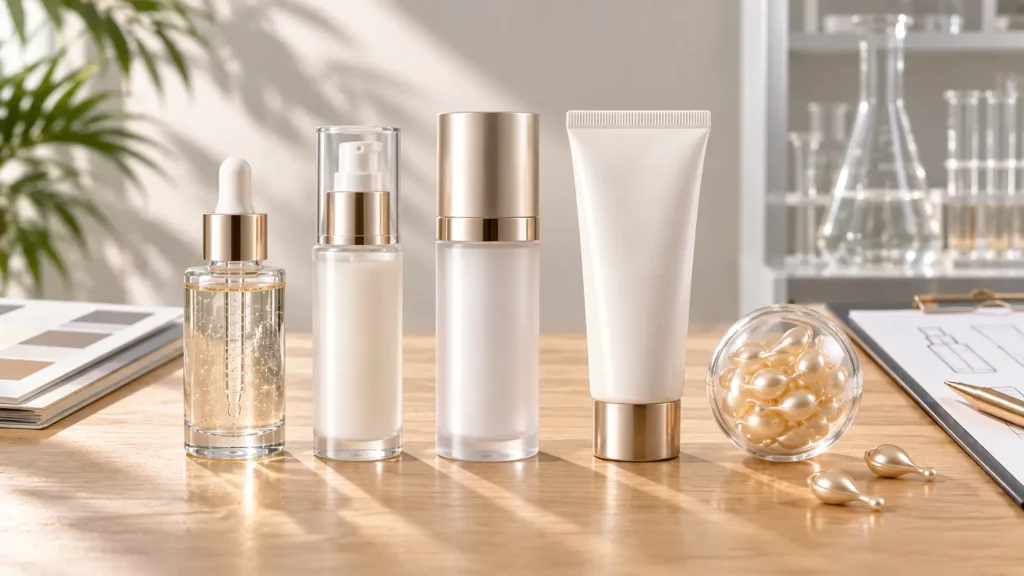
A stable formula can still fail if it is paired with unsuitable packaging.
Droppers, pumps, airless systems, tubes, jars, sprays, applicators, seals, and closures can interact differently with cosmetic formulas.
Potential problems may include:
- Leakage
- Pump clogging or failure
- Poor dose delivery
- Seal failure
- Material swelling or deformation
- Stress cracking
- Corrosion of components
- Changes to printing or decoration
- Formula discoloration
- Changes in odor or appearance
- Loss of volatile components
Compatibility testing should therefore evaluate the complete formula-packaging system, not just whether a bottle can physically hold the product.
This is why packaging is best selected while formulation development is still active rather than after the formula has already been finalized.
Packaging Functionality Also Matters
Compatibility is not only about chemical interaction.
Depending on the package, the development team may also evaluate:
- Pump priming
- Dose consistency
- Closure function
- Leak resistance
- Applicator performance
- Label and decoration durability
- Compatibility with filling equipment
If you’re still deciding which bottle, jar, tube, pump, dropper, airless system, or other package best fits the formula, see our Guide to Choosing Cosmetic Packaging for a deeper look at formula compatibility, dispensing, material selection, positioning, MOQ, cost, and user experience.
5. Sensory Evaluation
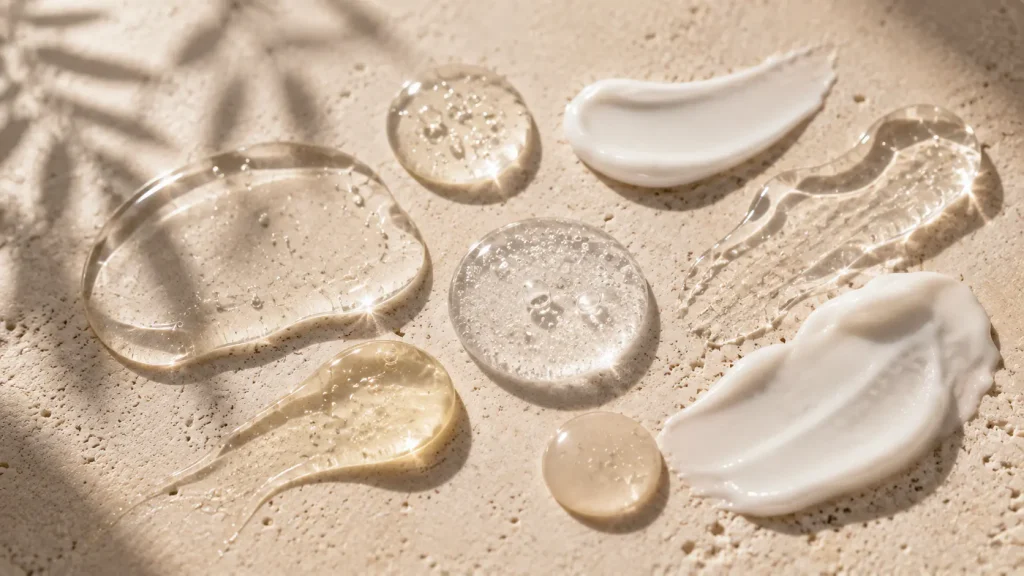
A technically stable formula is not automatically a commercially strong beauty product.
Consumers judge cosmetics by how they look, feel, spread, absorb, and fit into a daily routine.
Sensory evaluation can therefore be used to compare formulation versions using defined characteristics.
Appearance
- Uniformity
- Transparency or opacity
- Gloss
- Color consistency
During Application
- Spreadability
- Wateriness
- Oiliness
- Cooling sensation
- Smoothness
- Stickiness
After Application
- Absorption
- Smoothness
- Residue
- Stickiness
- Overall skin or hair feel
This becomes particularly useful when two formulas have similar ingredient lists but create noticeably different consumer experiences.
6. Efficacy Evaluation & Claims Support
Some product concepts require additional evidence to support specific performance claims.
Depending on the category, testing may be designed around areas such as:
- Hydration
- Appearance of firmness
- Soothing-related performance
- Brightening or radiance
- Oil-control performance
- Hair smoothness
- Hair surface characteristics
The appropriate method depends on the exact claim being considered.
Laboratory or R&D models can also be useful during formulation development, but a laboratory result should not automatically be converted into a consumer-facing marketing claim.
Claims should be reviewed according to:
- The finished product formula
- Testing method
- Quality of available evidence
- Claim wording
- Target-market requirements
Testing strategy and claim strategy should therefore be developed together.
7. Pilot Production & Scale-Up Evaluation
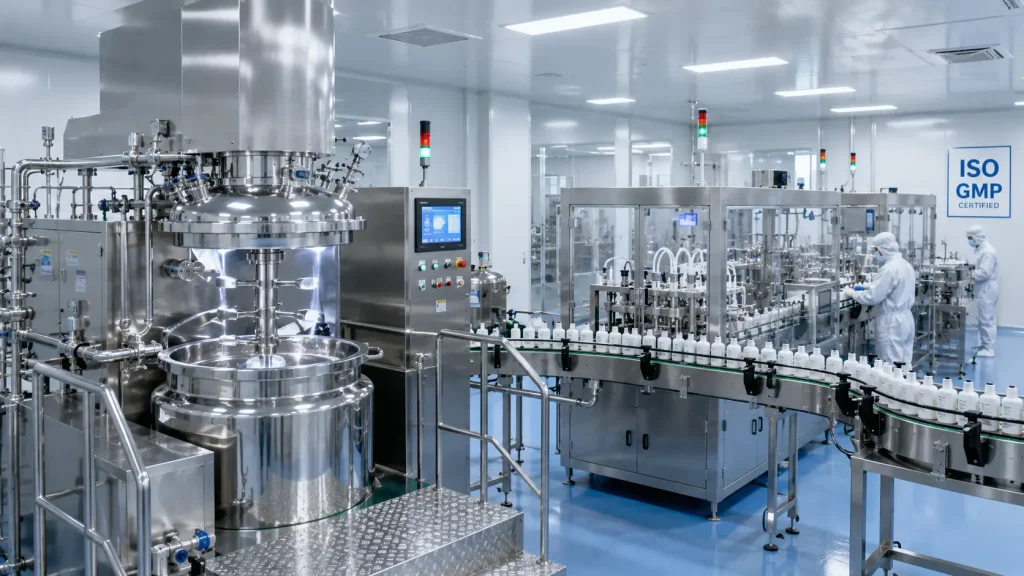
A laboratory mixer and a commercial manufacturing system do not behave identically.
When a formula moves to larger equipment, variables can include:
- Batch size
- Mixing speed
- Shear
- Heating rate
- Cooling rate
- Processing time
- Ingredient addition sequence
Even if the ingredient percentages remain unchanged, processing differences can influence:
- Viscosity
- Texture
- Appearance
- Particle distribution
- Sensory characteristics
- Filling performance
A pilot or scale-up evaluation can therefore help determine whether commercial production reproduces the characteristics of the approved laboratory formula.
Not every cosmetic project requires exactly the same pilot approach, so the appropriate scale-up strategy depends on the formula, equipment, and manufacturing process.
Testing and scale-up also need to fit into the broader product-development schedule. For a stage-by-stage look at how formulation, samples, testing, packaging, approvals, scale-up, and production can affect launch timing, see our Cosmetic Product Development Timeline Guide.
8. Quality Control During Commercial Manufacturing
Product testing does not end when mass production begins.
A robust quality system monitors the product throughout manufacturing.
Raw Material Control
Incoming materials are examined according to applicable specifications and quality procedures before use.
Pre-Production Preparation
Equipment, production instructions, ingredients, and packaging materials are prepared and reviewed before manufacturing begins.
In-Process / Bulk Product Control
Depending on the product, the bulk formula may be checked for:
- Appearance
- Physical characteristics
- Chemical specifications
- Sensory characteristics
- Microbiological quality where applicable
Packaging Inspection
Packaging components can be examined before filling and assembly.
Production Monitoring
Key manufacturing stages and defined process parameters are monitored throughout production.
Finished-Product Inspection
Finished goods are evaluated against established release specifications before distribution.
This layered approach reduces dependence on one final inspection to detect every possible problem.
9. Batch Traceability & Retained Samples
Commercial cosmetic manufacturing should also support appropriate batch traceability.
A traceability system may connect:
- Raw material lots
- Batch numbers
- Production records
- Bulk or semi-finished product
- Packaging components
- Finished goods
Manufacturers may also retain coded samples from production batches according to their quality procedures.
Retained samples can support later investigation of issues involving:
- Appearance
- Product stability
- Packaging
- Batch consistency
- Consumer complaints
The objective of a commercial quality system is not simply to manufacture the first successful batch.
It is to support consistency across repeated production.
10. Does Every Cosmetic Product Need the Same Tests?
No.
There is no universal cosmetic testing checklist that should be applied identically to every formulation.
The testing strategy can depend on:
- Product category
- Formula type
- Water activity
- Ingredient system
- Preservation strategy
- Packaging
- Intended use
- Target consumer
- Claims
- Target market
For example:
- A water-based leave-on serum presents different considerations from a waterless facial oil.
- A scalp serum may require different sensory evaluation from a body cream.
- A single-dose serum capsule creates different formula-packaging questions from an airless bottle.
- A rinse-off cleanser may have a different use profile from a leave-on eye-area product.
A strong formulation, quality, and manufacturing team therefore builds the testing program around the actual product.
Questions Beauty Brands Should Ask Their Manufacturer
Stability
- How is formula stability evaluated?
- Which characteristics will be monitored?
- What happens if the product changes during evaluation?
Microbiological Quality
- What microbiological evaluation is appropriate for this formula?
- Does the product require preservative efficacy testing?
- How is microbiological quality controlled during manufacturing and filling?
Packaging
- Will compatibility be evaluated using the final packaging?
- Will pump, closure, or applicator performance be checked?
- How are incoming packaging components inspected?
Scale-Up
- How will the laboratory formula be transferred to commercial manufacturing?
- Does this project require a pilot or scale-up batch?
- What happens if the production batch differs from the approved sample?
Claims
- What evidence supports the claims we want to use?
- Is additional finished-product testing needed?
- Does the claim wording fit the intended target market?
Production Quality Control
- Which specifications are monitored during production?
- How is batch-to-batch consistency evaluated?
- Are batches traceable?
- Are finished-product samples retained?
Frequently Asked Questions
What cosmetic product testing is needed before production?
There is no single test package for every product. Depending on the formula and project, development may involve stability, physical and chemical evaluation, microbiological testing, preservative efficacy testing where applicable, packaging compatibility, sensory evaluation, claim-related testing, and scale-up work.
How long does cosmetic product testing take?
There is no universal testing timeline. Duration depends on the product, formula, packaging, testing method, target market, and whether longer-term stability evaluation is required.
Can I skip testing if the laboratory sample looks good?
An approved sample is an important milestone, but it doesn’t show how the product will necessarily behave during longer-term storage, packaging interaction, transport, scale-up, or repeated commercial production.
What is cosmetic stability testing?
Stability testing evaluates how the formula’s relevant physical, chemical, microbiological, functional, and aesthetic characteristics behave over time and under defined conditions.
What is packaging compatibility testing?
Packaging compatibility testing evaluates whether the formula and final packaging continue to function appropriately together. This may include product appearance, leakage, deformation, sealing, dispensing, decoration, and other formula-package interactions.
What is preservative efficacy testing?
Preservative efficacy or challenge testing evaluates how an appropriate preserved formula responds to defined microbial challenge conditions. It is different from simply measuring the microbiological condition of a finished sample.
Does every cosmetic need preservative challenge testing?
Not every product has the same microbiological risk or formulation architecture. Whether preservative efficacy testing is appropriate depends on factors such as the formula, water activity, preservation strategy, packaging, intended use, and applicable requirements.
Why is sensory testing important?
Consumers judge cosmetic products by texture, spreadability, absorption, residue, stickiness, fragrance, and other sensory characteristics. Sensory evaluation helps determine whether the product experience matches the intended positioning.
What is a pilot batch?
A pilot or scale-up batch is used in some development programs to evaluate how an approved laboratory formula behaves when transferred to larger manufacturing equipment before full commercial production.
Who decides which tests a cosmetic product needs?
The testing program is normally scoped according to the product by the relevant formulation, quality, testing, regulatory, and manufacturing teams, with the brand’s intended claims and target markets also taken into account.
From Approved Sample to Market-Ready Product
The difference between a good laboratory sample and a reliable commercial beauty product is not only the formula itself.
It is the system surrounding that formula.
Stability evaluation, microbiological control, preservation strategy, packaging compatibility, sensory evaluation, claims support, scale-up, manufacturing quality control, and traceability can all contribute to whether a product performs consistently in commercial production.
At NEXO Beauty Labs, product development extends beyond creating an attractive laboratory sample.
From formulation and packaging development through manufacturing preparation and quality evaluation, the goal is to help beauty brands move toward products designed for reliable commercial production.
Request a Cosmetic Product Testing & Manufacturing Consultation with NEXO Beauty Labs to discuss your formula, packaging, testing strategy, target market, and manufacturing requirements.