
Sunscreen Stick vs Lotion vs Mist: Which SPF Format Is Right for Your Beauty Brand?
Compare sunscreen sticks, lotions and mists from a beauty product development perspective, including texture, packaging, positioning and manufacturing considerations.
Sun protection is no longer limited to the traditional sunscreen lotion.
Beauty brands can now build sun care collections around several formats — from skincare-inspired lotions and portable sunscreen sticks to lightweight spray or mist systems.
But choosing the right format should not be based only on appearance or trends.
Each option creates a different combination of formula requirements, texture, application, packaging, manufacturing, testing, MOQ, consumer experience, and target-market considerations.
So the better question isn’t:
“Which sunscreen format is best?”
It is:
“Which sunscreen format best supports the consumer, usage scenario, product positioning, and commercial strategy we are trying to build?”
This guide compares sunscreen lotion, stick, and mist/spray formats from a beauty-brand product-development perspective.
Quick Answer: Lotion vs Stick vs Mist
No format is automatically better.
The strongest choice is the one that allows the formula, packaging, application instructions, manufacturing process, and consumer behavior to work together.
1. Sunscreen Lotion: Flexible & Familiar for Daily Sun Care
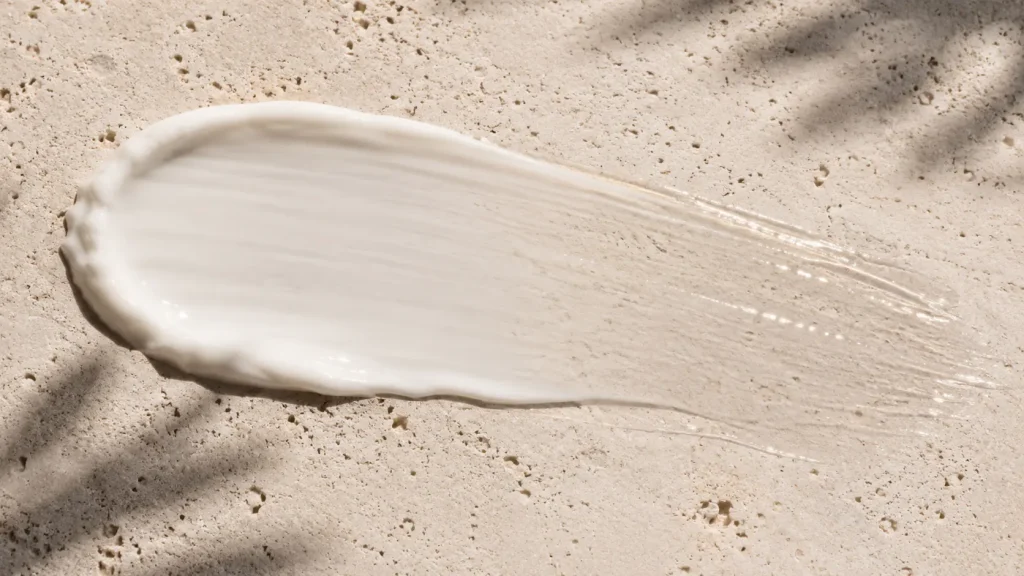
Sunscreen lotion remains one of the most familiar formats for everyday sun care.
Depending on the formula, the texture can range from a richer moisturizing emulsion to a lightweight fluid designed to spread quickly across the skin.
This makes lotion especially useful for concepts such as:
- Daily facial SPF
- Skincare-first sun care
- Moisturizing sunscreen
- Face and body products
- Sensitive-skin-oriented concepts
- Lightweight everyday sunscreen
- Premium skincare routines
The main advantage for product development is formulation flexibility.
A lotion can be designed around sensory directions such as:
- Lightweight
- Moisturizing
- Silky
- Fresh
- Semi-matte
- Non-greasy
Key Sunscreen Lotion Development Considerations
Developing a sunscreen lotion involves much more than selecting a target SPF.
The development team may need to consider:
- UV filter system appropriate to the target market
- Emulsion structure
- Formula stability
- Viscosity
- Spreadability
- Film formation
- Visual appearance
- White-cast characteristics
- Skin feel
- Packaging compatibility
- Commercial filling
A strong sunscreen lotion therefore needs to work simultaneously as:
SPF Formula + Sensory Experience + Packaging System + Manufacturing Process
2. Sunscreen Stick: Portable, Direct & Format-Driven
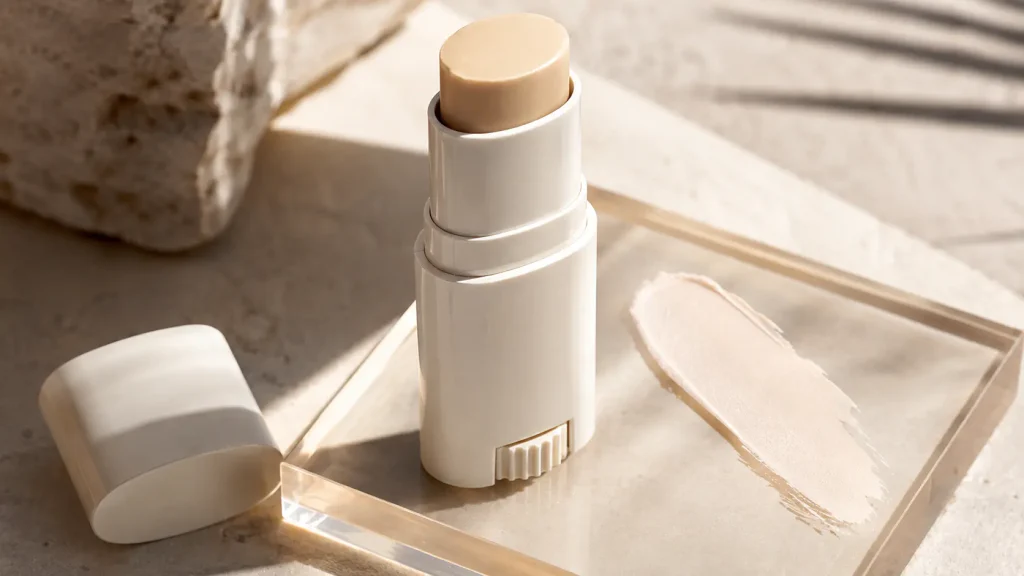
A sunscreen stick creates a very different product experience from a lotion.
The consumer applies a solid or semi-solid product directly from the package rather than dispensing a fluid formula into the hand.
This makes sticks naturally suited to concepts built around:
- Portability
- Outdoor activity
- Sport routines
- Travel
- Targeted application
- Compact packaging
- Less-messy usage
- Matte or semi-matte positioning
Texture & Structural Stability Are Critical
A sunscreen stick needs enough structure to remain stable in the component while still gliding smoothly across the skin.
The formulation team may need to balance:
- Glide
- Drag
- Waxiness
- Oiliness
- Residue
- Payoff
- Finish
- Structural strength
- High-temperature behavior
- Movement within the stick mechanism
Too much structure can create excessive drag.
Too little structure can create poor heat stability or mechanical problems.
This is why a sunscreen stick should be treated as its own formulation format rather than as a lotion converted into solid form.
3. Sunscreen Mist / Spray: Convenience Depends on the Complete Spray System
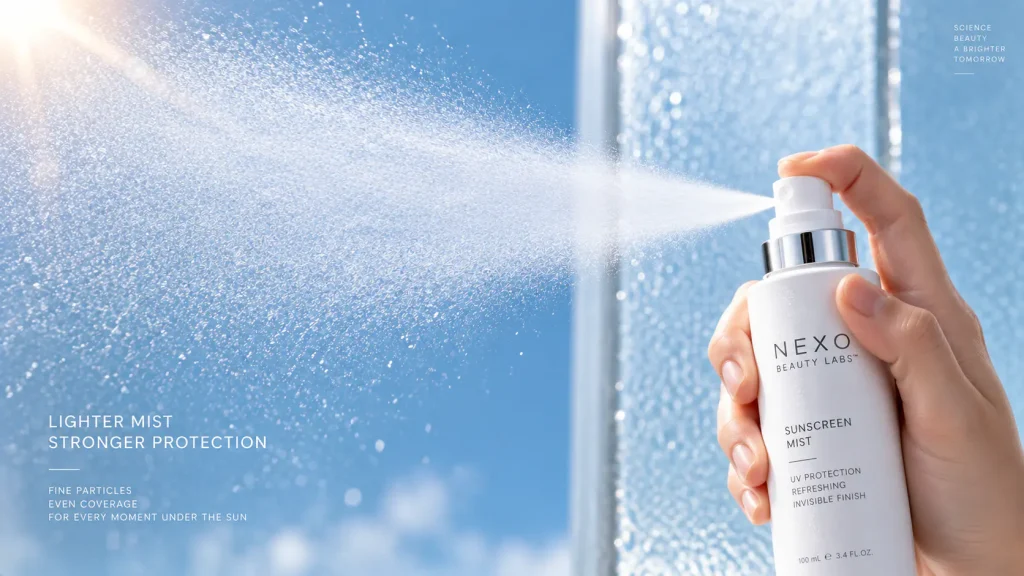
Sunscreen mist or spray formats can support a lightweight, portable, lifestyle-oriented product experience.
Depending on the target market, product design, and intended use, positioning may focus on:
- Lightweight application
- Portable sun care
- Convenient use
- Face or body concepts where appropriate
- Outdoor lifestyles
- Modern format differentiation
But in a spray-format product:
The packaging is part of the product technology.
The formulation and component need to be evaluated together.
Development may involve:
- Formula viscosity
- Spray mechanism
- Nozzle design
- Spray pattern
- Droplet distribution
- Application instructions
- Component compatibility
- Filling process
- Product stability
- Target-market requirements
A formula that looks appropriate in a laboratory container may behave very differently after it is paired with the intended spray system.
Explore Three Sunscreen Product Directions:
Daily Skincare SPF
Sport & Outdoor SPF
Lightweight Spray SPF
Application Behavior Matters as Much as Format
A sunscreen’s labeled protection is tied to the tested finished product and its intended use conditions.
That makes consumer application an important part of format development.
Different formats create different questions.
For Lotion
Can the consumer spread the formula comfortably and evenly across the intended application area?
For Stick
Does the application method make it clear how the intended amount should be delivered across the skin?
For Mist / Spray
Does the spray pattern, application method, and product labeling support consistent use according to the intended directions?
A convenient format is only commercially successful if consumers can understand how to use it correctly.
For brands, this means product development should connect:
SPF Testing + Dosage / Application + Packaging + Instructions + Consumer Behavior
Which Sunscreen Format Fits Your Brand Strategy?
Choose Sunscreen Lotion When Your Brand Prioritizes:
- Daily skincare integration
- Facial SPF positioning
- Moisturizing or barrier-support concepts
- Flexible texture development
- Broad face/body possibilities
- Skincare-led storytelling
Choose Sunscreen Stick When Your Brand Prioritizes:
- Portability
- Sport or outdoor positioning
- Direct application
- Compact packaging
- Travel
- Matte or semi-matte finishes
- Strong format differentiation
Choose Sunscreen Mist / Spray When Your Brand Prioritizes:
- Lightweight sensory experience
- Convenience
- Portable use
- Lifestyle positioning
- A differentiated spray-format experience
None of these advantages replaces the need for a suitable formula and appropriate finished-product evaluation.
Define the Consumer Before Choosing the SPF Format
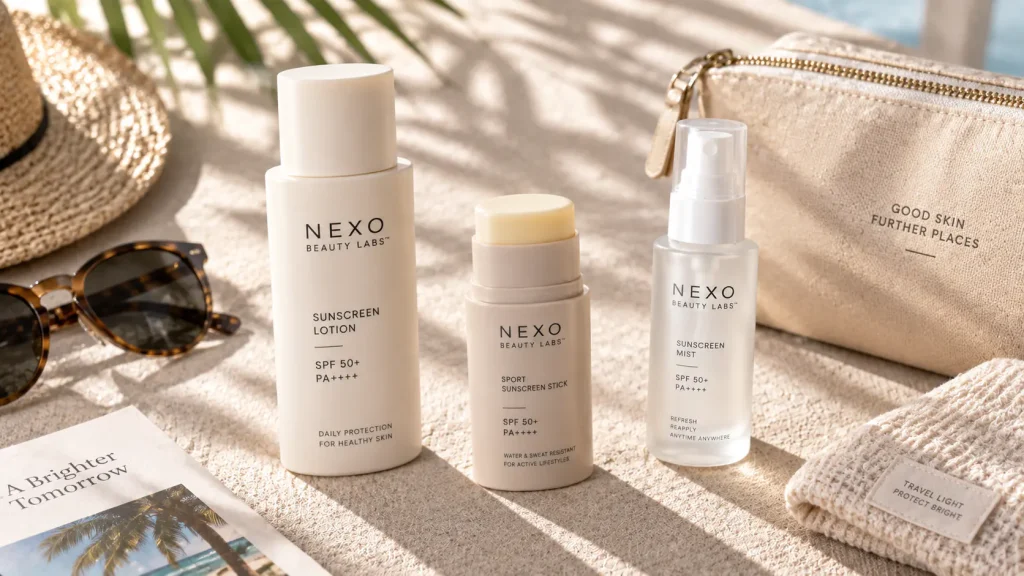
Before choosing the package or texture, define who will actually use the product.
Ask:
- Who is the target consumer?
- Is this for daily skincare, sport, outdoor activity, travel, or another scenario?
- Will it primarily be used on the face, body, or both?
- How portable does the product need to be?
- What should the finish feel like?
- How often is the product expected to be applied or reapplied?
- What price point is the brand targeting?
Possible sensory targets can include:
- Moisturizing
- Invisible-looking
- Lightweight
- Matte
- Silky
- Cooling
- Non-greasy
The format should follow the consumer strategy — not force the consumer to adapt to the format.
Packaging Changes the Development Path
A lotion, stick, and mist require fundamentally different packaging systems.
Lotion
Possible formats include:
- Tube
- Pump bottle
- Airless system
Stick
Requires considerations such as:
- Stick mechanism
- Component dimensions
- Structural support
- Formula-component fit
- Appropriate filling process
Mist / Spray
Requires:
- Compatible spray component
- Nozzle
- Spray pattern
- Formula-package compatibility
- Suitable filling route
Packaging can influence:
- MOQ
- Lead time
- Cost
- Filling
- Formula stability
- Application
- Manufacturing complexity
Related Guide: Because lotions, sticks, and spray-format sunscreens rely on very different dispensing and component systems, packaging should be evaluated together with formula viscosity, filling, compatibility, MOQ, and consumer use. See our Guide to Choosing Cosmetic Packaging →
Sunscreen Testing Depends on the Finished Product
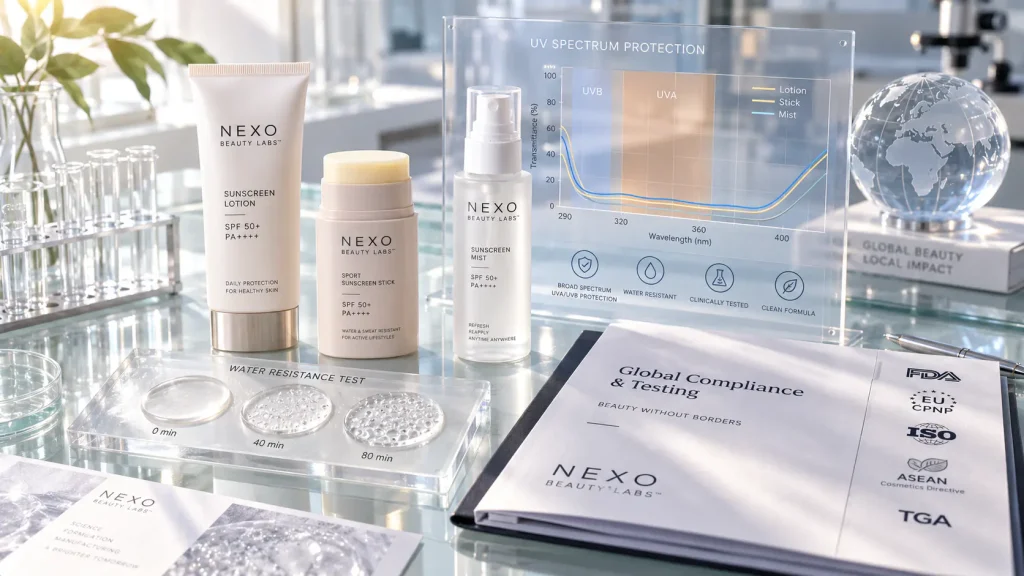
SPF development should be evaluated around the finished commercial product rather than only an early laboratory formula.
Depending on the format and market, development may involve areas such as:
- SPF performance
- UVA or broad-spectrum performance as applicable
- Water-resistance testing where claimed
- Formula stability
- Physical characteristics
- Packaging compatibility
- Application and dosage-form considerations
- Manufacturing consistency
- Market-specific labeling and documentation
A lotion, stick, and spray-format sunscreen should not automatically be assumed to require an identical development program.
The testing strategy needs to reflect:
Formula + Format + Packaging + Claims + Intended Use + Target Market
Related Guide: SPF and UVA-related evaluation are part of a broader finished-product testing strategy. To understand how stability, microbiological quality, packaging compatibility, sensory evaluation, claims support, and scale-up can fit into pre-production testing, read Cosmetic Product Testing Before Mass Production →
Target Market Must Be Defined Before Sunscreen Formulation Is Finalized
Sunscreen development is particularly sensitive to where the finished product will be sold.
Target market can influence:
- Permitted UV filter systems
- Product classification
- SPF and UVA-related testing
- Water-resistance claims
- Dosage-form considerations
- Directions for use
- Warnings
- Labeling
- Documentation
This means a sunscreen developed for one country should not automatically be assumed suitable for sale in every other market without additional review.
Tell your OEM/ODM partner early:
“Which country or market is this sunscreen being developed for?”
That decision should come before the formula, claims, packaging, and testing strategy are locked.
Water Resistance Is a Product Claim, Not a Format Feature
A sport stick is not automatically water resistant simply because it is solid.
A lotion is not automatically less water resistant because it is fluid.
A spray format is not automatically designed for sweat resistance.
Water resistance is connected to the actual finished formula, film performance, testing, directions, and applicable market requirements.
Brands should therefore avoid choosing a format and assuming that a particular performance claim comes with it automatically.
The stronger development sequence is:
Consumer Need → Formula Strategy → Finished-Product Testing → Supported Claim
Can One Beauty Brand Develop Multiple Sunscreen Formats?
Yes — and in many cases this creates a stronger sun care portfolio than asking one product to solve every usage occasion.
Daily Face Lotion
Designed for morning skincare routines and everyday use.
Sport / Outdoor Stick
Designed around portability, compact packaging, and active-lifestyle positioning.
Portable Mist / Spray
Designed around lightweight and convenient application where the intended use and target-market route support the concept.
These products do not necessarily compete with one another.
They can address different consumer moments:
One Sun Care Strategy → Multiple Usage Scenarios
This can create a more intentional product portfolio than trying to make one sunscreen format serve every consumer need.
How Does Sunscreen Format Affect MOQ & Cost?
Format selection changes not only the formula but also the commercial structure of the project.
MOQ and cost can be influenced by:
- Formula batch size
- UV filter and raw-material sourcing
- Packaging component availability
- Stick mechanisms
- Spray systems
- Custom bottle or component colors
- Printing and decoration
- Specialized filling equipment
- Testing requirements
- Order quantity
A readily available lotion bottle may create a different MOQ structure from a customized stick component or specialized spray package.
This does not mean one format always has the lowest MOQ.
The complete finished-product specification determines the practical manufacturing quantity.
Private Label vs ODM vs Custom Sunscreen Development
Private Label Sunscreen
A private label route starts with an existing sunscreen product or formulation platform.
This can reduce original formulation-development work, although packaging, claims, testing, market requirements, and production planning still need to be considered for the actual project.
ODM Sunscreen
An ODM project may begin with an established formulation direction that can be customized within an agreed scope.
Depending on the product and market, potential customization may involve:
- Texture
- Sensory feel
- Selected skincare ingredients
- Fragrance
- Packaging
- Product positioning
Custom OEM Sunscreen
A more customized OEM development program can be built around a detailed product brief covering the target market, SPF concept, sensory requirements, format, packaging, water-resistance direction, and consumer positioning.
Greater customization usually introduces additional formulation, evaluation, packaging, and manufacturing-development work.
Questions Beauty Brands Should Ask Before Developing Sunscreen
- Who is the target consumer?
- Where will the finished product be sold?
- Is it designed mainly for face, body, or both?
- What usage scenario should the product serve?
- Which sunscreen format best supports that scenario?
- What texture and finish should the product have?
- How should consumers apply the intended amount?
- What packaging system works with the formula?
- Which UV filter route is appropriate for the target market?
- What SPF/UVA or broad-spectrum claims are intended?
- Is water resistance part of the concept?
- What testing is required for the intended claims and market?
- Can the formula and packaging be manufactured consistently at scale?
- What is the formula MOQ?
- What is the packaging MOQ?
- Could this format complement other products within a larger sun care portfolio?
These questions turn format selection into a product-development strategy rather than a trend decision.
Frequently Asked Questions
Is sunscreen stick better than sunscreen lotion?
Not automatically. Lotion and stick formats provide different application experiences and require different formulation and packaging strategies. The right choice depends on the intended consumer, usage scenario, formula, and target market.
What is the difference between sunscreen lotion and sunscreen stick?
Sunscreen lotion is a fluid or emulsion-based product typically dispensed from a tube, bottle, or pump. A sunscreen stick uses a solid or semi-solid structure intended for direct contact application. The format changes formula structure, packaging, filling, and consumer use.
Is sunscreen spray better than sunscreen lotion?
Neither format is inherently better. Spray systems can provide a convenient application format, while lotions offer familiar spreading and broad formulation flexibility. Finished-product performance still depends on formulation, testing, packaging, directions, and appropriate consumer use.
What is the difference between sunscreen spray and sunscreen mist?
“Mist” is often used as a consumer-facing description for a fine spray experience. From a product-development perspective, the actual spray system, dosage form, nozzle, droplet pattern, formulation, and target-market requirements are more important than the marketing term alone.
Why do brands develop sunscreen sticks?
Sticks can support portable, sport, outdoor, travel, targeted-use, and matte or semi-matte positioning. They also create strong format differentiation compared with conventional lotion products.
Why do brands develop sunscreen sprays or mists?
Spray-format products can support lightweight, convenient, and lifestyle-oriented concepts. However, the formula, spray package, intended application, instructions, and market requirements need to be developed together.
Does sunscreen packaging affect SPF product development?
Yes. Packaging can affect formula compatibility, dispensing, application, filling, stability, MOQ, production efficiency, and overall consumer experience.
Is a sunscreen stick automatically water resistant?
No. Water resistance is a performance claim related to the actual finished product and appropriate testing. It should not be assumed from the product format alone.
Can a brand offer lotion, stick, and spray sunscreen products?
Yes. Different formats can address different consumer moments within one sun care portfolio — for example, daily skincare, outdoor activity, travel, or portable-use concepts.
Are sunscreen requirements the same in every country?
No. UV filter systems, product classification, testing, labeling, claims, directions, and documentation can differ between markets. Target market should therefore be defined early.
Which sunscreen format usually has the lowest MOQ?
There is no universal answer. MOQ depends on formula batch size, packaging components, decoration, manufacturing setup, filling requirements, testing, and supplier minimums. Stock packaging may sometimes provide more flexibility than highly customized components.
Develop the Sunscreen Format Around the Consumer
Choosing between sunscreen lotion, stick, and mist is not simply a packaging decision.
Each format creates a different combination of:
Formula + Texture + Application + Packaging + Testing + Manufacturing + Target-Market Requirements
The strongest product is not necessarily the newest-looking format.
It is the format that makes the most sense for the consumer, brand strategy, and market where the product will actually be sold.
At NEXO Beauty Labs, sun care development can be approached across private label, ODM, and custom OEM pathways alongside formulation, sensory design, packaging, testing, scale-up, and commercial manufacturing requirements.
Whether you’re exploring a skincare-first lotion, an active-lifestyle stick, or a lightweight spray-format sunscreen concept, the development path should begin with the product and consumer experience you actually want to create.
Request a Sunscreen OEM/ODM Consultation with NEXO Beauty Labs to discuss your SPF concept, format, formulation, packaging, target market, MOQ, and development requirements.